Regional Court Munich calculates Avago licence and issues injunction against Renault
In the third consecutive FRAND judgement, the 7th Civil Chamber of the Regional Court of Munich has once again clarified its FRAND case law. The court has prohibited Renault from selling two car models in Germany in its dispute with Avago over computer chips for navigation and telematics units. For the first time, the court calculated an exemplary FRAND licence based on comparable licences that do not relate to a pool licence.
24 February 2026 by Mathieu Klos
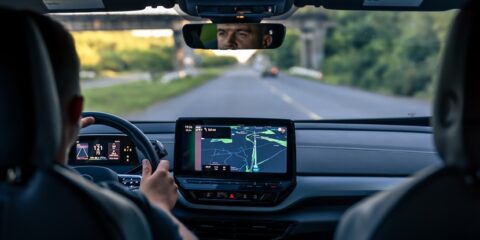
Renault has been aware of the consequences of the judgment in the dispute with Avago for several days. Immediately after the hearing on 5 February 2025, the judges of the 7th Civil Chamber imposed a sales ban on the Renault Clio and Mégane models in Germany. Other models could also be affected (case ID: 7 O 7655/25).
According to presiding judge Oliver Schön and his two assessors Katalin Tözsér and Florian Schweyer, the navigation and telematics units infringe the European patent of Avago EP 190 3 733. The patent protects a method and system for an extended range ethernet line code.
There is a lot at stake in the dispute. This is evident from the high security deposit of €7.5 million for the injunction and a further €10 million for recall and destruction. Avago would have to deposit this with the court if it wants to enforce the judgment. However, the company has not yet decided to do so. The significance of the dispute also arises from the fact that Renault lodged an appeal directly. It did not wait for the written judgment, as is usually the case (case ID: 6 U 346/26 e).
-

- Oliver Schön
-

- Katalin Tözsér

-
- Florian-Schweyer
For some time now, the judges of the 7th Civil Chamber publish their written judgments quite quickly. In the case of Renault, it was published just two weeks after it was announced in the courtroom. In a recent interview with JUVE Patent, presiding judge Oliver Schön described the new procedures of his chamber for patent proceedings. According to this, the panel enters the oral hearing with a strong view and issues a judgment on the same day if necessary. The written reasons are then to follow shortly afterwards.
FRAND rate determination
In the judgment, the panel again calculates a FRAND rate. The prerequisite for this is that the defendant company first proves an “external willingness to licence”. This is the case if the implementer does not pursue a hold-out strategy. Renault underlines this by paying an “undisputed amount” to the SEP holder. This corresponds to the implementer’s last offer. In addition, Renault deposited security with the court.
In this specific case, the panel then examined the FRAND conformity of Avago’s offer. The prerequisite was that Avago had submitted “a large number of suitable licence agreements”. The judges concluded that Avago’s offer was FRAND, but that Renault lacked an “internal willingness to licence”. This is given only if the offer is within a permissible framework and is accepted by the implementer.
As the judges saw a low likelyhood that EP 733 is invalid, they did not stay the proceedings and sentenced Renault.
Renault had additionally announced the dispute to the chip suppliers Bosch and Valeo. One of the two interveners had also invoked a FRAND licence. Although Renault had supported the antitrust law objection, it had not raised it as an objection of its own. This did not change the court’s judgment because, according to the judges, “in patent infringement proceedings, only the defendant can raise the antitrust objection”.
Calculation of the FRAND licence
The judgment does not provide concrete figures on the amount of the ideal licence. It is largely redacted for this purpose. However, it appears that the judges want to provide SEP holders and implementers with a basis for calculation for future proceedings in order to reach an agreement before they spend many months arguing in court.
Presiding judge Oliver Schön described “the lack of transparency with regard to comparative licences” as a major problem in his interview with JUVE Patent. He announced his intention to create transparency through sample calculations.
In the judgment between Avago and Renault, the judges provide nine guiding principles on how they envisage a calculation. For example, they state:
“If settlement licence agreements have been submitted, a FRAND corridor is to be determined in such a way that the highest admissible value is three times the lowest value or a deviation of 50% downwards and upwards from an average value is possible.”
The judges also provide an example calculation: “If a mean value is 5, then the FRAND range is between 2.5 and 7.5. This means that it is not permissible for a very cheap licence to be at 2.5 and a very expensive licence at 7.5. However, there must be good reasons for such a differentiation (because otherwise there would be discrimination). Typical reasons for a differentiation are the scope of the licence (number of units/duration) and the behaviour of the defendant party. This is because a party that concludes a licence quickly causes less effort for the suing party and this can be taken into account when determining the licence price.”
They paid particular attention to the determination of the mean value. “This consideration is based on a judgemental decision. In case of doubt, the unit rate used for comparison is to be taken as the mean value,” the judges stated.
Third FRAND ruling within four weeks
The 7th Civil Chamber clearly has some catching up to do when it comes to FRAND issues. After having little opportunity to comment on the topic last year because many SEP proceedings were settled early, Avago vs Renault is already the chamber’s third FRAND ruling this year.
In all three, the panel has taken a fundamental stance on FRAND issues. In Wilus vs Asus (Asus I) and Nokia vs Asus (Asus II) the judges dealt with the topics of a partial payment obligation, compensation for the past, control calculation based on a top-down analysis and comparative licence agreements.
All three judgments concretise the Munich SEP rules written down by the same chamber in a reference decision in Samsung vs ZTE.
In Asus I and Asus II, the judges already calculated a licence rate, but these essentially related to pool licences. Unlike in the UK proceedings, the court’s calculations are not concerned with setting a specific rate, but with determining whether the SEP holder’s offer is FRAND.
New claims
The current ruling is part of a broader dispute between Avago and Renault. At the UPC, the chip manufacturer has initiated four infringement cases with the local divisions Munich, Hamburg and Düsseldorf plus the now decided claim at Munich Regional Court. Renault challenges EP 733 in a national revocation action with the German Federal Patent Court. Renault subsidiary Dacia has also filed a central revocation action with the Paris central division (case ID: UPC-CFI-0001039/2025).
Avago is currently involved in many lawsuits against car manufacturers. These included lawsuits against BMW and VW brands. The chip manufacturer is also particularly active at the UPC. This included the lawsuits against Tesla and the Stellantis Group, which have since been settled. In early January Avago also filed infringement claims against Hyundai and Nissan. The latter is closely linked to Renault through a strategic partnership.
CBH and Dilg take the win
For Avago, the judgment is the first important success in the dispute with Renault and its two co-litigants. The chip manufacturer acquired Broadcom in 2016. The joint company trades as Broadcom, but lawsuits against car manufacturers continue to be brought in the name of Avago.
To date, Broadcom has conducted patent litigation in Germany primarily with Grünecker. Bird & Bird has good relations with the chip manufacturer as well and has repeatedly brought lawsuits outside of the automotive sector.
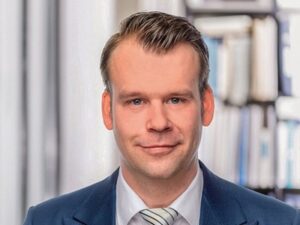
In a relatively new addition, CBH partner Hannes Jacobsen, together with his Munich partner Paul Szynka and patent attorneys from Dilg Haeusler Schindelmann, has now achieved success against Renault. Andreas Dilg and Peter Nilsson argued the technical part.
The CBH team also took over the defence of Avago against Dacia’s central nullity action at the UPC. It also filed the new actions against Hyundai and Nissan with the Munich local division. Grünecker is responsible for the four active claims against Renault at the UPC.
Close networking in the automotive sector
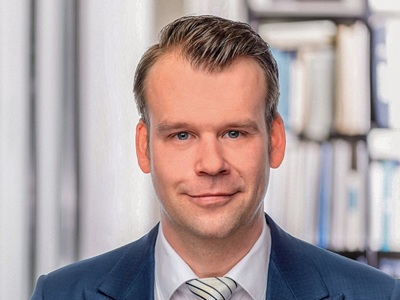
A Bird & Bird team led by Düsseldorf partner Felix Rödiger is defending Renault. He has good ties to the automotive industry. Rödiger regularly represents Valeo in patent proceedings, including at the UPC against Magna. Hes is supported by associate Fabian Saupe and patent attorneys Tim Hülsheger and Thomas Eelbo. Both are partners of the Munich patent attorney firm Prinz & Partner. They also recently filed the central revocation action against EP 733 at the UPC on behalf of Dacia.
-
- Hannes Jacobsen
-

- Felix Rödiger
-
- Jan Bösing
-

- Benjamin Schröer
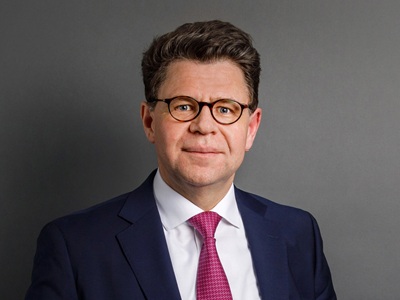
Co-litigant Valeo relied on Hogan Lovells partner Benjamin Schröer in the proceedings against Avago. He had previously represented the automotive supplier as an intervener in the dispute between Nokia and Daimler. Wolfgang Schulz and patent attorney Cédric Rohr are part of the team as well.
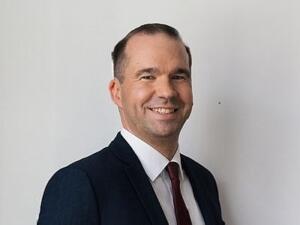
The second co-litigant Bosch has regularly relied on Bardehle Pagenberg for years. The law firm has represented the German electronics group in numerous proceedings concerning components in cars. Jan Bösing and Johannes Heselberger are leading the case.
