Fisher & Paykel and WBH successful in revoking Flexicare’s patent in Milan
Fisher & Paykel and Flexicare are once again fighting over accessories for respiratory machines. This time at the UPC, where patent holder Flexicare suffered a defeat, as the Milan local division revoked a patent for nasal cannulas.
14 April 2026 by Konstanze Richter
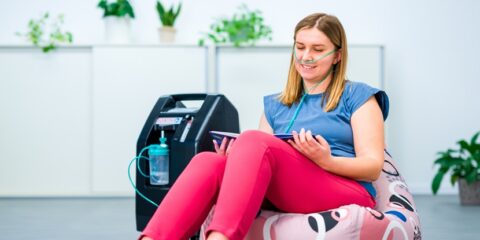
At the centre of the revocation claim filed by Fisher & Paykel is Flexicare’s EP 4 185 356 relating to a nasal cannula designed to improve patient comfort and usability during high-flow oxygen therapy. The nasal cannula comprises a manifold, non-sealing nasal prongs and a connector for a gas tube.
Fisher & Paykel claims the patent is not novel due to prior art disclosed in the document D2 and that it lacks inventive step. Furthermore, the claimant argues the patent should be revoked due to added matter and lack of clarity for the amendments.
Flexicare, having filed 13 auxiliary requests to amend the patent, argues that the claimed combination is not disclosed in D2 and thus novel.
The panel of judges around presiding judge Andrea Postiglione, including judge rapporteur Anna-Lena Klein and technically qualified judge Kerstin Roselinger, revoked the patent in its entirety. The court found all features could be mapped onto D2 and thus lacked novelty. While auxiliary request 1 was deemed admissible but also not novel over D2, the judges considered the other auxiliary requests not allowable due to lack of clarity (case ID: UPC_CFI_480/2025).
-
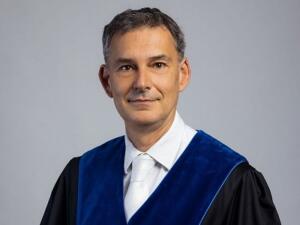
- Andrea Postiglione
-

- Anna-Lena Klein
-

- Kerstin Roselinger
An appeal against this decision is possible.
It is not the first time the two competitors have gone head to head in a patent court. A few years ago Fisher & Paykel defended a crucial patent for a hose system used in products for ventilators at courts in Germany and the UK — with different outcomes at the different courts.
WBH and Arnold Ruess team up
New Zealand-based Fisher & Paykel attacked its competitor’s patent with the help of a mixed team from patent attorney firm WBH Wachenhausen and litigation boutique Arnold Ruess. Munich-based patent attorneys Thorsten Haslinde took the lead, assisted by Marc Wachenhausen and Vladimir Traykov, while litigator Arno Riße provided legal and procedural advice. WBH Wachenhausen has a long-standing client relationship with Fisher & Paykel and has previously acted on their behalf in various filing and opposition proceedings before the EPO. They cooperated closely with in-house counsel and case manager Niko Alexas and Jon Harwood, general manager IP of Fisher & Paykel.
-

- Arno Riße
-
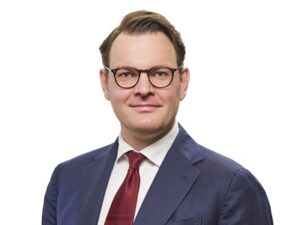
- Thorsten Haslinde
-

- Matthew Naylor
While British patent attorney firm Withers & Rogers initially filed the patent for Flexicare, Mewburn Ellis took over representation of the client in the examination period. At the UPC a team consisting of patent attorneys Isobel Stone and Matthew Naylor represented the UK-based medical device manufacturer.
In the previous national proceedings over Fisher & Paykel’s patent EP 359, a mixed international team of Bird & Bird represented the client in Germany and the UK. They faced lawyers from DAC Beachcroft in the UK proceedings and a mixed team from Hogan Lovells‘ German patent practice at the Regional Court Düsseldorf.
