EirGen Pharma and Meissner Bolte defend basic patent for kidney drug
An important basic patent for EirGen Pharma's drug Rayaldee for the treatment of chronic kidney disease in adults remains valid. This was decided by the Boards of Appeal at the EPO. However, this does not mean an end to the dispute between the pharmaceutical company and novel food manufacturer DSM.
3 March 2026 by Mathieu Klos

DSM Nutritional Products’ EPO opposition against EP 2 968 172 is not a classic dispute between an originator and generic drug manufacturers. The patent protects formulations of the active ingredient calcifediol. It is important because it protects Rayaldee, a medicinal product approved in the US, Canada and ten European countries for the treatment of secondary hyperparathyroidism.
Rayaldee is owned by US pharmaceutical company OPKO Health, which acquired EirGen Pharma, the owner of the European patent, in 2015. DSM Nutritional Products belongs to the Dutch-Swiss chemical company DSM-Firmenich, which received approval for its ampli-D calcifediol monohydrate ingredient as a novel food in the EU in 2024. The novel food is intended to help improve vitamin D levels. Rayaldee, on the other hand, is approved for adult patients who have stage 3 or 4 chronic kidney disease with secondary hyperparathyroidism and low vitamin D levels.
Patent experts report that pharmaceutical and novel food manufacturers regularly clash on overlapping issues such as the use of vitamins. For example, DSM Nutritional Products filed an opposition with the EPO not only against the application for the basic patent EP 172, but also against the two divisional applications EP 3 332 773 and EP 3 650 016.
First round goes to EirGen Pharma
At the end of February, the EPO Boards of Appeal accepted the novelty and inventive step of the independent claims of EP 172 as granted and rejected DSM Nutritional Products’ requests to the greatest extent. Technical Board 3.3.07 under chairman A. Usuelli, E. Duval, and L. Basterreix decided that only a few of the dependent claims had to be amended or deleted. EP 172 is now granted (case ID: T0433/24-3.3.07). The EPO Opposition Division had already agreed to grant the patent. DSM Nutritional Products appealed.
Active ingredient calcifediol occurs naturally in the human body and has been known for a long time. However, it is the special formulation protected by the patent that allows calcifediol to be used for the treatment of secondary hyperparathyroidism. EP 172 describes how the release profile of the medicinal product can be stabilised over longer periods of storage.
However, the Board of Appeal’s decision does not mean that the dispute is over. The same Technical Board will decide on DSM’s opposition to the grant of EP 773 on 10 March. The opposition against the grant of EP 016, on the other hand, is now back at first instance. The Opposition Division initially declared the patent invalid. However, the the Boards of Appeal overturned the decision in January 2026. The Opposition Division must now reopen the case.
Meissner Bolte successful for EirGen Pharma
A Munich-based team from Meissner Bolte successfully represented the patent applicant. Tobias Popp has the lead. The client relationship is relatively new, with other law firms initially filing all three patents. The Meissner Bolte team then took over the Europe-wide filing of protection certificates as well as the defence against DSM’s oppositions against EP 172 and EP 773. The team also includes patent attorneys Lukas Bischoff and Ole Trinks.
-

- Tobias Popp
-
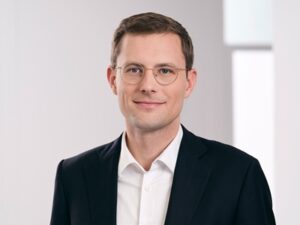
- Jonas Thelemann
A UK team from CMS Cameron McKenna Nabarro Olswang is handling EP 016.
DSM filed the oppositions against all three patents at the EPO with the support of Jonas Thelemann. He is a patent attorney and partner at Kraus & Lederer. His patent firm has a long-standing partnership with the chemical company in EPO oppositions and patent filings.
However, DSM also works with other patent firms in Europe. These relationships are not immediately apparent in the EPO register, however, because the company usually files European patents under its own name.


