Court of Appeal grants FujiFilm an injunction against Kodak after all
Kodak is prohibited from using certain Sonora-type printing plates in Germany. This was the ruling handed down yesterday by the Court of Appeal of the UPC, on the grounds that these plates infringe a FujiFilm patent. In doing so, the court once again overturned a ruling by the Mannheim local division in this dispute. The Court of Appeal judges also declined to grant an injunction for the UK in these proceedings.
14 July 2026 by Mathieu Klos

In October 2023, FujiFilm had brought a claim against Kodak before the Unified Patent Court, citing three patents. At the heart of the claims were Kodak’s Sonora X, Sonora Xtra-2 and Sonora Xtra-3 offset printing plates. FujiFilm focused in particular on the surface of the printing plates, as these allegedly infringe its patents. During the course of the proceedings, a claim brought by FujiFilm before the Düsseldorf local division was not pursued any further. The dispute subsequently centred on the two claims before the Mannheim local division.
Two and a half years later, it has now been established that Kodak’s printing plates infringe FujiFilm’s EP 3 476 616 and may no longer be sold in Germany. This was the ruling handed down yesterday by the UPC Court of Appeal in the second of two cases between the Japanese and German manufacturers of printing products (case IDs: UPC_CoA_473/2025, UPC_CoA_474/2025, UPC_CoA_873/2025 and UPC_CoA_881/2025).
EPO limits patent
The Luxembourg judges thereby largely overturned the ruling of the Mannheim local division. The Mannheim judges had revoked EP 616 on the grounds of lack of inventive step. However, following the first-instance ruling, FujiFilm asked the European Patent Office to limit EP 616 in summary proceedings. The EPO complied with this request.
At the Court of Appeal’s hearing in late March, FujiFilm did everything in its power to convince the panel EP 616 had been wrongly revoked by the Mannheim judges and that Kodak’s printing plates infringe the limited patent. Kodak argued that the patent remains invalid and that FujiFilm’s approach of limiting EP 616 is not permissible.
-

- Rian Kalden

-

- Patricia Rombach

-

- Ingeborg Simonsson

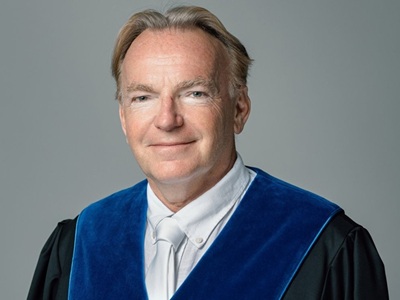
In the end, however, FujiFilm largely persuaded the second panel, presided over by judge Rian Kalden, who also served as judge-rapporteur. EP 616 is valid and Kodak’s printing plates infringe the patent. Alongside Rian Kalden, the legally qualified judges Patricia Rombach and Ingeborg Simonsson also took part in the judgment. Max Tilmann and Lorenzo Parrini are the technically qualified judges in the cases.
Surprising turnaround
However, the judges rejected an injunction for the UK, as sought by FujiFilm. FujiFilm was unable to prove that the Kodak companies had infringed the UK patent. Nevertheless, the UPC’s long-arm jurisdiction for infringement in EPO member states that are not members of the UPC remains in place.
-

- Max Tilmann

-

- Lorenzo Parrini
This comes as no surprise, as just over a month ago the same panel had confirmed this long-arm jurisdiction in the parallel dispute between FujiFilm and Kodak.
In early July, the parallel case between FujiFilm and Kodak took a surprising turn. The UPC Court of Appeal dismissed the injunction against Kodak concerning EP 174. The judges of the same panel ruled in early June that Kodak no longer infringes FujiFilm’s EP 3 511 174 and can therefore continue to manufacture and sell its planographic and lithographic printing plates in Germany and the UK (case IDs: UPC_CoA_312/2025, UPC_CoA_880/2025, UPC_CoA_333/2025, UPC_CoA_882/2025).
No injunction for the UK
Although the injunction for the UK was thus off the table, the Court of Appeal judges nevertheless confirmed the UPC’s long-arm jurisdiction for the first time. In this judgment, the judges also developed a general framework for the UPC’s international jurisdiction over patents outside the UPC’s territory. This is likely to affect the key sales markets of the UK, Spain, Poland, and Switzerland in particular.
Under certain conditions, the UPC may also rule on patent infringements of the national parts of a European patent outside the UPC’s territory. However, this is subject to the defendant company being based in a UPC member state.
Overall, the UPC Court of Appeal has now defined the basic principles for long-arm jurisdiction claims before the UPC in this dispute. At the same time, the Court of Appeal overturned both judgments of the Mannheim local division. The bottom line is that FujiFilm now retains the injunction in Germany based on EP 616.
Freshfields vs Kather Augenstein
In the Court of Appeal proceedings, FujiFilm relied on Kather Augenstein. Christof Augenstein led the team, which also comprised partner Sören Dahm and counsel Robert Knaps, as well as Nicole Schopp, Benedikt Walesch, Arne-Steffen Kamps, Carsten Plaga, and Christoph Heringlake. Patent attorneys Martin Herzog and Ansgar Hakvoort from the Düsseldorf headquartered firm Herzog IP were also involved in the UPC appeal proceedings. At first instance, FujiFilm had relied on Hoyng ROKH Monegier.
-

- Christof Augenstein

-

- Sören Dahm

-

- Martin Herzog

Throughout the proceedings, Kodak had relied on a German-English team from Freshfields, which had subsequently successfully challenged the injunction in Germany and the UK concerning EP 174. Partners Nina Bayerl and Wolrad Prinz zu Waldeck und Pyrmont pleaded the case at the Court of Appeal. The team also comprised Eva Acker, Kilian Seidel, Elena Hennecke, as well as Carlotta Mannes, Anton Porsche, and Yordan Terziev.
-

- Nina Bayerl

-

- Wolrad Prinz zu Waldeck und Pyrmont

-

- Christopher Stothers

A small London team led by partner Christopher Stothers played a part, with associates Katherine Dudman and Matthew Andrews assisting. The Vossius & Partner patent attorneys Natalia Berryman and Ursula Schnackenbeck provided technical support for Kodak throughout the proceedings.