Kodak and Freshfields turn long-arm jurisdiction case against FujiFilm around
It's a surprising twist in the case between Fujifilm and Kodak over printing technology. The UPC Court of Appeal yesterday dismissed an injunction issued by the Mannheim Local Division against Kodak. Fujifilm is therefore no longer entitled to an injunction in Germany and the UK. Nevertheless, the long-arm jurisdiction of the UPC for EPO states that are not members of the UPC remains in place.
3 June 2026 by Mathieu Klos

Kodak does not infringe FujiFilm’s EP 3 511 174 and can therefore continue to manufacture and sell its planographic and lithographic printing plates in Germany and the UK. This is the decision of the second panel of the Court of Appeal (case IDs: UPC_CoA_312/2025, UPC_CoA_880/2025, UPC_CoA_333/2025, UPC_CoA_882/2025). The judges around presiding judge Rian Kalden set asside the previous injunction of the Mannheim local division.
In April 2025, the Mannheim judges found EP 174 valid and infringed. They ordered Kodak to cease and desist and pay high damages in Germany. Since Fujifilm had also asked the court for an injunction in the UK, the Mannheim judges had separated the UK portion and jurisdiction decision early on.
In the course of the proceeding they rendered a secound decision, extending the April ruling on EP 174 to the UK. These rulings were subject to the Court of Appeal’s hearing in late March.
Surprising turnaround
In the two-day hearing in Luxembourg, nothing that was said suggested that the Court of Appeal judges would overturn the injunctions at first instance.
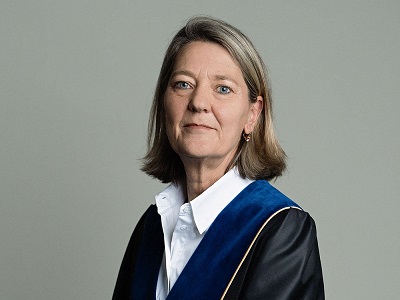
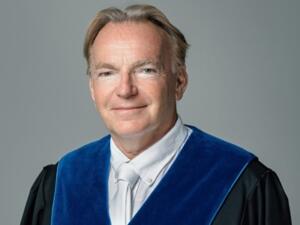
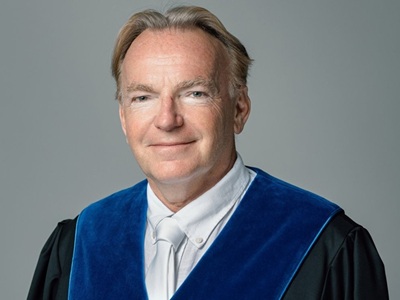
In addition to presiding judge and judge-rapporteur Rian Kalden, the panel also included Patricia Rombach and Ingeborg Simonsson by default. Two technically qualified judges assist, in this case Max Tilmann and Lorenzo Parrini.
-

- Rian Kalden
-

- Patricia Rombach

-

- Ingeborg Simonsson

According to the Court of Appeal, Kodak can now surprisingly invoke private prior use in Germany after all. The Mannheim judges had taken a different view. With regard to the injunction in the UK, Fujifilm failed to sufficiently prove infringement by the three Kodak companies sued. Furthermore, the Court of Appeal judges did not recognise joint tortfeasorship of the Kodak companies.
FujiFilm has a second chance
However, Kodak failed with its revocation attack against EP 174 and the Court of Appeal judges upheld the patent.
-

- Max Tilmann

-
- Lorenzo Parrini
The cross-appeal in the second proceedings between FujiFilm and Kodak for infringement of EP 3 476 616 was heared together with EP 174. In this case, the Mannheim judges had revoked EP 616 due to lack of inventive step. in the Hearing FujiFilm fought fiercly to turn around the case. But others then the cases regaring EP 174 it was not decided by the Court of Appeal yesterday (case IDs: UPC_CoA_473/2025, UPC_CoA_474/2025, UPC_CoA_873/2025 and UPC_CoA_881/2025).
For FujiFilm it will now be important that the Court of Appeal turns this judgement into an injunction against Kodak. It is not known when the Court of Appeal will publish this judgement.
Yes to long-arm jurisdiction
In few other judgements has the Court of Appeal dealt with so many fundamental legal questions. In 19 headnotes, the judges deal with the topics of claim construction, private prior use, frontloaded proceedings and joint tortfeasorship, but above all long-arm jurisdiction.
The Court of Appeal has now confirmed the jurisdiction of the UPC for the British validation of EP 174 and thus, in large part, the first instance decision of the Mannheim local division.
The judges have also developed a general concept for the international jurisdiction of the UPC for patents outside the UPC territory. This is likely to affect the important sales markets of the UK, Spain, Poland and Switzerland in particular.
Under certain conditions, the UPC can also decide on patent infringements of national parts of a European patent outside the UPC territory. However, the prerequisite is that the defendant company is based in a UPC country.
Restraint and clear rules
Under the conditions of the Brussels Ia Regulation, the UPC may exercise its jurisdiction beyond its own territory. Kodak had vehemently argued that the UPC was only responsible for the UPC parts of European patents.
However, the judges also make it clear that the UPC must apply this international jurisdiction beyond its borders with restraint. The UPC must not only apply the applicable national patent law, but also international principles such as “comity”.
In a total of 14 headnotes, the judges set out specific procedural rules for various groups of cases in which long-arm jurisdiction is requested by the claimant. There is no automatic jurisdiction of the UPC for national parts of a European patent outside the UPC territory.
For example, the UPC does not have jurisdiction for isolated nullity actions against European patents outside the UPC territory.
Freshfields vs Kather Augenstein
In the Court of Appeal proceeding FujiFilm relied on Kather Augenstein. Christof Augenstein lead the team, which also comprised partner Sören Dahm and counsel Robert Knaps, as well as Nicole Schopp, Benedikt Walesch, Arne-Steffen Kamps, Carsten Plaga, and Christoph Heringlake.
-

- Christof Augenstein

-

- Sören Dahm

-

- Martin Herzog

Patent attorneys Martin Herzog and Ansgar Hakvoort from Düsseldorf Düsseldorf- headquartered firm Herzog IP were also involved in the UPC appeal proceedings.
But the victory in the first of two decisions was surprisingly won by Freshfields alongside Kodak. Partner Nina Bayerl and Wolrad Prinz zu Waldeck und Pyrmont pleaded the case at the Court of Appeal. The team also consisted of Eva Acker, Kilian Seidel, Elena Hennecke as well as Carlotta Mannes, Anton Porsche and Yordan Terziev.
-

- Nina Bayerl

-

- Wolrad Prinz zu Waldeck und Pyrmont

-

- Christopher Stothers

A small London team led by partner Christopher Stothers played a role, with associate Katherine Dudman and Matthew Andrews assisting.
The Vossius & Partner patent attorneys Natalia Berryman and Ursula Schnackenbeck provided technical support for Kodak in all proceedings.