Agfa loses most of leather decoration patent on appeal against Gucci
Gucci has not infringed Agfa's patent for a technique used in printing on leather. The UPC Court of Appeal now confirmed this part of a first instance judgement of the Hamburg local division. At the same time, the court has partially revoked Agfa's patent.
27 October 2026 by Konstanze Richter
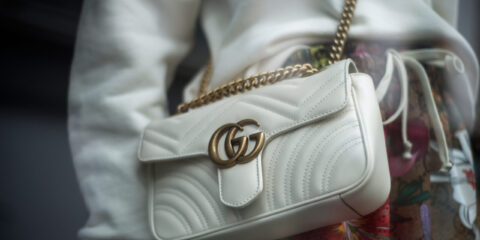
In a recent decision, the UPC Court of Appeal set aside in part the first-instance ruling of the Hamburg local division. The appeal panel under court president Klaus Grabinski revoked large parts of Agfa’s EP 3 388 490, for the territories of Belgium, France, Germany, Italy and Sweden, finding most claims not novel in view of Gucci’s own prior-used “Flora” products. Furthermore, the court dismissed Agfa’s infringement appeal, confirming that Gucci’s Pikarar Collection does not infringe the remaining claims (case ID: UPC_CoA_582/2025).
The patent-in-suit covers a manufacturing method for decorating natural leather with a decorative image. It involves the application of a base coat containing a pigment for an achromatic colour different from black, followed by inkjet printing a colour image using UV curable inks. Agfa had sued nine Gucci subsidiaries in 2023, alleging that products from Gucci’s Pikarar Collection infringed the patent.
The Hamburg local division had dismissed both the infringement action and Gucci’s counterclaims for revocation in April 2025. Both parties appealed.
Flora Products as prior use
The appeal turned largely on Gucci’s argument that its own “Flora” range of leather products, including a wallet manufactured and sold before the patent’s filing date in April 2017, anticipated the claimed method. The Court of Appeal found that the Flora Wallet disclosed all features of claim 1, including the use of a base coat with an achromatic colour different from black and the use of pigmented UV curable inkjet inks.
A central point concerned the standard for public prior use. The Court of Appeal clarified that a manufacturing method of a publicly used product is made available to the public under Art. 54(2) EPC if the skilled person could establish the method without undue burden by analysing the product’s composition. The judges expressly rejected Agfa’s argument that an additional requirement should apply, namely that the skilled person would need particular reasons to analyse the product. The court further held that reproducibility of features which are not part of the claimed invention is not required.
Based on analytical reports examining the Flora Wallet through microscopy, infrared spectroscopy, gas chromatography, mass spectrometry and Raman spectroscopy, the court concluded that the skilled person could detect the use of UV curable inkjet inks and pigmented inks. Accordingly, independent claims 1, 10, 14 and 15 and several dependent claims were found to lack novelty.
Partial survival and claim construction
The court upheld claim 5 in combination with claim 1. It also upheld claim 9, concerning heat pressing of the printed leather, and dependent claims 6, 7 and 8 insofar as they depend on claim 5. The judges found that Japanese prior art and a US patent, cited by Gucci, did not anticipate these claims.
Significantly, the Court of Appeal disagreed with the Hamburg division’s interpretation of the term “achromatic colour”. The first instance had adopted a narrow reading. It excluded base coats containing a combination of chromatic and ac’hromatic pigments providing an off-white colour. The appeal court held that an achromatic colour within the meaning of the patent is not restricted to a theoretically perfect achromatic colour. The judges’ panel noted that in the context of luxury leather goods, warmer whites are commonly used.
On the infringement side, the court confirmed that Agfa had not demonstrated that the inks used in the attacked Gucci products contained polyfunctional monomers or oligomers in the range of claim 5. The judges also rejected Agfa’s reference to the flexibility of the leather and its reliance on a reversal of the burden of proof under Art. 55 UPCA.
The appeal panel ordered Agfa to bear the full costs of both the infringement action and the counterclaims for revocation at both instances, setting the total value of the appeal proceedings at €2.5 million. The Hamburg division had originally apportioned 60% of the costs to Gucci.
Continued representation
Agfa continued to rely on the team from Vossius Brinkhof UPC Litigators that led the case at first instance under Daan de Lange. On the lawyer’s side he worked with Brinkhof counsel Alexander de Leeuw and associate Isabelle Kleinveld as well as Vossius counsel Leonie Dißmann-Fuchs. The patent attorney team consisted of Vossius’ partners Stefan Fickert and Elard Schenck zu Schweinsberg and patent attorney Ananda Landwehr.
Hans Louis Strijckers handled the case in-house as head of department at Agfa.
-

- Benjamin Schröer
-

- Daan de Lange
-

- Andreas Schmid
-

- Elard Schenck zu Schweinsberg
Gucci was again represented by a Hogan Lovells Cadwalader team led by Munich-based partner Benjamin Schröer as infringement lead and Andreas Schmid as validity lead. The team included Luigi Mansani and Andrea Schettino from the Milan office and Alexander Lebschy and Wolfgang Schulz from Munich. The client relationship with Gucci originated from soft IP work.