110+ attorneys later: what AI taught a 120-year-old firm about judgment
Plasseraud IP marks 120 years in 2026, and its 110+ patent attorneys and engineers now work with AI. Nearly three years into that bet, the most useful lesson is not about speed. It is about where judgment sits in a firm, and how the next generation of attorneys will build it.
28 October 2026 by DeepIP
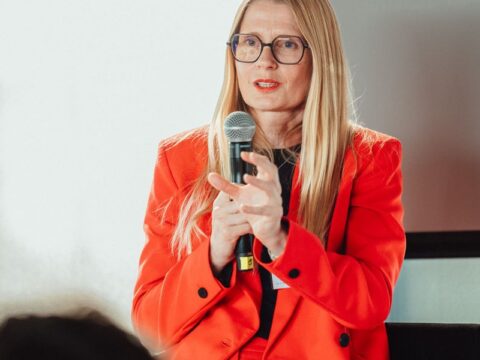
By Ina Schreiber, Partner, Head of Patent Department and Board Member, Plasseraud IP
A firm does not last 120 years by standing still. Founded in 1906 as a technical bureau for industrial property, Plasseraud has lived through every change in how inventions are protected. Plasseraud IP was one of the first firms to adopt electronic filing as early as 2004, and moved towards paperless files before 2010. AI is the latest of these shifts, and the one that touches the core of our work most directly: the drafting itself.
When we started working with AI in 2024, we chose DeepIP, an AI patent platform, and rolled it out across our patent practice. We expected the usual adoption curve. Younger attorneys, at ease with new tools, would lead. Senior attorneys would follow, cautiously, if at all.
We were wrong. When we surveyed attorneys across the firm in January 2026 on the adoption of AI tools for substantive patent work, the most frequent users were our senior attorneys. They also used AI across the widest range of tasks.
Our reading is simple. An experienced attorney can judge a draft claim or a prior art summary at a glance. They know what a good output looks like, so they can use AI as a fast first pass and correct it quickly. Seniority was not resistance. It was the condition for getting value.
Why we stopped counting hours
The obvious question after three years is how much time we have saved. We do not have a clean answer, and we have stopped looking for one. Every matter is bespoke. There is no standard, repeatable task to time before and after.
So we look at other signals: whether attorneys keep using the tools once the novelty has passed, how deeply they use them, and how the same attorney’s work evolves over time. On that measure, the answer is clear: our 110+ attorneys and engineers now work with AI.
What did not go as planned
Our patent practice is organized in four practice groups: life sciences, chemistry, IT, and mechanics. Adoption was not even across them. For a long time, our chemistry and life sciences teams used AI mainly for prior art summaries, not for drafting. The reason was legitimate: the tools did not yet handle the specifics of their fields, from Markush structures to biological sequences.
Rather than wait, we worked with DeepIP’s team on what our chemists needed, and I joined the company’s Product Advisory Board to bring the questions of chemistry and life sciences practitioners directly to the people building the tool. Support for sequences, chemical structures and Markush claims is now part of the platform, and our chemistry and life sciences teams are being trained on it.
The lesson for us: adoption does not follow a firm-wide decision. It follows the moment a tool earns the trust of each specialty, on its own terms.
The question we have not solved
If senior attorneys get the most out of AI because they can judge its output, a harder question follows. Where will the next generation build that judgment?
Patent attorneys have always learned by doing the heavy lifting themselves, drafting claims from scratch, wrestling with the prior art, and being corrected over red-penned drafts. In the era of AI, the line between what can be delegated and what must be understood firsthand is unforgiving. If a junior practitioner delegates that initial intellectual struggle to a machine, they risk skipping the very reps that build seasoned instinct.
This is our next frontier. To claim we have it all figured out would be dishonest, but we are actively testing and evaluating different approaches to training and supervision. Because judgment remains the single indispensable condition for successful AI adoption, protecting how it is cultivated in junior attorneys is not just an internal training concern, it is an existential question for the profession.
At a panel in Munich last July, I said that AI will make us fly. I still believe it. Today, I would add one thing: how high we fly depends less on the tool than on the judgment of the people using it.
These questions reach beyond one firm. On November 19 in Paris, together with DeepIP and JUVE Patent, we will put them to peers from private practice and corporate IP departments.
Join the conversation in Paris
Beyond the pilot: How IP teams turn AI into lasting value
Thursday, November 19, 2026, from 4:00 pm
Morning Concorde, Grand Salon, 4 rue Royale, Paris
Three panel discussions, each bringing together a law firm and an in-house IP team, moderated by Mathieu Klos of JUVE Patent, followed by a standing dinner above the Place de la Concorde. Hosted by Plasseraud IP and DeepIP, with JUVE Patent as media partner.
By invitation, in English, free of charge. Seats are limited and every request is reviewed by the hosts.