United in hope and fear at the AIPPI World Congress
AI applications are becoming increasingly prevalent in the world of patents. This was also evident at this year’s AIPPI World Congress in Hamburg, which drew to a close on 10 October. It was not topics such as patentability, the UPC or arbitration in SEP disputes that were the number one talking point, but rather how to deal with this new cutting-edge technology.
19 October 2026 by Mathieu Klos
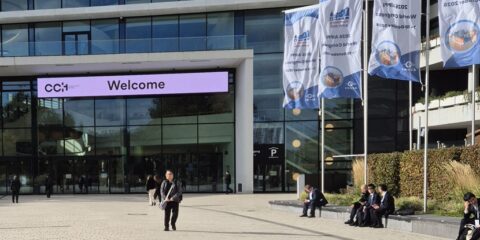
At this year’s AIPPI World Congress in Hamburg it was clear the global patent community is preoccupied with the use of AI. This was most evident during the 30-minute AIPPI Café session on the topic “AI, TK and the ‘Derivative Knowledge’ Dilemma: When algorithms learn from culture”. Initially, the discussion focused primarily on technical and practical considerations regarding the use of AI applications.
One question raised was which tools were used most frequently. A spontaneous poll revealed that the approximately 30 participants most commonly use general AI tools. Only five use IP-specific AI solutions. Most participants use AI tools on a daily basis. Applications based on Anthrophic’s Claude AI are used particularly frequently. Applications based on ChatGPT, Gemini, and Copilot are also common. It was also interesting to note that, for many participants, the impetus to use AI stemmed more from the wider corporate environment or a personal initiative, rather than directly from the IP department.
The question of how to implement AI applications into the day-to-day work of law firms and in-house departments also featured prominently. One of the participants reported that, in her company’s patent department, one person was tackling the topic with particular vigour and was helping the rest of their colleagues greatly with their knowledge. A lawyer commented that this person was probably a young employee. The discussion then became somewhat heated. “No,” the in-house lawyer dismissed the suggestion. “He’s an older gentleman approaching retirement.” The other participants reacted with embarrassed giggles, and from then on the conversation centred on how to implement AI applications into business processes and take staff with them on this journey into the unknown.
The right culture
The participants then expressed their views on fundamental issues of culture and leadership. Several participants reported that employees had already resigned because they did not want to use AI. Others had moved to AI development firms to contribute their IP expertise to the advancement of relevant tools. It quickly became clear that the concern over how to recruit, train, and motivate staff is just as crucial as choosing the right tool. For many participants, it was also still unclear how to align these tools and the way they are used with the culture of a law firm or in-house legal department. One participant asked, with some concern, how one should motivate colleagues when one is unsure whether one’s own job is secure.
The programme entailed six different sessions. Most were shorter, 30-minute consultation sessions on the following topics:
- Breakfast Meeting on AI, IT and the Internet
- Pharma Session III – From Code to Cure: Navigating AI-driven Biotech Innovation
- AIPPI Café: AI, TK and the ‘Derivative Knowledge’ dilemma. When algorithms learn from culture
- IHC Café: AI tools for supporting an IP practice
- Panel Session IV – Does anything under the sun created by humans deserve protection? Human creation with AI
- SGT Café: Agentic AI for IP professionals
Thursday 8 October turned out to be the main day for AI. Five of the six events were spread throughout the day. Only the topic “Agentic AI for IP professionals” was discussed on the Friday.
A hot topic at the social events
Thursday was also the designated day for law firms to host their receptions. Once the official discussions had concluded, many conversations at these events also focused on AI. “I haven’t been to a single reception where the attendees weren’t discussing AI,” said a German lawyer the following morning. “AI was the big elephant in the room.”
But unlike in the official consultations during the day, participants were significantly more critical of the use of AI over wine, canapés, and music. Many lawyers are not yet personally convinced by artificial intelligence. Deep down many even reject it outright because they feel AI is progressing too fast and it is unclear what consequences this will have for their own lives and the IP profession.
Lawyers in private practice are concerned about whether they will be able to recoup the high investments in AI tools from their clients, or whether these will merely lead to greater efficiency and quality. However, this group finds the uncertainty about how to train the next generation of lawyers – and whether there will still be enough potential partners – particularly pressing.
Next level agentic AI
The following morning at the SGT Café Agentic AI for IP Professionals, the discussion took a decidedly more fact-based turn. Here, the challenges involved in using AI-agent-based applications were discussed. The majority of participants expressed the hope that AI agents could help organise workflows within their law firms and departments, particularly when dealing with the ever-increasing volume of information, data, and documents.
Although many participants remain personally sceptical about AI applications, it became clear during the discussions that these are already easing the burden of day-to-day work and are perceived to be improving the quality of work. The discussions also focused exclusively on applications in patent prosecution. The impact on patent litigation is still minimal and was scarcely discussed.
Next stop Mexico City
AIPPI has already adopted several resolutions, such as the one on “AI & Copyright”, which proposes a comprehensive legal framework for the use of copyrighted works in the training of AI. Two earlier resolutions address the topics of inventorship and inventive step and disclosure from a patent law perspective.
In Hamburg, discussions also took place at the highest level regarding what AI and agentic AI systems could mean for a patent system traditionally centred on human creativity and inventiveness. EPO President Campinos took part in a roundtable in Hamburg, joined by the President of the German Patent and Trade Mark Office Eva Schewior, UPC President Klaus Grabinski, the Director of the IP, Government Procurement and Competition Division at the WTO Tanuja Garde, and President of the UPC’s PMAC Aleš Zalar.
Overall, the World Congress in Hamburg focused more on the exchange of experiences between participants and various professional groups from all participating countries. It was reported that a resolution on the topic of agentic AI and IP is in the pipeline. However, case studies will first be used to lay the foundations for subsequent consultations. The Standing Committee on AI, IT and the Internet will revisit the topic as early as the mid-term meeting in Mexico City in February 2027.
