Luke Minford: “90% of IP strategy advice disappears into this incredibly fragmented network of service providers”
Nearly a year after Arnold & Siedsma joined private-equity-backed IP group Rouse, JUVE Patent spoke with Rouse CEO Luke Minford. In this extract, Minford shares his views on AI, his vision for the IP firm of the future, and what drives him personally. The full interview, in which Minford reflects on Rouse’s first year with Arnold & Siedsma, its long-term strategy and the opportunities and hurdles facing the group in Benelux and Germany, can be read in JUVE Patent's exclusive PaceMaker newsletter.
23 September 2026 by Christina Schulze

JUVE Patent: What investments in AI do you think are necessary?
Minford: I think there are three levels. The first is foundational infrastructure, that is creating a single source of truth for all data. The second is the transformation level, which means changing the way you work with AI and with technology, so that you can deliver the benefits to your clients, but also to your teams in terms of productivity, efficiency, quality, etc. The third level is to help you solve problems for clients at a level of complexity and speed that we never had before. Clients will want a solution that is multi-geographic and multi-dimensional.
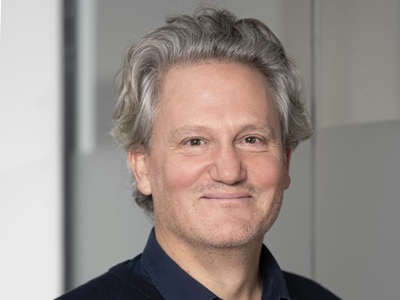
Luke Minford
JUVE Patent: What do you think IP business will look like five years from now?
Minford: My view, and I believe this view is shared widely by the businesses that have joined the Rouse Group, is that the value proposition of an IP professional is going to transform. I believe there will be more IP professionals in five years than there are today. The value they deliver and the way they solve problems will fundamentally transform. Expertise and judgment will always play a role, but these will be combined with data and technology, and at a scale and level of complexity that is beyond the way we have solved problems historically. It will be more multinational, more multi-domain, and much more integrated. And we will be solving problems much faster.
I believe about 5 to 10% of IP strategy is effectively implemented currently. 90% of IP strategy advice disappears into this incredibly fragmented, dislocated, global network of IP service providers and stakeholders all around the world. And these assets that we are responsible for are about 80 to 90% of the value of these companies.
“In the future, those silos of expertise will not be enough”
But they are only effectively translating good strategy into a very small percentage. Imagine when that percentage starts to reach 70, 80, 90%, where the speed, the ability to execute and deliver starts to reach a much higher level. And that’s where I think the value we can bring to companies will be at an exponentially higher level than it is today.
JUVE Patent: What is the role of IP law firms in this new eco system?
Minford: Until this age of technology, data and AI, human expertise used to be enough to deliver value to clients. And that expertise has very much been defined by domain and geography. In the future, those silos of expertise will not be enough. They will need to be connected through data, and that connection will be unimaginably fast. Clients will then be able to address things at a much higher level of complexity. If you do not have the ability to connect your expertise and capabilities with everything else at speed, I just don’t see how you will be able to serve your clients well.
JUVE Patent: What are the main hurdles?
Minford: You need a vision. You need clarity as to what are we trying to achieve. For us at Rouse, we considered that we have Asia, and real strength in brands and trademarks. But we need to be stronger in Europe and in patents and technology services. So we needed to get those foundations in place and make sure everyone has the same vision as to what we’re trying to build.
“We consciously brought investors in as a minority”
We needed to ensure we have a common set of behaviours and a common culture to underpin that. The final foundation was capital. But we consciously brought investors in as a minority because this is such a specialised profession and we need to make sure we are the ones driving the strategy and setting the pace and priorities.
JUVE Patent: Where does the current high level of interest from private equity in the IP business come from?
Minford: There is huge interest in business services now. Accounting, legal and consulting services have all seen significant investment in the last few years. IP is interesting because it’s regional and global. But it’s also very fragmented, so there’s a big opportunity for somebody to build a connected global capability. However, there are lots of barriers that you’ve got to overcome, so the barrier to entry is high. It requires a brave firm to tackle these challenges. For Rouse that is a great thing because we’ve always seen ourselves as pioneering and willing to address challenges. As a sector, I think IP services really benefit from investment in tech and data.
JUVE Patent: If you were to do it all again, would you still choose IP law?
Minford: Absolutely I would, but I’d be extremely careful in where I started and want to make sure it was with a firm that had a clear vision and strategy, with proven leadership to drive it forward and the capacity to invest over the long-term. Knowing what I know now, I’d also probe deeply on what makes the firm different and how they see that differentiation helping clients. So many firms think they’re different but when you scratch the surface they offer the same thing as everyone else.
“So many firms think they’re different but they offer the same thing as everyone else”
Funnily enough, it’s why I first joined Rouse nearly three decades ago, because I saw them doing something totally different from other firms, expanding into Asia in the nineties and being bold about having a totally different culture to most other law firms in the UK.
JUVE Patent: What advice would you give to university graduates in light of these massive changes?
Minford: First, I’d give them confidence that they’re entering a profession that will only grow in importance and value. What we do is critical to enabling innovative companies to compete and that criticality is only growing. Second, I’d encourage them to learn how to connect their knowledge and expertise to a broader business context, to other forms of control beyond just IP and in other jurisdictions and markets beyond their own.
“Graduates will see the critical role of data and AI in enabling connectivity to happen”
If they can show that they understand the value of this connectivity then they will fly. They’ll also then see the critical role of data and AI in enabling that connectivity to happen, rather than seeing it as a simple efficiency tool for their own expertise. Finally, I’d encourage them to be bold and not blindly follow a career path just because others before them have trodden it down.
The full interview is available in JUVE Patent’s PaceMaker. Our premium newsletter provides original reporting and background on developments that matter to leading patent practices in Europe. Sign up for a free trial and discover PaceMaker.