“Forum shopping is the plaintiff’s prerogative”
The Düsseldorf Regional Court recently recorded another decline in the number of patent cases. A visible effect of this is the closure of the 3rd chamber. After several patent judges transferred to the UPC, Tilmann Büttner and Carsten Haase took over the chairmanship of the remaining chambers 4a and 4b. JUVE Patent spoke to them about the court and the challenges posed by the UPC.
27 February 2026 by Konstanze Richter
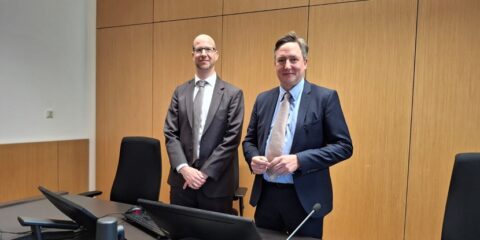
JUVE Patent: The number of newly filed patent cases at Düsseldorf Regional Court has been declining for several years. What does this mean for Düsseldorf as a patent location?
Carsten Haase: Fortunately, this does not change the way we work. Our specialisation is not called into question by the drop in the number of new cases. One positive effect, however, is that the reduced number of cases filed has reduced the time it takes to complete proceedings and thus speeded them up. Currently, the time from filing a lawsuit to judgment is less than a year. That is, if service on international defendants can be managed quickly. However, the latter is beyond the control of the court.
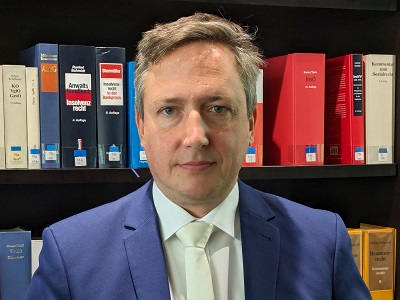
Tilmann Büttner
The UPC’s local division in Düsseldorf recently opened a second panel. The increasing number of cases at the UPC is likely to lead to a further exodus of judges. What effect do you see this having on national jurisdiction?
Tilmann Büttner: First of all, I am a little proud that so many experienced judges from Düsseldorf work at the UPC. But it’s not just since mid-2023 that Düsseldorf patent judges have been moving to other locations. Before that, renowned judges often went to the Federal Court of Justice. Among them are Peter Meier-Beck, Klaus Grabinski or Tim Crummenerl.
Carsten Haase: So far, we haven’t had any problems promptly appointing new judges to the chambers who themselves have several years of experience in patent law. Despite the departures, the level of experience and age structure of judges in patent law is no different today than it was 10 years ago. If a third chamber were to be opened again right now, we would have no difficulty staffing it with qualified and experienced judges.
How attractive is a career at the Regional Court for young judges in the long term i.e. not just as a stepping stone to the UPC?
Carsten Haase: Even though the internationality of the UPC is certainly very appealing, it also makes personal interaction among judges more difficult, as they do not sit together permanently in one place, depending on the location and set-up of the panel. At the Regional Court, by contrast, we enjoy personal contact with other judges in our daily work; only a few of us work extensively from home.
“The UPC is like a large law firm: fast, digital, and anglophone”
Tilmann Büttner: What further distinguishes us from the UPC is that, as national judges, we act in a sovereign capacity. We issue enforceable orders. I find that very appealing, and it entails a high level of responsibility. Compared to our work, the UPC is like a large law firm: fast, digital, and anglophone. At national courts, it is institutionally possible for us to take more time. I feel very comfortable at the Düsseldorf Regional Court.
What influence does the UPC and its case law have on your work?
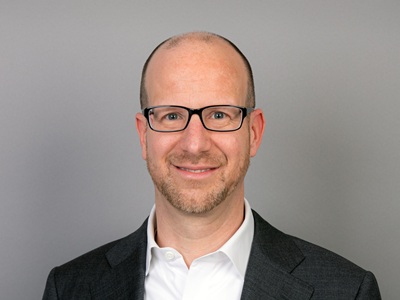
Carsten Haase
Tilmann Büttner: The case law of the UPC, alongside that of other national courts, is another source of inspiration. In February of last year, for example, the UPC Court of Appeal fundamentally addressed the principles of patent claim interpretation —principles that in practice hardly differ from ours (case ID: UPC_CoA_335/2023). One example of practical inspiration is the fact that the UPC has relied on fixed deadlines from the outset. This has once again made us realise how important the factor of time is in patent law cases, since patents are only valid for a limited period. However, it must also be said that the benchmark of a one-year duration for proceedings is as old as the judiciary itself. We record proceedings lasting longer than one year separately in our statistics.
In recent years, the Munich Regional Court has positioned itself very prominently beyond Germany with proceedings relating to SEP/FRAND. What opportunities to increase the international perception of Düsseldorf do you see?
Carsten Haase: I believe that through the many international cases we decide, we are certainly perceived beyond Germany as well. When someone presents us with a case, we make decisions to the best of our knowledge and belief – that’s all we can do as judges. In doing so, we do not consider how we position ourselves vis-à-vis our colleagues in Munich or at other courts. But of course we take note of the decisions of other courts and maintain an exchange, particularly with the appellate instance, not least to ensure that our decisions stand up on appeal. However, it is important that this is not about distinguishing ourselves from other locations. We, too, have had one or two cases in Düsseldorf in recent times involving SEPs and FRAND issues. However, the parties tended to settle these cases, so the court did not issue a statement.
Tilmann Büttner: We therefore do not pursue a clear positioning with regard to specific technologies. In the judiciary of North Rhine-Westphalia, work is carried out properly and without pretension. If plaintiffs choose a different court as a result of forum-shopping, that is their prerogative.
The interview was conducted by Christina Schulze and Konstanze Richter


