Boutiques and international firms still neck and neck at UPC
The new JUVE Patent UPC ranking has once again sparked debate over whether litigation teams in major international law firms or IP boutiques are leading the pack. While the number of boutiques visible in UPC litigation is growing, specialised firms have yet to pull ahead of their larger international counterparts.
16 December 2025 by Mathieu Klos

For years, it has been a constant sticking point among industry experts whether highly specialised IP boutiques are dominating the European patent litigation market or the patent teams at international firms.
In the early 2000s, a senior partner from a German team that had recently joined a leading UK full-service practice predicted the demise of specialised boutiques in patent law. But the boutiques have by no means disappeared from the scene.
On the contrary, in its latest UPC ranking, JUVE Patent ranked more specialised outfits than in the previous year. Of the 43 ranked patent litigation teams from Europe, 28 identify as boutiques with a clear focus on IP law. Some are also active in neighbouring segments.
Ten of the firms stem from international mergers, such as Freshfields and Bird & Bird, which predominantly offer full-service advice with patent litigation just one of many areas.
Meanwhile, Hoyng ROKH Monegier represents the intersection of the two predominant types of law firms. It is internationally positioned with offices in Germany, France, Belgium, Spain, and the Netherlands, but its range of advice is highly specialised in IP law. Only four patent teams in the JUVE Patent UPC ranking are part of national full-service firms.
Stalemate at the top
Those at boutique firms regularly dismiss patent litigation teams in major international law firms as “pure support teams” for the dominant M&A practices. “Too unprofitable” or “hardly any partner prospects for younger lawyers” are common arguments against the long-term success of patent teams in large law firms.
Such preconceptions trace back to the early 2000s, when Clifford Chance and Linklaters, driven by profitability concerns, significantly downsized their robust IP teams — particularly in Germany. Since then, both firms have reinvested heavily, rebuilding their patent litigation teams into strong and successful UPC teams. Meanwhile, numerous full-service US firms are now eager to enter the European market and claim a share of the increasingly attractive UPC business.
A look at the top tier in the UPC ranking shows that the race between boutiques and international outfits is far from over. Bird & Bird and Hogan Lovells exemplify internationally integrated firms leading the charge. On the boutique side, Bardehle Pagenberg and Kather Augenstein stand as a formidable counterweight, while Hoyng ROKH Monegier cannot be attributed to either side.
The second tier of the ranking is no different. Freshfields and Taylor Wessing are matched by UK boutique Powell Gilbert and the collaborative Vossius & Brinkhof UPC litigators. The latter is an alliance formed by two specialist firms—Vossius & Partner from Germany and Brinkhof from the Netherlands. Although financially independent, they operate jointly under a single brand for UPC matters.
A question of faith
When it comes to presenting themselves as the most attractive option for clients, both types of law firms highlight their respective strengths. Boutiques emphasise their deep expertise and competitive cost structures. They often point out their flexibility in collaborating with top specialists from other jurisdictions, particularly in cross-border or UPC matters, tailoring teams precisely to the client’s needs. Additionally, boutiques promote their well-structured teams and promising career prospects for junior lawyers as further advantages.
International law firms also lay claim to professional excellence, highlighting their ability to provide seamless, cross-border services — the hallmark of the renowned one-stop shop. British full-service firms, in particular, are actively expanding their transatlantic presence. Recently, Allen & Overy merged with Sherman & Sterling, while Herbert Smith Freehills joined forces with Kramer Levin. Most recently, a merger between Ashurst and Perkins Coie has emerged, further strengthening this trend.
Furthermore, this week Taylor Wessing UK also formally announced its merger with the US law firm Winston & Strawn. Several media outlets had previously reported that Taylor Wessing UK would be leaving the Schweizer Verein structure, which had previously linked the UK arm to its continental European counterparts.
More boutiques
Five partners from the German patent team were already aware of this significant shift within the firm when they established their own offices in Munich and Hamburg under the banner of Pentarc in October.
For the twelve German Taylor Wessing lawyers led by Christian Lederer, Anja Lunze, Dietrich Kamlah, and Jan Rektorschek, the decision was primarily motivated by conflict issues and a desire for greater independence. Existing UPC work from clients such as Samsung Electronics, Transsion, and Disney provided an ideal foundation for launching this new boutique in the European market.
-

- Christian Lederer

-

- Dietrich Kamlah

-

- Anja Lunze

-
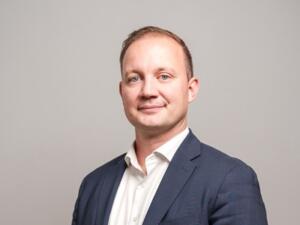
- Jan Phillip Rektorschek

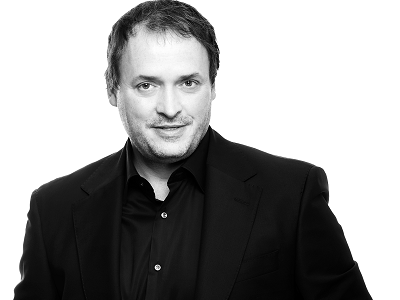
Just over a year earlier, Bonabry emerged as a spin-off. However, the team in Hamburg, Munich, and Paris around Daniel Hoppe and Konstantin Schallmoser did not break away from a large international firm but from the respected boutique Preu Bohlig & Partner. Their strong and swift entry into the UPC market is underpinned by their established work for clients in the generic pharmaceutical sector, such as Stada, as well as for French companies like Decathlon.
Boutique firms have long dominated IP law and thus also patent litigation. This tradition continues and is reflected in their substantial representation in the current UPC ranking. Most of these boutiques are based in Germany, with others operating out of Austria, Italy, France, the Netherlands, and the UK.
-
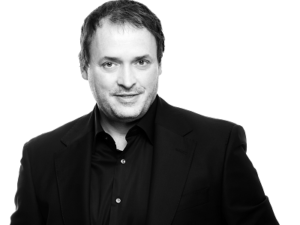
- Daniel Hoppe
-

- Konstantin Schallmoser

-

- Alexander Harguth

Recent spin-offs such as Pentarc and Bonabry have further increased the number of specialist UPC teams in Europe. New entrants to the latest UPC ranking also include Bristows, EIP and Taliens.
Notably, two boutiques have taken the trophies for UPC Firm of the Year, last year Powell Gilbert and this year Arnold Ruess.
Agility vs internationality
Boutiques are generally more agile than the patent teams within large international law firms. They enjoy greater freedom in making strategic decisions, even if they tend to implement changes cautiously rather than undertaking frequent overhauls.

Last week the winning Arnold Ruess team received the trophy as UPC Firm of the Year 2026 ©JUVE Patent
By contrast, patent teams in large international firms must coordinate their strategies with a heterogeneous and often extensive partnership. Nevertheless, these firms excel in their international offering and flexibility. For example, Hogan Lovells has established highly visible UPC teams not only in Germany and Italy, but also in key cities such as Amsterdam, London, and Paris.
Establishing a patent team in a new international location is typically a straightforward process for these firms. Taylor Wessing, for instance, recently illustrated this by successfully expanding its patent practice to Amsterdam and Paris.
Seeking national full-service firms
The number of patent teams from large national law firms is still conspicuously low in the UPC ranking. Noerr made it into the ranking this year with a team led by Munich partner Ralph Nack, as did Gleiss Lutz with Matthias Sonntag and his Düsseldorf team.
Last year, CBH Rechtsanwälte and August Debouzy already made it into the ranking. However, these national firms have yet to break into the top tiers.
Like their international counterparts, they face similar internal challenges, such as the need to coordinate decisions with a broad partnership. Moreover, they must compete with specialised boutiques to build strong international networks. Nevertheless, their key advantage remains their deep-rooted relationships with national clients.
-
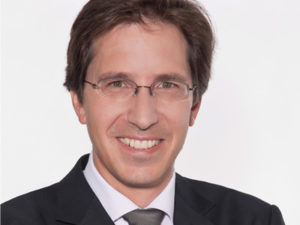
- Ralph Nack

-

- Matthias Sonntag

-
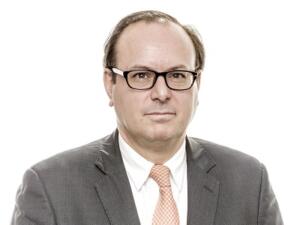
- François Pochart
-

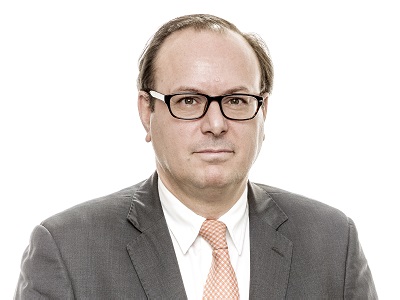
- Grégoire Desrousseaux

The Parisian team of August Debouzy is in the third tier. François Pochart and Grégoire Desrousseaux have established a stellar reputation as leading experts in European patent law. Although widely regarded by clients and competitors as a boutique, few patent professionals are aware that August Debouzy is, in fact, a French full-service firm with an office in Brussels.
The client’s choice
Pochart is also a key member of the lawyer team representing Abbott Laboratories in multiple UPC proceedings related to glucose-monitoring devices, with Taylor Wessing acting as the lead counsel.
In the early years, international companies like Abbott often assembled legal teams comprised of lawyers from several different firms with whom they had already collaborated during major proceedings. The combination of the UPC’s tight deadlines and uncertainty about the extent to which national legal traditions would influence the court’s internationally composed panels encouraged the use of broad, multi-firm teams.
This is particularly evident in the ongoing dispute between Edwards Lifesciences and Meril Life Sciences over heart valves, which is playing out across several UPC divisions. Meril’s principal legal team comprises Hogan Lovells and Marks & Clerk, with additional support from Wildanger, Gide Loyrette Nouel, and Regimbeu, depending on the division.
Edwards, meanwhile, has retained Powell Gilbert, Bird & Bird, and Thum IP. Notably, the leadership roles in this high-profile litigation are occupied by Hogan Lovells for Meril and Powell Gilbert for Edwards — showcasing the direct competition between an international full-service law firm and a specialist boutique.