UPC claims power to stop patentees escaping validity decisions via withdrawal
In a landmark order issued by the Milan central division, the UPC has now affirmed its jurisdiction to prevent patent proprietors from using divisional applications to escape judicial scrutiny of validity. In a dispute over a patent related to GLP-1 drugs, the court signalled it may bar Novo Nordisk from withdrawing its patent text at the EPO.
26 October 2026 by Konstanze Richter

The court has largely dismissed a preliminary objection filed by Novo Nordisk against three unusual requests brought by Sandoz alongside its ordinary revocation claim (case ID: UPC_CFI_2221/2026).
The dispute concerns EP 3 689 365, which covers a composition comprising semaglutide for the treatment of type 2 diabetes administered once weekly at a dose of 1.0 mg. Semaglutide is the active ingredient in Novo Nordisk’s blockbuster drugs Ozempic, Wegovy and Rybelsus. Sandoz filed the revocation action in Milan this summer, alleging lack of inventive step and added matter.
Beyond standard revocation relief, the Swiss generics manufacturer sought three additional declarations aimed at preventing what it describes as the “divisional game”. This refers to the practice of withdrawing a patent application shortly before an adverse validity ruling while keeping equivalent subject matter alive through divisional applications. EP 365 itself has a pending divisional, EP 4 406 593, which is currently in examination.
Jurisdiction extends beyond the literal wording
The core of the order addresses the scope of the UPC’s jurisdiction under Article 32 UPCA. The panel held that the court possesses what it termed “inherent jurisdiction” to ensure the effective exercise of the competences expressly conferred by the UPCA. This power is “not to be intended as external or additional” to the conferred jurisdiction, but implicit in it where necessary to secure its effective exercise.
-
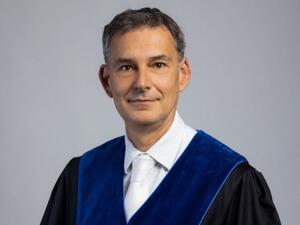
- Andrea Postiglione
-

- Anna-Lena Klein
-
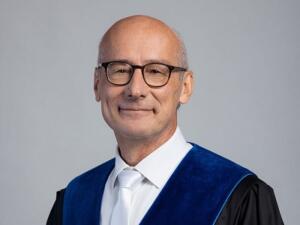
- Rudi Goedeweeck
Drawing on the Court of Appeal’s reasoning in XSYS vs Esko and on earlier UPC case law on anti-anti-suit injunctions, the panel found that Article 32 UPCA must be read in light of the object and purpose of the Agreement, including Article 47 of the Charter of Fundamental Rights. The judges also relied on Article 42(2) UPCA, which requires the court to ensure that its procedures and remedies do not distort competition.
The panel chaired by presiding judge Andrea Postiglione, with legally qualified judge Anna-Lena Klein and technically qualified judge Rudi Goedeweck, further addressed the abusive use of divisional applications under Article 76 EPC and Rule 36 EPC. While acknowledging the legitimate function of divisionals, the court observed that strategic filings designed to maintain uncertainty for third parties and to delay generic market entry may constitute an abuse of rights. The panel referred to academic literature describing the practice in the pharmaceutical sector.
Three requests, three outcomes
The court declared Sandoz’s first additional request manifestly inadmissible. That request sought an abstract declaration that a composition comprising semaglutide was obvious at the priority date, independently of any specific patent. The panel found the request too broad and unspecific, noting that it would risk affecting third parties who have not been heard. The court distinguished this request from an “Arrow declaration” under English practice, which is directed to an identified product or process.
By contrast, the panel accepted jurisdiction over Sandoz’s second additional request, which seeks a declaration that any claim of a unitary or European patent entitled to the priority of an application within the EP 365 family, broad enough to cover claims 1 to 5 of the patent in suit, would be invalid for lack of inventive step. The court interpreted this request as seeking Arrow-type relief aimed at preventing the re-emergence of the same protective perimeter through a divisional application.
The panel noted that, should Novo Nordisk withdraw its approval of the text of the patent under Article 113(2) EPC during the proceedings, the court may decline to dispose of the action under Rule 360 of the Rules of Procedure. According to the order, the Milan division may still rule on validity despite the withdrawal, with consequential effects on divisional patents whose claims substantially correspond to the adjudicated subject matter.
Preserving the effectiveness of proceedings
On the third request, which seeks an order preventing Novo Nordisk from withdrawing its approval of the patent text at the EPO until a final validity decision, the court likewise affirmed its jurisdiction. The panel grounded this power in Article 32(1)(b) and (d) UPCA on revocation and declarations of non-infringement, holding that central divisions must be able to protect the effectiveness of their own proceedings.
The court distinguished this type of measure from infringement injunctions under Directive 2004/48/EC, which fall within the competence of local divisions. However, the panel reserved its decision on whether the conditions for granting such an interim measure, including urgency and proportionality, are met in the present case.
The panel granted the parties leave to appeal the order in its entirety but indicated it is not currently inclined to stay the first-instance proceedings pending any appeal. It is not yet known whether any of the parties will make use of the option to appeal.
EP 365 is also subject to 18 oppositions at the EPO, with opponents including Sandoz, Teva, Zentiva and Synthon alongside several straw men. The EPO Opposition Division has agreed to accelerate the proceedings due to the pending UPC case. Several other semaglutide-related patents owned by Novo Nordisk have been revoked by the EPO in recent years, including the parent patent EP 2 866 825 and earlier patents revoked in 2024.
Bird & Bird for Sandoz
An international Bird & Bird team is representing Sandoz, led by Milan-based partner Giovanni Galimberti alongside German partners Oliver Jüngst from Düsseldorf and Jan van Dieck from Munich, assisted by associate Nelly-Isabel Kerb. The firm regularly represents generics manufacturers such as Zentiva and Teva and has previously acted for Sandoz, including in UK litigation against Biogen over natalizumab. At the EPO, partner Lee Mullen from Elkington + Fife is handling the opposition proceedings for Sandoz.
-

- Giovanni Galimberti
-

- Oliver Jüngst
-

- Rachel Mumby
Bristows is representing Novo Nordisk, with London litigation partner Claire Phipps-Jones leading the team alongside partner Rachel Mumby, of counsel Katie Cambrook and associate Eden Winlow. The team is working closely with associate general counsel Michal Porubsky and principal patent attorney Michaela Melcher from Novo Nordisk’s in-house team. A Forresters team is acting for the Danish patent holder in the parallel EPO opposition.
