“Divisional game” under scrutiny as UPC proceedings over semaglutide kick off in Milan
What mechanisms are available to the UPC in order to stop a potential misuse of divisional patents? This question is at the heart of a dispute heard at the Milan central division today. The oral hearing is part of a revocation action against a patent owned by Novo Nordisk related to the blockbuster weight loss drug semaglutide. Through this action, claimant Sandoz also aims to prevent the Danish pharma originator from withdrawing the text of the patent before a decision is handed down.
28 September 2026 by Konstanze Richter

Sandoz kicked off the action by filing a revocation against EP 3 689 365 at the Milan central division this summer (case ID: UPC-CFI-0002221/2026). It is the first UPC action against a patent related to the active ingredient in treatments for type 2 diabetes and obesity, such as Ozempic, Wegovy, and Rybelsus. The generics manufacturer is challenging the patent for added matter and lack of inventive step.
Furthermore, Sandoz requests the UPC issue an order that Novo Nordisk may not withdraw the patent application before there is a decision on validity — either from the EPO or the UPC. The Danish patent owner filed a preliminary objection against this, which the court will hear today. A decision will likely have far reaching consequences for future pharma cases at the UPC.
Numerous divisionals
EP 365 claims to cover an improved use of GLP-1 peptides in therapy and specifically certain dosage regimes providing improved effect. It is one of many patents related to blockbuster drugs containing active ingredient semaglutide. Several of these have been challenged at the EPO in recent years, among them EP 365’s parent EP 2 866 825, which the Boards of Appeal revoked in an opposition in April last year. Previously, the EPO had revoked other semaglutide-related patents in 2024. EP 365 itself also has a divisional EP 4 406 593, which is currently in the process of examination.
The patent-in-suit is also subject to a total of 18 EPO oppositions. Among the opponents, many of which are straw men, are also household names in generics manufacturing such as Sandoz, Teva, Zentiva, and Synthon. At Sandoz’s request, the Opposition Division has informed the parties that, due to the pending UPC case, the EPO will accelerate proceedings.
Order against withdrawal
According to documents filed in this EPO opposition, one of Sandoz’s requests is that the UPC issue an order that “the approval to the text of the patent must not be withdrawn to avoid a decision on the merits”.
It is not uncommon for patent owners to withdraw patent applications in order to prevent a final decision on validity. Even if this results in the subsequent revocation of the protection right itself, it still keeps the door open for the filing of further divisionals — a practice that critics call the “divisional game”.
Novo Nordisk, however, lodged a preliminary objection. Today’s hearing therefore does not concern the actual validity of the patent. Rather, the panel – comprising the presiding judge and judge rapporteur Andrea Postiglione, legally qualified judge Anna-Lena Klein and technically qualified judge Rudi Goedeweeck – must first clarify whether the UPC has the authority to issue such an order.
-
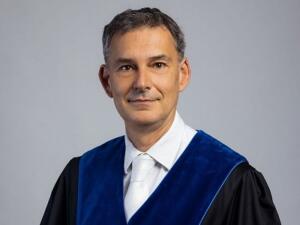
- Andrea Postiglione
-
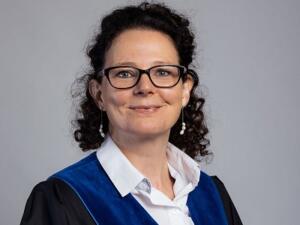
- Anna-Lena Klein
-
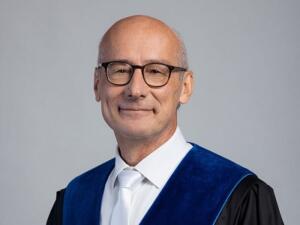
- Rudi Goedeweeck
This would be similar to the ‘Arrow declaration’ customary in the UK, which stipulates that a claim was either not novel or obvious on a particular date, so that it cannot be used for any patent granted subsequently.
German-Italian team
Sandoz has retained an international team from Bird & Bird. Milan-based partner Giovanni Galimberti and German partners Oliver Jüngst and Jan van Dieck from the Düsseldorf and the Munich offices respectively have the lead. The firm regularly represents generic drug manufacturers such as Zentiva and Teva/Ratiopharm and has also worked for Sandoz in the past. For example, the London team acted for the client in litigation against Biogen over Tyruko containing the active ingredient natalizumab.
At the EPO, patent attorney and partner Lee Mullen at Elkington + Fife is representing Sandoz in the opposition proceedings.
Bristows is representing Novo Nordisk. The IP boutique is one of the more active UK law firms at the UPC, representing clients such as Sophia Genetics and Novartis in life sciences disputes. London litigation partner Claire Phipps-Jones is leading the current case with partner Rachel Mumby, of counsel Katie Cambrook and associate Eden Winlow. They cooperate closely with associate general counsel Michal Porubsky and principal patent attorney Michaela Melcher of the in-house team at Novo Nordisk.
A team from Forresters is acting for the Danish patent holder in the parallel opposition at the EPO.
