Show down at the UK High Court in Nokia’s video streaming dispute against Paramount and Warner Bros.
What is an appropriate RAND rate for a licence covering video streaming patents granted to major streaming providers? From today, UK High Court judge James Mellor must determine the answer to this question. He has scheduled 20 days of hearings in the dispute between Nokia and Paramount and Warner Bros. Earlier this year, Nokia withdrew all related infringement claims. Now James Mellor has the final say. Many observers from the streaming industry are closely following the hearing.
18 November 2026 by Mathieu Klos

“This is indeed a market leading and critical case,” said an expert just the day before UK High Court judge James Mellor hears the video streaming case between Nokia and the two streaming service providers Paramount and Warner Bros. The parties have been in the pre-hearing phase since Monday. From today, Mellor will officially hear the case in court. The UK High Court is now set to determine the actual royalty rate for Nokia’s portfolio covering H.264 (AVC), H.265 (HEVC) and other video-related patents (case IDs: HP-2025-000053 and HP-2025-000055).
For the first time, Mellor will set the RAND rates payable by streaming service providers to SEP holders for the use of a video codec patent portfolio. For many years device manufacturers signed licences but never before has a rate been set for the movie and content providers. There are therefore few comparable licences. Mellor must decide whether the RAND rate offered by Nokia is reasonable and has become established in the market.
20 days in court
There is considerable interest in the industry in the mega hearing. Mellor has to break new ground and there is a great deal of money at stake in global disputes over video streaming.

James Mellor
All the other SEP holders for video codecs will likely attend the hearing. Representatives from Ericsson, Huawei, InterDigital and others SEP holders are expected to listen attentively and take diligent notes on what the judge and the lawyers have to say at the Rolls Building until 11 December.
Other major streaming providers such as Amazon Prime, Disney+, Netflix and the like are also likely to send their observers to the courthouse on New Fetter Lane in London.
As JUVE Patent has learnt, more than ten experts nominated by the three companies involved in the proceedings are likely to be heard on how to calculate the licence rate. The fact witnesses will take the stand first, followed by the expert witnesses. The cross-examination of the experts is expected to take a good five and a half days alone.
In addition to the question of the actual licence rate, Mellor is also expected to discuss with the parties whether and to what extent Paramount and Warner Bros. must pay for indirect subscribers via channel partners as well as for its direct subscribers. It is also a matter of dispute between the parties whether and how much the two streaming providers must pay in royalties for the period prior to the moment Nokia first approached them to take out a licence.
Focus on London
The RAND trial follows Nokia’s decision earlier this year to accept that the UK court should determine the terms of both interim and final global licences in the dispute. To clear the way, Nokia had withdrawn its parallel infringement actions, including Germany and the UPC.
This move made Nokia the second licensor, after Huawei, to accept a licence set by a UK court in a global SEP dispute. In early February, the UK High Court granted an interim licence to Huawei in its dispute with implementer TP-Link over Wi-Fi 6.
Nokia had initially taken a different stance. At a case management hearing in January to expedite the RAND trial, the company agreed to grant a global licence covering its full portfolio of SEPs and non-SEPs, but insisted that the price be set through arbitration. Nokia argued at the time that arbitration was the appropriate mechanism for determining a global FRAND rate.
But UK High Court judge Richard Meade disagreed, finding that the UK court was equally capable of setting a price for the entire Nokia portfolio. In view of the risk of injunctions faced by Warner Bros. and Paramount in jurisdictions including Brazil, Germany and at the UPC, the judge accused Nokia of “ramping up the number of legal proceedings and the jeopardy they pose to the claimants as a means of forcing arbitration to which the claimants would otherwise not agree”.
A clue to what the price might be
In June this year, Richard Meade decided how much Paramount and Warner Bros. had to pay as an interim payment. In his judgment, Meade sets out in detail how the court assesses interim payments. However, he did not publish the exact rate.

Richard Meade
Nevertheless, the judgment does give an indication of the actual amount of money at stake in the dispute. Not surprisingly, both sides were very far apart in their original offers. According to Meade’s judgment, Warner Bros. and Paramount primarily argue that the court should set the final RAND price by referring to the rates that patent pools charge for streaming standards. This approach sets a lower bound of approximately $250,000–$300,000 for the final RAND licence. This would not include payment for the full period of past use, dating back to 2011, nor interest.
Nokia had demanded a much higher licence fee based on three comparable licences. Meade wrote in his judgment, “This is about three orders of magnitude higher than what WBD and Paramount argue for.” JUVE Patent understands that Nokia’s total claim amounts to several hundred million US dollars.
Trusted adviser teams
Richard Meade has since been promoted to the UK Court of Appeal and is no longer involved in the High Court case. In the meantime, Paramount has acquired Warner Bros. and renamed itself Skydance Corporation. In the UK RAND trial, however, both companies continue to appear under their old names and with separate legal teams.
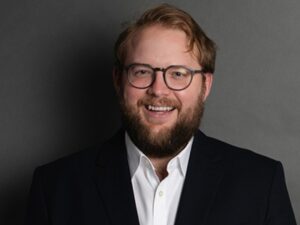
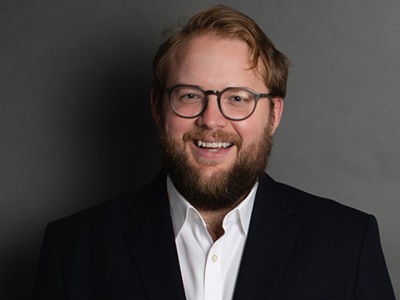
Nokia is relying on its regular advisers at Bird & Bird. The lead partners are Tom Darvill, Richard Vary and Jane Mutimear. The Bird & Bird team also comprises Anna Duffus, Ben Simpson, Emma Mackenzie Nation, Gregory Aroutiunian, Harry Wong, Rhiannon Graves, Vicky Laws, Zoe Fuller and Huw Edwards. The latter recently joined from Nokia, where he was director and head of litigation operations at Nokia UK.
-
- Tom Darvill
-

- Richard Vary
-

- Mark Chacksfield
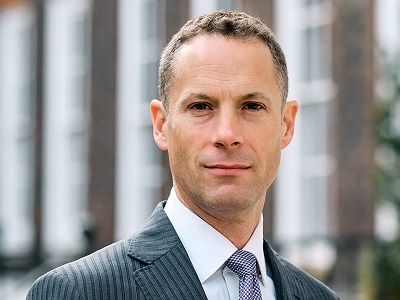
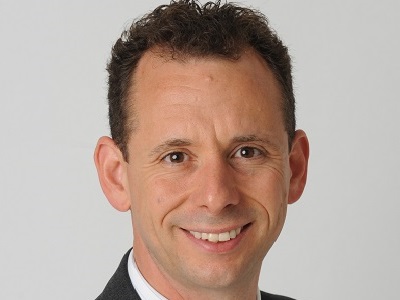
However, it will be the barristers Nicholas Saunders of Brick Court Chambers, Mark Chacksfield and Edmund Eustace from 8 New Square, as well as Joe Delaney of Three New Square, who will represent Nokia at the forefront of the courtroom for up-coming 18 days.
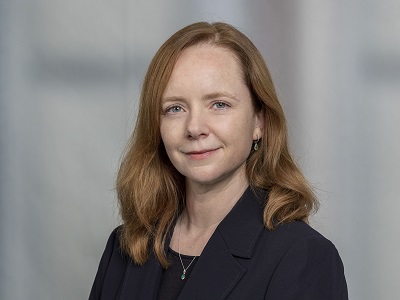
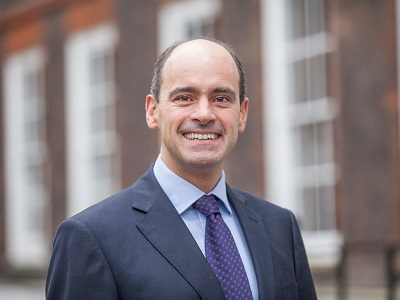
Following the merger to form Skydance, Paramount and Warner Bros have consolidated their barrister teams. The joint barrister team now comprises Andrew Lykiardopoulos and William Duncan of 8 New Square, along with Kathryn Pickard and Kyra Nezami of 11 South Square, as well as Daniel Piccinin and Femi Adeoyka. Piccinin (Brick Court Chambers) and Adekoya (Blackstone Chambers) were originally instructed by Warner Bros.
-

- Kathryn Pickard
-
- Andrew Lykiardopoulos
-

- Nicola Dagg, who recently moved to Kirkland & Ellis, helped lead the team for Novartis.

On solicitor side Paramont continues to work with Kirkland & Ellis. The Kirkland team comprises Nicola Dagg, Peter Pereira, Kevin Leung, Nevyn Fournel and Trudy Yates.
Warner Bros. instructed a London-based team led by Mike Washbrook from Winston Taylor. The firm emerged from the merger of the UK branch of Taylor Wessing and the US firm Winston & Strawn. The team also included partner Xuyang Zhu, senior associates Sheenal Singh. (Co-author: Konstanze Richter)
