Mixed ruling for Boehringer in UK fight with Dr. Reddy’s over empagliflozin
Boehringer Ingelheim has suffered a blow and simultaneously took a win in the UK. In a dispute over its blockbuster Jardiance, the High Court has invalidated a patent and SPC, while upholding a formulation patent relating to the same diabetes drug.
25 November 2026 by Konstanze Richter

It is the next step in the long-running UK dispute between generics manufacturer Dr Reddy’s Laboratories and Boehringer Ingelheim over patent protection for empagliflozin. The active ingredient forms the basis of Boehringer’s diabetes drug Jardiance. In one of his last decisions before being elevated to the Court of Appeal, Lord Justice Richard Meade found EP 1 730 131 and the related SPC/GB14/070 invalid. At the same time, he upheld formulation patent EP 1 888 552 (case ID: HP-2024-000037).
Empagliflozin is an SGLT2 inhibitor used to treat type 2 diabetes, heart failure and chronic kidney disease. Although EP 131 expired in March 2025, the SPC derived from it was due to remain in force until November 2029. It had been the principal basis for Boehringer’s market exclusivity. Dr Reddy’s had brought the claim to clear the way for its own generic empagliflozin product.
In its judgment, the UK High Court concluded that the specification of EP 131 did not establish the plausibility of the claimed compound acting as an SGLT inhibitor. The court rejected Boehringer’s argument that a cascade of preferences in the patent amounted to a disclosure that the 15 compounds listed as “particularly preferred” had been successfully tested. He also dismissed Boehringer’s so-called “glucose argument”, which sought to infer activity from structural similarity to known inhibitors phlorizin and T-1095.
Earlier PI
The judgment follows a preliminary injunction issued in November 2025 by Deputy Judge Michael Tappin. The injunction prevented Dr Reddy’s from marketing its generic product pending trial. Tappin has meanwhile been appointed as a High Court judge.
In the main trial, the court also addressed the validity of EP 552, which protects a specific crystalline form of empagliflozin and expired on 1 May 2026. Dr Reddy’s attacked the patent for lack of plausibility and lack of industrial applicability. However, the court found the patent valid.
Judge Richard Meade concluded that the PXRD and DSC data in the specification were sufficient to make the single crystal form plausible. However, they did not prove its existence with absolute certainty. He also accepted that the crystalline form had industrial applicability, since it facilitated testing of empagliflozin as a potential SGLT inhibitor.
Dr Reddy’s admitted infringement of EP 552. Accordingly, the interim injunction remained in place until the patent expired in spring 2026.
Plausibility doctrine reaffirmed
In his analysis, Meade applied the UK plausibility standard established by the Supreme Court in Warner-Lambert. The standard was recently reaffirmed by the Court of Appeal in Sandoz vs Bristol-Myers Squibb (apixaban) and Generics vs AstraZeneca (dapagliflozin). The judge noted that although the Supreme Court has so far declined to revisit Warner-Lambert following the EPO Enlarged Board of Appeal decision G 2/21, there remains a realistic possibility that it may do so.
For that reason, Meade made contingent factual findings in the alternative. He accepted that Boehringer had tested the 15 compounds listed in the specification before filing, with results showing IC50 values below 50 nM. However, he found that Dr Reddy’s had established positive reasons to doubt empagliflozin’s SGLT activity. These were based on structural considerations relating to the unusual tetrahydrofuranyloxy moiety. The court made these findings to safeguard against possible further appeals and any future shift in the applicable legal standard..
Leapfrog appeal
Both parties have announced that they will file leave to appeal. In the case of Boehringer Ingelheim, the patent owner considers a so called leapfrog appeal to the Supreme Court. The Association of the British Pharmaceutical Industry supports this approach. In a letter to Judge Meade, the ABPI expresses concern that the UK courts’ current approach to plausibility diverges from that of the European Patent Office. The latter approach was set out by the Enlarged Board of Appeal in G 2/21. All the generics are currently injuncted pending the decision on appeal.
Counsel line-up
Mishcon de Reya represented Dr Reddy’s, with Justin Lambert leading the case. Litigation partner David Rose and managing associate James Holland supported him. The firm’s patent group recently added another partner, patent attorney Alex Korenberg, who joined from Kilburn & Strode.
-

- Justin Lambert
-

- David Rose
-

- Nicola Dagg
-
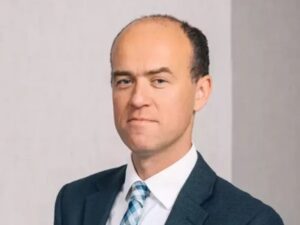
- Tim Austen
They instructed barristers Mark Vanhegan, Adam Gamsa and Seaghan Davey of 11 South Square. At the preliminary injunction stage, Penningtons Manches Cooper advised Dr Reddy’s, with Vanhegan leading the team alongside Christopher Hall.
Boehringer Ingelheim relied on Kirkland & Ellis. Litigation partner Nicola Dagg and Tim Austen, who recently joined the firm from Three New Square. The team included Steve Baldwin and Andrew Marks. They worked with worked with barristers Thomas Mitcheson, Stuart Baran and Thomas Lunt, also of Three New Square.
