Millenium and Cohausz & Florack successfully defend Velcade patent in Germany
Millennium Pharma has prevailed in the German nullity suit against Betapharm, Zentiva and Ratiopharm. The Federal Court of Justice upheld a formulation patent for cancer drug Velcade, thus confirming a first instance ruling of 2024. During the hearing, the discussion regarding confidentiality obligations in clinical trials and their interaction with the legal validity of the patent was a key focus.
19 November 2026 by Konstanze Richter

Millenium Pharmaceuticals is defending the patents EP 2 251 344 B1 and EP 3 078 667 B1 in Germany and other countries. Both protect a formulation of boronic acid compounds. They form the basis of anti-cancer medication Velcade with the active ingredient bortezomib. It is used for the treatment of multiple myeloma and mantle cell lymphoma.
Owner of the patents are the United States of America. Millennium Pharmaceuticals, a daughter company of Takeda operating as Takeda Oncology since 2008, is the licensee and distributor for the US. Johnson & Johnson subsidiary Janssen-Cilag is Millennium’s distribution partner in Germany.
Although the patents expired in January 2022, Millennium continues to pursue damages claims against generics manufacturers in several European jurisdictions. According to an estimate by the Indian market research and consulting firm Mordor Intelligence, the market for these drugs is worth $25.88 billion and is expected to grow in the coming years.
Nullity claims dismissed
Generic manufacturers Zentiva, Ratiopharm and Betapharm attacked EP 344 with nullity suits in Germany. In April 2024, the Federal Patent Court dismissed the actions (case IDs: 3 Ni 24/22, 3 Ni 26/22 and 3 Ni 9/23). The 3rd Senate held that the patent was neither unduly extended nor insufficiently disclosed, and that its subject matter was both novel and inventive.
All three claimants appealed.
Earlier this week, the X. Civil Senate of the Federal Court of Justice, under presiding judge Klaus Bacher, dismissed the appeals (case ID: X ZR 78/24). The appellants must bear the costs of the appeal proceedings, including the costs of the intervener Millennium Pharmaceuticals.
Clinical trials and prior art
The case has broader implications for pharmaceutical patents. It asks when clinical trials required for marketing authorisation can count as prior art that bars later patent protection. The claimants argued that participating clinics had not kept the studies sufficiently confidential. A similar issue is under debate in Bayer’s Xarelto.
At first instance, the Federal Patent Court found no proof that outsiders could have learned enough about the invention from the trials. Medical staff were generally bound by confidentiality. The court found no plausible evidence that patients could analyse the contents of vials labelled “PS-341”. Each vial contained just 2.5 mg of active substance, too little for reliable analysis. The court also held that a skilled person would not have been prompted to lyophilise bortezomib with excess D-mannitol.
The case concerned the duty of confidentiality of the parties involved during clinical trials. According to research by JUVE Patent, the Federal Court of Justice (BGH) appears to assume that such a duty of confidentiality exists and that a plaintiff seeking a declaration of nullity must provide concrete evidence that the parties involved have breached it.
Parallel proceedings
In the parallel infringement actions, the Regional Court Düsseldorf dismissed the claims brought by Millennium and Janssen-Cilag against Betapharm, Ratiopharm, Hikma Pharma, Zentiva and Zentiva’s manufacturer Synthon. Early this year, the 4a Civil Chamber under presiding judge Tilmann Büttner held that the claimants lacked standing to sue, as the United States as patentee had reserved the right to issue further exclusive licences. According to German law, this is incompatible with an exclusive licence. Next year, the Düsseldorf Higher Regional Court will hear the appeal.
In France the Paris Judicial Court took a different view in a partial judgment handed down in the parallel French proceedings. In May, the French court confirmed that Millennium, Janssen and Cilag could bring proceedings. The licence agreement expressly allowed Millennium to sue for patent infringement in its own name, regardless of whether the licences were exclusive. The French court continues to examine the merits, focusing on damages linked to Velcade’s price reduction after generics entered the market.
Further damages proceedings involving the same patents are pending in Italy and Spain.
At the European Patent Office, the Boards of Appeal upheld the related patent EP 3 078 667 in limited form in mid-2024.
Hoyng ROKH team up with Cohausz & Florack
The United States, as patent owner, relied on Hoyng ROKH Monegier in the infringement proceedings in Düsseldorf and Paris. Partners Christine Kanz and Amandine Métier took the lead. Lisa-Marie Rauschendorfer attended the hearing in the nullity suit.
However, the lead in the nullity proceedings lay in the hands Cohausz & Florack, representing licensee Millennium Pharmaceuticals. The patent attorney team was led by Arwed Burrichter and Natalie Kirchhofer, with Wieland Fahr also involved. They cooperated with Christian Rohnke, a Federal Court of Justice-admitted attorney, who presented the case. From Herbert Smith Freehills, Ina vom Feld participated in the proceedings. She acted in the parallel infringing proceedings at the Düsseldorf Regional Court. Furthermore Takeda’s in-house counsel Stephan Riemann and Head of Patents Oliver Mechnich attended.
-

- Arwed Burrichter
-
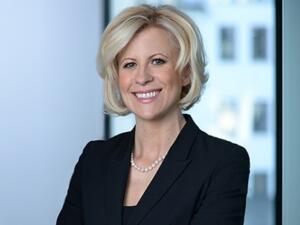
- Natalie Kirchhofer
-

- Christian Rohnke
Betapharm continued to rely on ZSP Patentanwälte, with Sebastian Höpfner and Roksana Hosseini, counsel at Bird & Bird, appearing for the claimant. Mujeebur Rahman from Dr. Reddy’s legal department joined via video link from London.
Bird & Bird patent attorneys Daniela Kinkeldey and Anne Halbach represent Zentiva, working with Ana Lopez Lozano from Zentiva’s legal department.
-
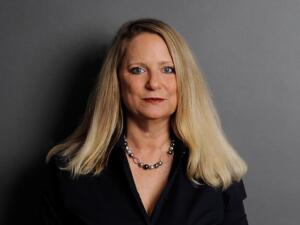
- Daniela Kinkeldey
-
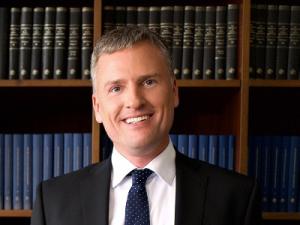
- Sebastian Höpfner

Ratiopharm instructed Rainer Hall as a representative admitted to the Federal Court of Justice, together with patent attorney Sandra Lepthien of Graf von Stosch. Oliver Jüngst of Bird & Bird, who had led Ratiopharm’s case in the parallel Düsseldorf infringement proceedings, joined via video link.
Co-author: Christina Schulze
