Hogan Lovells Cadwalader fend off arrest for Polytech manager
It's a setback for Brazilian company Silimed in its dispute with German competitor Polytech: Last summer, Munich Regional Court ordered the imprisonment of Polytech's managing director for allegedly circumventing a preliminary injunction. With a new team of legal representatives, Polytech has overturned this decision. Now, the Munich Higher Regional Court has found that the Regional Court made several fundamental errors.
5 November 2026 by Mathieu Klos

The patent dispute between Brazilian company Silimed and its German competitor Polytech has taken another turn. The most dramatic development in the dispute so far was an arrest for disobedience against Polytech’s managing director (case ID: 7 O 15569/24). The accusation: abusive litigation tactics intended to deprive an opponent of the UPC as a forum. Both sides filed immediate appeals against the Munich Regional Court’s decision.
The 6 Civil Senate of the Munich Higher Regional Court now set aside the lower court’s decision in its entirety and dismissed the application for coercive measures (case ID: 6 W 773/26 e). The order is final.
Long-running dispute over patent rights
The conflict dates back to the 1990s. At that time, Silimed, a Brazilian manufacturer of silicone implants, supplied its products to Polytech, which acted as the German distributor. In 1995, the parties entered into an agreement that would pave the way for Polytech to obtain CE marking in Europe. In the course of this collaboration, the German company gained deep insights into the Brazilians’ manufacturing expertise.
The cooperation ended in 2008. Three years later, Polytech registered the implant manufacturing process as European patent EP 2 581 193 — in its own name. The patent was granted in 2015. Silimed struck back in 2017 and filed a patent infringement action in Frankfurt. A legal marathon ensued that went all the way to the Federal Court of Justice and back again.
The decisive turning point came in late 2024 when Frankfurt Higher Regional Court awarded the patent to Silimed (case ID: 6 U 79/19). The court found that Polytech had been informed of Silimed’s invention as part of the contractual collaboration. An ICC arbitration tribunal had already established the unlawful use of trade secrets in October 2022 and ordered Polytech to pay damages.
Whilst still the registered owner of the patent, Polytech declared an opt-out on 30 March 2023, thereby removing EP 193 from the jurisdiction of the UPC. In order to prevent Polytech from diminishing the value of the patent prior to the transfer of ownership, Silimed obtained an ex parte preliminary injunction from Munich Regional Court at the end of 2024 (case ID: 7 O 15569/24). Polytech lodged an objection against the PI, which the 7th Civil Chamber rejected.
Blocked from the UPC
In a letter dated 7 January 2026, Silimed expressly warned Polytech that a national nullity action could have a blocking effect under Article 83(4) of the UPCA. This would render any subsequent withdrawal from the opt-out ineffective. Silimed would regard this as an infringement of the PI. Two days later, the German Federal Patent Court received a nullity action against the German part of EP 193 (case ID: 6 Ni 6/26). The claimant was not Polytech itself, but its holding company, PTH&A Management, which had the same address in Dieburg and the same managing directors.
When Silimed attempted to withdraw the opt-out on 4 February 2026, following the transfer in the patent register, and brought an infringement action against Polytech and several European distributors before the UPC on 5 February 2026, it was too late. Hamburg local division dismissed the action as inadmissible. The withdrawal from the opt-out was invalid due to the previously filed nullity action (case ID: UPC-CFI-481/2026).
Silimed then applied to the Munich Regional Court for injunctive relief against Polytech. The court’s 7 Civil Chamber ordered an arrest for disobedience against court orders against the managing director of Polytech Health & Aesthetics GmbH, alternatively against his successor (case ID: 7 O 15569/24).
Custodial detention “too harsh”
Munich Higher Regional Court has now overturned that decision. According to the second instance court, an nullity action, which would bar Silimed from bringing proceedings before the UPC, is not covered by the preliminary injunction. This applies neither according to the wording of the preliminary injunction nor as a variant of the exemplary case of a waiver of patent rights. Silimed’s application for an injunction does not even come close to suggesting this, the court stated. Nor does the warning letter of 7 January help: According to the ruling, a party cannot retrospectively imbue a legal instrument with its desired content. The Senate criticises the Regional Court for having expressly deferred the decisive question in the final judgment regarding the injunction to the enforcement proceedings. However, what is prohibited must be established before enforcement takes place.
The 7th Civil Chamber, presided over by Oliver Schön, had argued that a fine — capped by law at €250,000 — would hardly impress Polytech. The Munich Higher Regional Court has now made it clear that custodial detention serves to punish breaches. However, it must not be used as a means of pressure to force a specific action. Anyone who uses it in this way risks being too harsh, as in this case: six months’ imprisonment for an alleged first-time offence was disproportionate, the 6th Civil Senate found. Silimed’s appeal therefore came to nothing, although the court of second instance largely shared the constitutional concerns raised in the appeal.
Following the Regional Court’s judgment in June, some observers interpreted the Munich ruling as follows: German courts will intervene to prevent the UPC from being circumvented by national procedural instruments. And the threshold for holding management personally liable is lower than expected. Both of these points are now put into perspective. The Higher Regional Court did not even rule on whether it constitutes an abuse of the law to cement an opt-out within a corporate group by means of an action for nullity — the application failed on procedural grounds alone. For Silimed, this removes a means of pressure that could have paved the way back to the UPC.
Change of counsel pays off
Polytech also owes this success to a new team of advisers. It broadened the base of its legal team at the start of the year. Boehmert & Boehmert had handled the lost action for recovery of property on behalf of the company. In 2025, Jörg Wahl and Uli Foerstl from Viering Jentschura & Partner took the lead in the proceedings.
-

- Christian Stoll
-

- Jörg Wahl
According to JUVE Patent sources, Polytech brought in Hogan Lovells Cadwalader and Zimmermann & Partner in the spring. Following Munich Regional Court’s order for compliance, Polytech transferred the lead role in the appeal to Hogan Lovells Cadwalader. The firm assembled a mixed team of patent lawyers and specialists in corporate litigation, led by Hamburg-based patent lawyer Christian Stoll and Düsseldorf-based corporate litigator Kim Lars Mehrbrey.
This dual leadership reflects the dual nature of the case: on the one hand, the UPC’s opt-out mechanism; on the other, the question of the extent to which actions within a group of companies can be attributed to one another. Natascha Leymann from the patent team and Sophia Jaeger from the corporate litigation team are also involved.
For the invalidity proceedings before the Federal Patent Court, Polytech has also instructed a Maiwald team led by lawyer Christian Meyer and patent attorney Derk Vos.
According to JUVE Patent sources, Polytech has significantly broadened the scope of the proceedings with this new line-up — ranging from the specificity of the title to company law and constitutional law.
Viering Jentschura & Partner, which had represented Polytech before the Regional Court, remained on board.
-

- Niels Hölder

-

- Mike Gruber
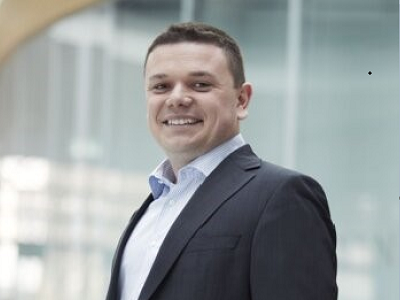
Mike Gruber and Niels Hölder of Carpmaels & Ransford are once again representing Silimed in the proceedings. They have represented the Brazilian client from the outset of the dispute in both national and UPC proceedings. The team works closely with Karlo Tinoco from São Paulo-based firm RNA Law, who is managing the cross-border litigation.
Co-author: Marc Chmielewski


