Celonis lands win in process mining patent battle against SAP in Germany
SAP is banned from offering relevant technology from the Signavio Process Intelligence software in Germany. Munich Regional Court has issued an injunction against the German software company for infringing a Celonis patent covering process mining technology. The ruling marks the first decision in a broader patent and antitrust battle spanning Germany, the UPC, and the US.
16 October 2026 by Konstanze Richter

In its judgment the 7th Civil Chamber at Munich Regional Court ruled in favour of Munich-based software developer Celonis in its patent infringement suit against SAP (case ID: 7 O 12849/25). The panel, chaired by presiding judge Oliver Schön with judges Katalin Tözsér and Florian Schweyer, found that SAP’s Signavio Process Intelligence software infringes Celonis’ EP 3 139 274.
The patent protects a computer-implemented method for determining net throughput times between process steps in a process instance. The technology enables the exclusion of non-business hours, such as weekends and nights, from the calculation of process durations, which companies use to assess the efficiency of their internal workflows.
In addition to the injunction, the court ordered SAP to provide information and render accounts regarding the infringing acts, and established the company’s liability for damages. The court rejected SAP’s request to stay the proceedings pending the outcome of the parallel nullity action before the Federal Patent Court (case ID: 6 Ni 17/26), which SAP filed in March 2026.
Interpretation of key features
The dispute centred on the interpretation of several features of claim 1, in particular whether SAP’s software stores the process log in main memory in the manner required by the patent, and whether the storage of process steps in neighbouring addresses in column format is covered. The court agreed with Celonis that a column-oriented storage format meets the patent’s requirement that process steps be stored in neighbouring addresses sorted by a time attribute.
The judges also rejected SAP’s argument that the patent requires a globally unique identifier for each process step, holding instead that uniqueness arising from the combination of the process instance identifier and the step description is sufficient. On validity, the panel found that the cited prior art neither anticipated the claimed invention nor rendered it obvious.
SAP has filed an appeal against the decision. According to Celonis, the company intends to enforce the injunction.
Broader dispute across jurisdictions
The Munich ruling forms part of an escalating dispute between the two software companies. Celonis specialises in process mining software, which digitally maps and analyses business processes. SAP entered this market in 2021 through its acquisition of Berlin-based Signavio.
In spring 2025, Celonis filed an antitrust action against SAP at the Northern District Court of California, alleging that SAP charges excessive fees for third-party access to data stored in its systems, thereby disadvantaging competitors such as Celonis in favour of Signavio. The US court dismissed most of the claims in June 2025 but allowed Celonis to amend and refile.
Shortly before that decision, SAP launched a patent infringement action against Celonis at the Düsseldorf local division of the UPC based on EP 3 913 496 (case ID: UPC_CFI_558/2025). SAP also filed suit at the District Court of Delaware over four US patents. Celonis responded with infringement actions in Texas, at Munich Regional Court, and at the Munich local division of the UPC over EP 3 765 962.
The parallel UPC proceedings will soon continue, as the Düsseldorf local division has scheduled an oral hearing for the end of November, with a Munich hearing following in February.
German-US axis
Hogan Lovells Cadwalader acted for claimant Celonis. The German start-up retained a team around Düsseldorf litigation partner Andreas von Falck and patent attorney and partner Alexander Klicznik. The team included counsel Martin Koch, associate Lea Gröblinghoff, as well as patent attorney Lennart-Knud Liefeith. Litigation partner Carolin Marx provided assistance along with IP partner Morten Petersenn and Alex Aber from the US corporate & finance practice, with partner Falk Schöning assisting in regulatory matters.
-

- Andreas von Falck
-
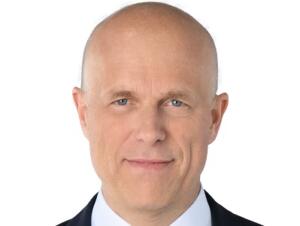
- Alexander Klicznik
-
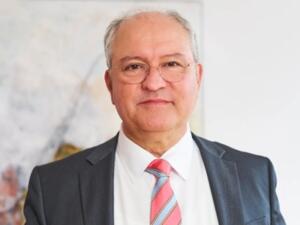
- Gerd Jaekel
SAP banked on a team of Jones Day with Munich partner Gerd Jaekel in the lead. The firm also represents SAP at the UPC and in the US proceedings. The team in Germany and at the UPC includes Jones Day partner and patent attorney Ping Li, counsel Tobias Mandler, associate Theresa Zirbs from the Munich office, as well as Otto Hertzberg and Cordt van Geuns-Rosch from the Frankfurt team.
In addition, a patent attorney team of Müller Boré & Partner provided technical advice, with Michael Huber in the lead.
Lukas Colberg (lead senior legal counsel, global litigation) and Lucas Dreesen (IP counsel) from the SAP in-house team were also involved in the German proceedings. In the US, Samir Pandya, head of global litigation at SAP, and Kevin Prey, director of IP policy and strategic transactions at SAP, are handling the proceedings internally at SAP.
Several law firms are handling the proceedings in the US. At Jones Day, the lead lawyers are Greg Lanier, Josh Fuchs, Joe Beauchamp, and Catherine Zeng. Kristin Cleveland of Klarquist and Michael Wolfe of Paul Hastings also play a role in the US litigation.
