BMS and Johnson & Johnson battle over novel CAR-T cell therapy in Europe
The relatively unknown biotech company 2seventy bio has filed a lawsuit at the UPC against several Johnson & Johnson companies and Legend Biotech concerning the bone cancer therapy Carvykti. Bristol Myers Squibb is behind the plaintiff. Johnson & Johnson is now challenging the patent at the UK High Court with a revocation action. The patent-in-suit is also under fire at the European Patent Office.
20 February 2026 by Mathieu Klos
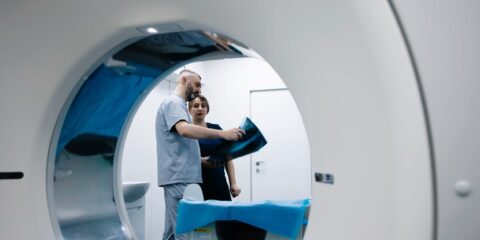
Bristol Myers Squibb and Johnson & Johnson are competitors in the market for novel cancer therapies known to experts as CAR-T cell therapies. In 2025, BMS acquired the US cell and gene therapy company 2seventy bio for around $300 million. The company, based in Cambridge, Massachusetts, had specialised in the development of innovative cancer therapies and driven the development of Abecma, a CAR-T cell therapy for multiple myeloma. With the acquisition of 2seventy bio, BMS also acquired Abecma.
In early January, 2seventy bio filed an infringement claim at the Brussels local division (case ID: UPC_CFI_0000029/2026). The defendants are 13 Janssen-Cilag companies, all belonging to the Johnson & Johnson Group. The company is also suing the parent company, as well as four international Legend Biotech companies. Janssen Biotech and Legend Biotech jointly developed and market the CAR-T cell therapy Carvykti. In Europe, Janssen-Cilag International holds the corresponding marketing authorisation for the therapy.
In the UPC case, 2seventy bio is accusing Johnson & Johnson and Legend Biotech of infringing EP 3 689 383. It protects a chimeric antigen receptor targeting B-cell maturation antigens. The European Patent Office granted the patent at the end of 2025, valid for 37 European countries. In January, the EPO granted the unitary effect. A few days later, the UPC received the complaint.
Even though the statement of claim is not public, insiders suspect it is aimed at the distribution of Carvykti in Europe. The therapy is used to treat bone cancer in adults. The BMS product Abecma has a similar area of application.
Rare pharma and biotech cases
The dispute marks the UPC’s latest pharma and biotech case. These are still relatively rare compared to other technologies, but have been on the rise at the UPC since last year. Lawsuits concerning mRNA patents in particular have increased recently.
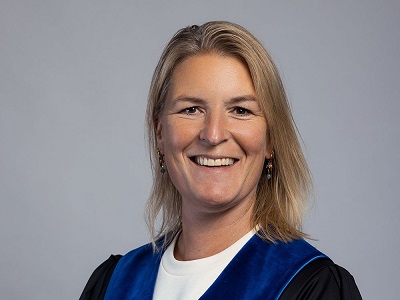
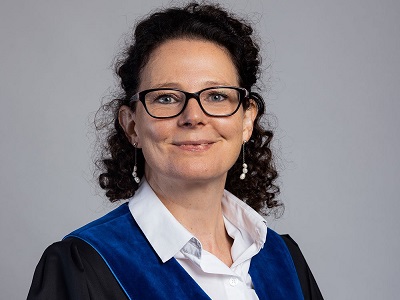
The panel at the Brussels local division consists of presiding judge Samuel Granata, Dutch judge Marije Knijff and German judge Anna Lena Klein. The latter two are also regular judges at the central division in Milan, which deals with pharma and biotech patents.
-
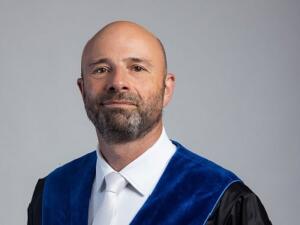
- Samuel Granata
-
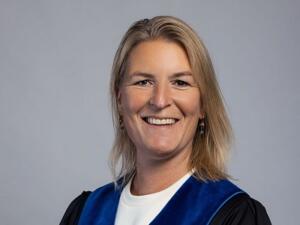
- Marije Knijff
-

- Anna-Lena Klein
Samuel Granata is the regular judge with the Brussels local division and acting as judge rapporteur in the case. According to JUVE Patent research, Granata will work full-time at the UPC from 1 March.
This is the first pharma case for the Brussels local division, having previously heard a case concerning medical devices and medical implants. It is not known why 2seventy bio decided to file the lawsuit in the Belgian capital. However, the holder of the European marketing authorisation for Carvykti is based in Belgium. So far, neither side has answered questions from JUVE Patent in view of the ongoing proceedings.
Role of USA
JUVE Patent is not aware of any parallel lawsuits in the US between BMS and Johnson & Johnson. Nevertheless, the country is involved in the European dispute as it is the owner of EP 383. JUVE Patent does not know whether there is an exclusive licence between the USA and 2seventy bio.
The US is initially only involved in the UPC proceedings as the patent holder. However, it is an active party in a revocation action in the UK (case ID: HP-2026-000007). Janssen-Cilag Limited filed this with the support of a UK team from Herbert Smith Freehills at the beginning of February. The exact details of the lawsuit are unknown. However, JUVE Patent sources indicate it is directed against EP 383.
In addition, the US must now also defend the patent against an attack the European Patent Office. The UK law firm Boult Wade Tennant had already filed a straw man opposition at the end of 2025. Partner Matthew Spencer is responsible for this. Rainer Plaggenberg, a partner at Grünecker, filed the European patent on behalf of the USA.
Mewburn Ellis for 2seventy bio
A German-British team from Mewburn Ellis filed the UPC action on behalf of the US biotech company. Thomas Wolter, Eliot Ward, and Matthew Naylor are named as the main representatives. However, the team is significantly larger.
-

- Thomas Wolter

-

- Camilla Balleny

-

- Amy Crouch

Amy Crouch, Camilla Balleny, Sean Jauss, Alex Galbraith, Anja Koller, Lauren Woolley, and Liam Batty are also on the team. The UK law firm with its international office in Munich recently strengthened its UK litigation team with Crouch and Balleny in order to land more UPC litigation. An important patent prosecution client of the firm is Bristol Myers Squibb.
Joint defence
Johnson & Johnson and Legend Biotech also quickly organised their defence. Linklaters partner Pauline Debré from Paris is leading the UPC proceedings together with Dutch Brinkhof partner Daan de Lange for Johnson & Johnson. The team behind the defence is likely to be significantly larger.
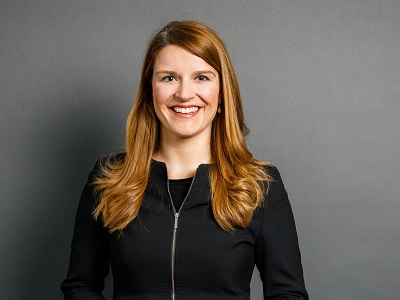
Bird & Bird is representing Legend Biotech separately. German patent attorney Andreas Obermeier and lawyer Annika Lückemann are leading the case. Both were only appointed partners of the German practice in 2025.
-

- Pauline Debré

-

- Daan de Lange

-

- Annika Lückemann
In the UK, Johnson & Johnson is attacking EP 383 with the help of Herbert Smith Freehills. The team is primarily known for pharma litigation. Partner Sebastian Moore is in the lead. The firm already has an established relationship with Johnson & Johnson.
Its German team is currently acting for Millennium Pharma and Janssen-Cilag in a dispute at Düsseldorf Regional Court over infringement of patents related to anti-cancer medication Velcade. The UK team is coordinating the litigation throughout Europe.
JUVE Patent does not yet know which law firm is defending the USA in the UK revocation action.