BioNTech and Pfizer score win in UPC dispute over COVID-19 vaccines against Promosome
In the battle over mRNA technology, BioNTech and Pfizer have now secured a victory at the UPC. A panel of the Munich division dismissed Promosome's infringement claim and ruled that the patent was invalid.
8 July 2026 by Konstanze Richter
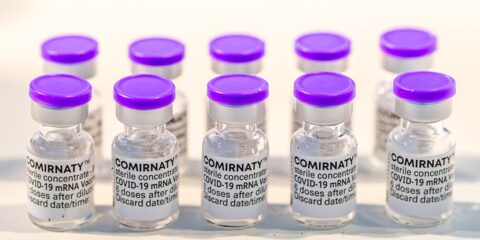
Promosome, acting on behalf of the exclusive licensee and patent holder Scripps Research Institute, brought the proceedings before the UPC at the end of 2024. It accuses BioNTech and its US partner Pfizer of infringing EP 2 401 365 through the development and manufacture of the COVID-19 mRNA vaccine Comirnaty. The patent protects the re-engineering of the primary structure of mRNA to enhance protein production. The patent holder and licensee claim that the vaccines and intermediate products were directly obtained by the patented process.
BioNTech and Pfizer denied infringement and filed counterclaims seeking revocation of the patent. They challenged EP 365 on the grounds of lack of novelty and lack of inventive step. Furthermore, the defendants claimed that Promosome lacked standing because it did not hold a valid exclusive licence.
Promosome entitled to sue
A panel presided over by Daniel Voß and comprising legally qualified judges András Kupecz and Georg Werner, as well as technically qualified judge Martin Schmidt, heard the case.
-

- Daniel Voß
-
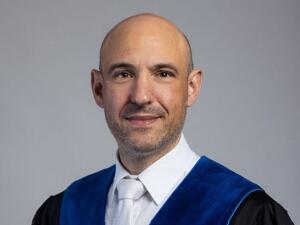
- András Kupecz
-
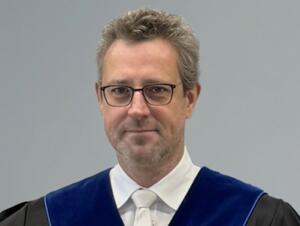
- Georg Werner
-

- Martin Schmidt
The court rejected the defendants’ challenge to Promosome’s standing. It found that Promosome held an exclusive licence within the meaning of Article 47(2) of the UPCA and was therefore entitled to bring the infringement action. However, it found the patent to be invalid due to lack of novelty. The judges held that, even if the patent had remained valid, Promosome had failed to prove infringement.
According to the court, the experimental evidence did not demonstrate that BioNTech and Pfizer had mutated actual secondary initiation codons as required by the claims. The observed increase in protein expression could equally be explained by conventional codon optimisation.
It is not yet known whether Promosome will appeal the decision.
mRNA in the crosshairs
Promosome withdrew a similar lawsuit in the US. In 2023, the company filed a claim against BioNTech and Pfizer at the US District Court for the Southern District of California in San Diego concerning US patent 8,853,179. However, in October of the same year, Promosome announced that it would dismiss its case with prejudice, meaning it cannot be refiled.
Previously, the best-selling COVID-19 vaccine had already come under fire in pan-European lawsuits filed by Moderna and CureVac. Then, in the summer of last year, GSK launched several lawsuits at the UPC against Moderna, BioNTech and Pfizer.
Meanwhile, the dispute with CureVac has come to an end, following the company’s merger with BioNTech last year, and with it the dispute with GSK.
German-Dutch teams
Litigator and Munich-based partner Georg Rauh of Vossius & Partner filed the lawsuit on behalf of Promosome. Lawyer and partner Philip Widera from the Düsseldorf office, as well as associate Franziska Erlmeier and patent attorneys Florian Grasser, and Joachim Wachenfeld, also worked on the case. In this instance, lawyers from Brinkhof were not part of the team. The two firms maintain the alliance Vossius Brinkhof UPC Litigators for UPC proceedings.
-

- Georg Rauh
-
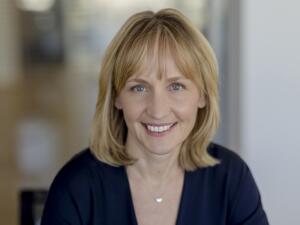
- Christine Kanz
-

- Tobias Hessel
-

- Michael Eder
As in the previous national proceedings against Moderna and CureVac, a team from Hoyng ROKH Monegier represented BioNTech. Düsseldorf-based partner Christine Kanz led the case alongside Amsterdam-based partner Theo Blomme. They worked closely with Pfizer’s counsel, Tobias Hessel of Clifford Chance. They know each other well from Hessel’s time as a partner at Hoyng ROKH Monegier. Together with other lawyers, he moved from the IP boutique to the international full-service firm Clifford Chance in early 2023.
In addition to the lead partners, the international Hoyng ROKH Monegier team also included associates Ling-Ling Dorsch, Max von Leitner, Moritz Lohr, Lisa-Marie Rauschendorfer, and Giulia-Isabella Otten.
At Clifford Chance, counsel Thomas Misgaiski and associates Lisa Philipps, as well as scientific adviser Andrea Abele, also worked on the case. The latter is a biologist and also advises on technical issues. They collaborated on technical matters with Michael Eder of the patent attorney firm df-mp.
BioNTech also retained the patent attorney firm Zwicker Schnappauf & Partner. Partners Georg Schnappauf and Sebastian Höpfner were also involved in the national proceedings. A team from Powell Gilbert is also providing advice. The UK boutique firm is BioNTech’s regular adviser in the UK and is conducting the national proceedings against CureVac.
All images of judges: ©Unified Patent Court