Hubertus Schacht takes helm at 21st Civil Chamber in Munich
As expected, Hubertus Schacht will be the new presiding judge of the 21st Civil Chamber at the Regional Court Munich. He succeeds the experienced patent judge Georg Werner, who recently moved to the UPC.
26 January 2026 by Mathieu Klos
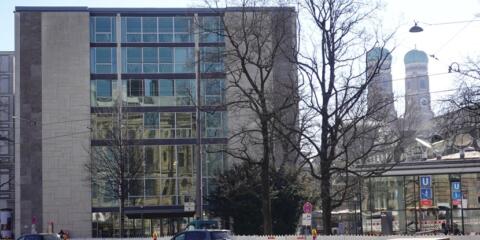
The Regional Court Munich swiftly provided clarity regarding leadership of the 21st Civil Chamber, which specialises in patent proceedings. Hubertus Schacht, an experienced patent judge, is taking over the chamber.
Its long-standing head Georg Werner recently moved to the UPC as a full-time judge. Schacht is expected to take up his new position on 1 February. Judges Sebastian Benz and Julia Obermeier will then join him.
Extensive patent experience
Hubertus Schacht most recently worked at the Higher Regional Court Munich in the 6th Civil Senate for patent and trademark cases. Prior to this, he worked for many years at both patent divisions of the Regional Court. Here he worked in the 7th Civil Chamber under former presiding judge Matthias Zigann and Oliver Schön, as well as in the 21st Civil Chamber under Georg Werner. The patent community has speculated about his return as presiding judge for some time.
It is now a done deal, as JUVE Patent has learned from court sources. However, a formal confirmation by the presidium is still pending. The court therefore did not want to confirm the appointment, but did not deny it either.
Schacht was involved in numerous important decisions of the Regional Court. These included rulings in the PI dispute over Bayer’s Xarelto, as well as the dispute between Panasonic and Oppo over SEPs and a far-reaching injunction for Huawei against Amazon over wifi routers.
Successful court
The 21st and 7th Civil Chambers are jointly responsible for patent cases at Munich Regional Court. Recently, both chambers have taken on more patent cases and replaced the Düsseldorf Regional Court as the busiest patent infringement court in Germany.
In 2025, the court is again expected to have significantly increased the number of new cases. However, the Regional Court Munich has not yet released official figures. The court is highly attractive, especially for SEP holders, because it tends to issue injunctions against implementers. Just last week, the 7th Civil Chamber ordered Asus and Acer to cease and desist due to the infringement of a Nokia SEP (case IDs: 7 O 4100/25 and 7 O 4102/25).
In pharmaceutical litigation, the Regional Court Munich recently attracted attention for granting Bayer and Regeneron far-reaching preliminary injunctions against manufacturers of generic preparations of the ophthalmic drug Eylea.
