UPC Administrative Committee decides against proactive distribution of cases
A proactive allocation of UPC cases by the management of the Court of First Instance is not in line with the UPC Agreement and is therefore off the table. According to JUVE Patent sources, the UPC Presidium and member states have nevertheless agreed on measures to strengthen the smaller UPC divisions. However, there is currently disagreement regarding the appointment of new judges.
15 July 2026 by Mathieu Klos

On 3 July, representatives of the UPC member states met for the regular meeting of the Administrative Committee to respond to ongoing criticism from some states that cases are not allocated fairly. The appointment of new judges was the second key item on the agenda.
Parts of the patent community claim that the German local divisions receive too many cases and that this is a threat to the international character of the UPC. In February, the Administrative Committee launched a wide-ranging consultation on the issue. Since then, experts have vigorously debated possible measures to strengthen the non-German divisions. However, a proactive allocation of cases by the president of the Court of First Instance is not one of them.
Such a proactive allocation of new claims across all divisions would require an amendment to the UPC Agreement. JUVE Patent has now learnt from insiders that the majority of member states are unlikely to be in favour of this.
The relevant Advisory Committee had analysed the results of the consultation and proposed alternative measures to the member states. The UPC Presidium responded with a position paper, on which the member states appear to have largely reached agreement. JUVE Patent has seen the paper.
Claimant’s choice
The UPC does not wish to undermine the claimant’s right to seek the best forum for their claim within the framework of Article 33 of the UPC Agreement.
According to UPC President Klaus Grabinski and President of the Court of First Instance Florence Butin, all measures can only be taken “within the legal framework set by the UPC Agreement”. This also includes the composition of the panels at the Court of First Instance. Proposals to deviate from the rule that, in the larger divisions in Germany, France, and the Netherlands, two national judges and only one international judge decide on cases would likewise only be possible by amending the UPC Agreement.
-

- Klaus Grabinski

-
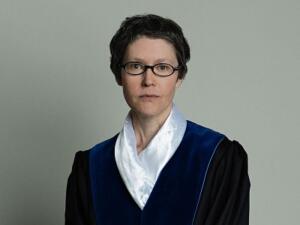
- Florence Butin
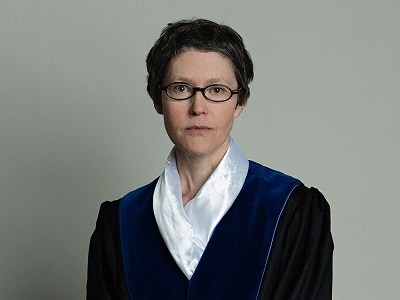
However, Grabinski and Butin emphasise in the paper that the court has already implemented measures “in order to allow for a more even distribution of cases”. They also propose further measures.
Greater reliability for users
According to the paper, experienced judges — including those from busy divisions — should be seconded more frequently to divisions with few cases. This would also apply to the judges of the German local divisions. This commitment is intended to make it more attractive for claimants to assign their cases to smaller divisions.
In addition, the UPC intends to further strengthen the role of foreign judges who, as international judges, are involved in cases in Germany, France, and the Netherlands. They are to act regularly as judge-rapporteur. This should ensure greater continuity and provide users with reliability regarding the composition of the panels.
Article 8(3) of the UPC Agreement gives the court the option of assigning foreign judges to a division on a permanent basis. It states, “Such third judge shall serve at the local division on a long-term basis, where this is necessary for the efficient functioning of divisions with a high workload.”
Preliminary opinion is to be the rule
The UPC Presidium also wants to ensure the harmonisation of procedural practices across the court. “This includes communication with the representatives, preparatory work in view of the interim conference and the oral hearings, handling of procedural applications, consideration of time constraints, early scheduling, and early designation of the technically qualified judge,” as Grabinski and Butin write in the paper.
A preliminary opinion, such as that practised to varying degrees in proceedings in France, the Netherlands, and Germany, is now also to be applied uniformly. “Judges across all divisions are encouraged to standardise the introduction to the case, identifying the key issues likely to determine the outcome and, where appropriate, the panel’s preliminary assessment on certain questions,” the paper states.
It appears that the Presidium and the member states have identified the German practice of the preliminary opinion as one reason for the strong preference shown by patent holders for the German local divisions. At the start of oral proceedings, the German judges give the parties a clear indication of how they view the case and on which points the claimant and the defendant still need to present additional arguments. Such an active role for judges is not in keeping with the legal tradition in all UPC member states. However, at various conferences — such as the Lisbon Patents & Standards Conference in mid-June — practitioners have recently called on judges in all UPC divisions to make greater use of preliminary opinions.
Greater transparency
The UPC Presidium intends to continue working on improving the transparency of the panels. It intends to act on the Advisory Committee’s suggestion to publish pre-determined panel compositions, including international judges. At the same time, Grabinski and Butin emphasise that all judges are, in principle, part of the common pool of judges and can be deployed flexibly.
The Presidium also intends to publish hearing dates as early as possible in order to make the court’s working practices more transparent so as to facilitate the choice of division.
No new judges for now
When it came to the appointment of additional judges, however, the member states were unable to agree, say JUVE Patent sources. Recently, there have been persistent rumours that experienced German judges, for example, are to be appointed to the UPC, who would then specifically support divisions with fewer cases. But some countries appear to have reservations and need time to consider the matter. The member states now intend to return to the topic in autumn.
Nevertheless, the UPC launched a public call at the start of the year. Judges from the member states were invited to apply to work with the UPC. Another topic of discussion was therefore new additions to the reserve list. New judges are usually appointed from the reserve list.