New FRAND guidelines: Munich Court aims to make proceedings more efficient
The 7th Civil Chamber of Munich Regional Court has published detailed FRAND guidelines consolidating its recent case law on standard-essential patents. The 67-page document introduces a top-down approach to check licence rates, presumes Chinese patent portfolios are inflated and gives exact figures to calculate streaming licence-rates. Presiding judge Oliver Schön explains his chamber’s reasoning to JUVE Patent.
19 August 2026 by Mathieu Klos

The guidelines, dated 13 August 2026, summarise the reasoning behind four major recent SEP decisions handed down earlier this year by the 7th Civil Chamber: ASUS I, ASUS II, Renault and ZTE v Samsung. The parallel 21st Civil Chamber has been informed of the guidelines. Joint guidance was not feasible due to the level of detail, but the 7th Civil Chamber assumes that both panels agree that a substantive review of the patent holder’s offer is required in a range of scenarios.
‘Other’ and ‘inner’ willingness test
At the heart of the guidelines is a two-stage assessment of the licensee’s willingness. The chamber distinguishes between ‘outer’ and ‘inner’ willingness to take out a licence. Outer willingness is deemed to exist if the implementer does not adopt any obvious hold-out strategy.
Outer willingness requires the implementer to pay the undisputed portion of the licence fee — essentially its own last offer — to the patent holder on a permanent basis. Additional security is required where the implementer’s offer is below 60% of the patent holder’s demand and the difference exceeds US$10 million. In such cases, security corresponding to one year’s worth of the patent holder’s demanded amount must be provided.
A special rule applies where the implementer has sought a rate-setting procedure in another jurisdiction. In that case, the implementer must post as security the amount either set by the foreign court or proposed in its own application, regardless of whether the opposing party accepted the foreign court’s proposal.
Court-appointed experts are not required
Only if external willingness is established does the chamber proceed to examine internal willingness, which requires a full substantive review of the patent holder’s offer against a FRAND range. This is described as equivalent in scope to rate-setting procedures conducted by the UK High Court or courts in the People’s Republic of China.
However, the chamber explicitly rejects the appointment of experts, holding that the question of an appropriate rate is a legal one and not amenable to expert evidence.
Comparable licences take priority
The guidelines establish a clear hierarchy. Comparable licence agreements are the primary tool for determining a FRAND rate, with the top-down approach serving as a control mechanism. The chamber sets an absolute limit of five years on the age of comparable agreements. Multi-standard licences generally cannot be unpacked and are unsuitable for comparison with single-standard licences. Cross-licences are also, as a rule, unsuitable comparators.
The chamber determines a median value from the submitted agreements. A FRAND range extends 50% above and below this value. Where a directly comparable agreement exists, the patent holder may increase the rate by no more than 15%. The chamber emphasises that cumulative increases are not permitted. The benchmark for each new agreement remains the original reference contract, not a rate that has previously been increased.
Top-down approach
For the top-down approach, the chamber uses standardised per-unit prices for product categories rather than actual selling prices. For mobile phones, the standardised price is US$170; for tablets, US$150–200; for laptops and PCs, US$500–550; and for routers, US$130–150. The aggregate royalty burden for 5G in a mobile phone (backwards compatible) is set at 8%, equating to US$13.60 per device. Across mobile, Wi-Fi and streaming standards, the chamber estimates a total ARB of around 18% for a mobile phone, or US$30.60.
The chamber applies the top-down analysis to verify whether rates derived from comparable agreements remain within reasonable limits. Where the result of a comparable-agreement analysis significantly exceeds the top-down figure, a qualified review of the submitted contracts becomes necessary.
Discount for Chinese portfolios
Furthermore, the judges assume that patent portfolios held by Chinese companies are artificially inflated. They justify this by referring to Chinese state programmes that provided financial incentives for patent filings, thereby distorting portfolio sizes relative to genuine innovative contribution. Consequently, the judges will presume a 15% discount on Chinese portfolios in future. They note that no corresponding upward adjustment is warranted for other portfolios.
Applying this new rule retrospectively to their own judgment in the ZTE v Samsung case of 30 April 2026, the judges would now reach a different decision. Whilst the outcome — that ZTE’s offer fell within the FRAND range — would remain unchanged, the appropriate lump-sum figure for the 2024–2028 period would now be US$550 million rather than US$640 million. The upper limit of the FRAND range would decrease from US$798.6 million to US$678.8 million.
Streaming as a service
The guidelines also address streaming services such as Netflix and Disney+, an area where, according to the chamber, no established licensing practice exists. Applying its methodology, the chamber calculates indicative monthly licence fees of around €0.63 for a standard Netflix subscription and €0.49 for a standard Disney+ subscription, with premium subscriptions costing €1.05 and €0.84 respectively. These calculations are explicitly non-binding and depend on further factual submissions.
The chamber holds that patent exhaustion does not apply to streaming providers, as providing streaming capability in a device and offering a streaming service constitute distinct forms of use.
No safe harbour
The chamber considered but rejected introducing a formal “safe harbour” concept that would have shielded implementers from injunctions if they agreed to binding arbitration under certain conditions. The judges concluded that such a mechanism would run counter to the interests of patent holders and could be misused. Instead, parties may request an early ‘FRAND FIRST’ hearing dedicated exclusively to FRAND issues, with submissions limited to 25 pages plus annexes.
The chamber notes that the establishment of the Patent Mediation and Arbitration Centre in June 2026 did not materially alter the landscape of alternative dispute resolution, given the long-standing availability of mediation at Munich Regional Court and arbitration through bodies such as the ICC.
Avanci and previous ruling
For the Avanci 5G pool, which lists a standard price of US$32 per vehicle, the judges find that the rate withstands top-down scrutiny. Based on the longer average lifespan of vehicles compared to mobile phones, a rate of US$36.72 per vehicle would be FRAND, suggesting that the pool does not fully exhaust its licensing potential.
On past release — the treatment of unlicensed use prior to the conclusion of a licence agreement — the chamber has departed from its earlier position for the period from 2015 onwards. From that point onwards, awareness of licensing obligations for telecommunications technology can be presumed, and implementers should have made corresponding provisions. Whether to waive claims for past use remains a commercial decision for the patent holder, subject only to a test for abuse.
“Achieving a better factual basis”
“With the new guidelines, we are providing a clarifying summary of our three decisions – ASUS I, ASUS II and Renault – and the ZTE/Samsung decision based on them,” explains presiding judge Oliver Schön to JUVE Patent, outlining the 7th Civil Chamber’s reasoning. Alongside Schön, Katalin Tözsér and Florian Schweyer are also members of the chamber. “In addition, over the past few months we have had a number of interesting FRAND First hearings, as well as other proceedings involving interesting specific issues which have not yet been decided.”
-

- Oliver Schön

-

- Katalin Tözsér

-

- Florian-Schweyer
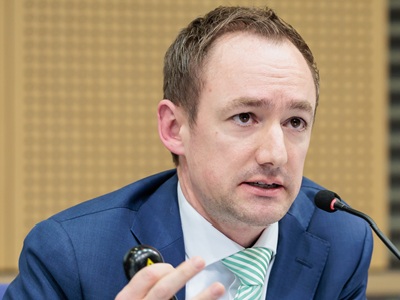
During discussions with the parties’ representatives, the chamber identified difficulties in understanding how its approach to review was presented in relation to various decisions. “We have identified a clear need for a systematic and clearly structured presentation in practice,” said Oliver Schön. The chamber anticipates that these guidelines will enable the parties to present their cases more specifically in future, thereby providing the judges with a better factual basis for their decisions.
Criticism of the European Commission
In the guidelines, the chamber also addresses the interaction between international courts in SEP disputes. “In the global system of patent enforcement, the Federal Republic of Germany and the Unified Patent Court play a significant role,” the introduction states. The judges do not hold back from taking jabs at other courts.
“Other jurisdictions, such as the United Kingdom and Brazil, play a secondary role, which can be defined primarily as a complement to, or reflection of, the systems in Europe and the US. At present, it is not yet possible to conclusively assess the role of the judiciary in the People’s Republic of China. It is to be expected that the courts there will gain in importance over the next few years, not least because the courts have expressed a corresponding self-image.”
The guidelines are likely to serve to consolidate the position of Munich Regional Court as a leading court for SEP claims. Almost every SEP campaign last year involved several cases before the court. The judges anticipate between 40 and 50 SEP cases per year for the 7th Civil Chamber. In total, Munich Regional Court had 332 new cases last year.
The judges also address the European Commission’s amicus curiae brief in the VoiceAge v. HMD appeal proceedings. They argue that the criticism voiced by the Commission focuses, in a manner that is ultimately too one-sided, on supposed consumer interests and fails to do justice to the complexity of the issue as a whole. “It must be noted that an important institution has missed the opportunity to enrich the discussion on the subject of SEPs/FRAND by putting forward weighty arguments and treating the arguments of both sides in a balanced manner,” the judges criticised the Commission.
