How the UPC has evolved into an established court
Growing case law, rising case numbers and a smoothly functioning case management system. In 2025 the Unified Patent Court matured into an established institution. This is evident in the increasing number of legally qualified judges working full time, while the new UPC budget allows for further recruitment.
21 January 2026 by Mathieu Klos

According to the latest JUVE Patent data on UPC judge capacities, the 48 legally qualified judges now dedicate an average of 80% of their time to the UPC and only 20% to other courts. A majority of 29 judges now work full time for the European patent court, while 19 legally qualified judges continue to split their time with national courts.
JUVE Patent’s data covers all legally qualified judges who took office by 1 January 2026. Recent appointments to the Court of Appeal include Nathalie Sabotier from France and Bart van den Broek from the Netherlands. Daniel Severinsson from Sweden and Georg Werner from Munich joined the Court of First Instance. These appointments cap off a series of new judicial appointments over the past year.
-

- Nathalie Sabotier
-

- Bart van den Broek
-

- Daniel Severinsson
-
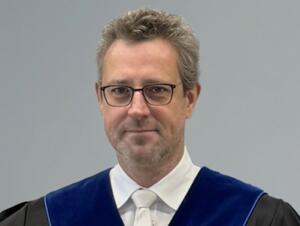
- Georg Werner
When the court launched in June 2023, most judges worked simultaneously for the UPC and their national courts. However, the UPC Administrative Council — where member states determine personnel policy — has begun hiring judges directly on a full-time basis. Severinsson, Werner and van den Broek are among these appointments, as is German judge Tobias Sender, who joined the Mannheim local division in autumn.
Trend continues
Additionally, more existing UPC judges have moved to full-time positions, taking leave from their national court duties. JUVE Patent published a comprehensive overview. Part-time UPC judges work at either 20%, 50% or 80% capacity.
Three of the five judges joining the UPC on 1 March will work full time. Thomas Adocker will leave his partnership at Taylor Wessing in Vienna to become a UPC judge. According to JUVE Patent sources, Ingo Rinken from Düsseldorf is moving from the Higher Regional Court to the UPC, while Ina Schnurr is leaving the German Federal Patent Court in Munich.
At least three other judges will soon increase their UPC commitment to 100%. JUVE Patent research indicates these include Samuel Granata from Belgium, Finland native Petri Rinkinen and Rute Lopez from Portugal. All three regularly serve as foreign judges in proceedings at major UPC local divisions in Paris and Germany. The average judicial capacity remains stable at 80%.
More recruitment
The UPC has become an attractive career destination. Young judges, particularly from Düsseldorf, increasingly view patent chamber judgeships as stepping stones to UPC positions. To the frustration of national court presidents tasked with maintaining domestic patent courts, the UPC continues to lure judges away. As the capacities at national level tighten, the UPC plans further expansion.
The UPC’s 2026 budget plan allocates 41 full-time equivalent (FTE) positions for the Court of First Instance — 1.8 more than in 2025. The Court of Appeal target remains at 12 FTEs. However, even after adding a third panel with three new judges, the Court of Appeal has not reached this target. Currently, ten judges work at 82% capacity, leaving room for 3.8 new FTE positions.
The Court of First Instance has not yet filled its approved 39.1 FTE posts for 2025. The current 38 judges work at 78% capacity, leaving 8.8 FTE positions unfilled from last year’s target, plus the additional 1.8 FTE positions for 2026. This indicates significant growth potential.
The court also plans to add technically qualified judges, who work case-by-case rather than at fixed capacities. Currently, 82 TQJs serve in the UPC pool. The court budgeted 9.2 FTEs for this in 2025, increasing to 13 FTEs in 2026.
The missing piece
The UPC stands out globally for its attractiveness to judges and concentration of patent expertise. Last year’s implementation of a new case management system marked significant progress in user-friendliness, earning broad approval from companies and lawyers.
Case numbers continue to climb. The UPC case search shows 446 infringement, 78 revocation and 76 preliminary injunction cases by year-end. The actual figure may be higher, as some December filings must be served on defendants before publication.
The court projects 1,100 new cases this year. These include, for example, 186 infringement actions, 64 preliminary injunction proceedings and 29 standalone revocation actions.
The Patent Mediation and Arbitration Centre in Ljubljana (PMAC) remains the system’s final unknown. However, it is increasingly taking shape and aims to begin operations in June 2026. The UPC budget forecasts income for this of nearly €400,000 against expenditure of €1.5 million.
Overall, the UPC targets a modest €1.3 million profit this year. Member states recently approved slight increases in court fees — another sign of a well-functioning institution.