Nokia, Warner Bros. and Paramount can now focus on RAND-rate setting
It is difficult to say who has actually emerged as the provisional winner in the interim payment dispute between Nokia, Warner Bros. and Paramount. In his judgment, UK High Court judge Richard Meade sets out in detail how the court assesses interim payments. However, he did not publish the exact rate.
25 June 2026 by Mathieu Klos

Over several days in early May, a hearing took place at the UK High Court to determine the interim payment rate in the video-streaming dispute between Nokia, Warner Bros. and Paramount. Presiding judge Richard Meade has now set the rate, but the exact amount remains confidential (case ID: HP-2025-000053 and HP-2025-000055).
The two sides were very far apart in their original offers. According to the judgment, Warner Bros. and Paramount primarily argue that the final RAND price should be set by reference to the rates charged by patent pools for streaming standards. This approach sets a lower bound of approximately $250,000–$300,000 for the final RAND licence. This would not include payment for the full period of past use, dating back to 2011, nor interest.
Nokia had demanded a much higher licence fee based on three comparable licences. Meade wrote in his judgment, “This is about three orders of magnitude higher than what WBD and Paramount argue for.”
Calculation of the interim payments
For Meade, the starting point for calculating the interim payments was a previous lump-sum offer from Nokia. Meade confirmed the non-refundable minimum payment, which is undisputed between the parties. He also set a refundable interim amount for Paramount.
Starting from the median value, Meade subjectively increased the figure in Nokia’s favour. For Warner Bros., the rate is higher due to higher subscriber numbers. The companies had previously agreed “that Warner Bros. ought to pay more than Paramount for the interim licence in the ratio of 4:3, owing to different subscriber numbers.”
Patent holders agree on RAND terms
In his judgment, Meade frequently refers to his decision in TP-Link vs Huawei. In February, Meade awarded an interim licence to Huawei. He awarded Huawei significantly more money than the implementer TP-Link had proposed, stipulating that the amount must be calculated using the “mid-point method”. This corresponds to the average of the amount requested by Huawei — based on the rack rate approach and its standard licence rates — and the lump sum of $12 million proposed by TP-Link as the lower limit.
It was the first time the court had granted an interim licence to an SEP holder. Nokia vs Warner Bros. and Paramount is the second rate-setting case in which a patent holder has agreed to accept a RAND rate from the UK High Court. In April, after agreeing to a global RAND rate-setting in the UK, Nokia withdrew all proceedings against the two streaming providers at the UPC and in Munich. However, unlike in Huawei vs TP-Link, this case concerns an interim payment rather than an interim licence.
General rules for interim payments
In his judgment, Meade set out a number of fundamental aspects that could be important for future proceedings. For example, the interim payment trial should remain simple, swift, and cost-effective. It should not become a mini-trial that anticipates a comprehensive taking of evidence for the main trial.
Meade then confirmed Nokia’s position that the court may order an adjustable portion of an interim payment. Warner Bros. and Paramount sought to prevent this.
In the present case, Meade rejected the mid-point method previously applied in other proceedings, emphasising that it should not be applied in cases where it reaches its limits. The mid-point method is attractive solely because it is fair, robust, and can be applied without extensive findings of fact.
Furthermore, he considers the comparable licences cited by Nokia to be rather unsuitable, as these contracts differ significantly from one another and Nokia ultimately selects the contract most favourable to itself. Meade also rejects the patent pool approach proposed by Warner Bros. and Paramount for determining the interim payments. However, he left open a final assessment for the main trial.
Overall, Meade focused on Nokia’s lump-sum offer. Although not part of the actual legal dispute, he considers it particularly significant in the context of a pragmatic interim arrangement. He therefore attaches greater weight to it than to the other comparative licences. At the same time, he granted Nokia the right to payment dating back to 2011, plus interest.
The details must now be finalised in a form of order hearing. Once Warner Bros. and Paramount have made the interim payment, the parties can focus on the main trial at the end of November or on settlement discussions.
The advisors
In the UK proceedings, Nokia is relying on its regular advisors at Bird & Bird. The lead partners are Tom Darvill, Richard Vary, and Jane Mutimear. The company has instructed barristers Nicholas Saunders of Brick Court Chambers and Joe Delaney of Three New Square.
Kirkland & Ellis represents Paramount, whilst Warner Bros. has instructed a team from Winston Taylor.
-

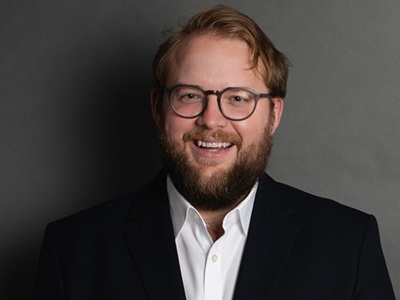
- Tom Darvill
-
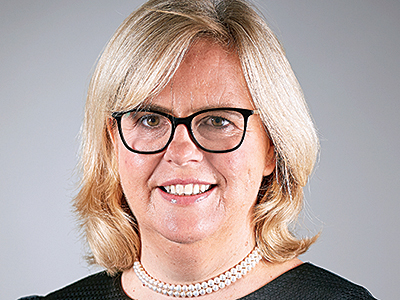
- Nicola Dagg
-

- Michael Washbrook

The barristers pleading in court were Daniel Piccinin of Brick Court Chambers and Femi Adekoya of Blackstone for Warner Bros., and Kathryn Pickard and Kyra Nezami of 11 South Square for Paramount.
The Kirkland team comprises Nicola Dagg, Peter Pereira, Ray Cheng, and Nevyn Fournel. Taylor Wessing’s team consists of lead partner Mike Washbrook, partner Xuyang Zhu, senior counsel Julie Chiu, and associates Sheenal Singh, Alex Walker, and Natalie Smith.
