Amazon and InterDigital will settle their FRAND dispute through arbitration
Rumours of an agreement in the streaming dispute between InterDigital and Amazon have been circulating for days. Now it has been confirmed. The parties have agreed to resolve all pending litigation and will enter into binding arbitration to determine the final terms of the new agreement. However, the PMAC is probably out of the question as a forum.
12 June 2026 by Mathieu Klos

InterDigital and Amazon have come to an agreement concerning civil court litigation regarding Amazon’s services and devices, including Amazon Prime Video. According to a press release published by InterDigital yesterday afternoon, the deal ends all pending litigation between the two companies, with the final terms of the agreement to be determined in binding arbitration.
The agreement marks a significant de-escalation in one of the most intense global disputes over SEPs over the past twelve months. It brings an end to all civil court litigation between the two companies. Since September 2025, the dispute had escalated into a jurisdictional conflict between the UK High Court and the Unified Patent Court. The case was closely followed by the global patent community.
The parties will now work through the remaining issues in global arbitration. At the centre of the dispute is the setting of a global licence rate for InterDigital’s video streaming portfolio. This was the subject of so much conflict between the parties because it not only concerns Amazon’s own streaming offering, but also devices and possibly Amazon Web Services.
“This agreement is an important milestone in InterDigital’s longer-term goal to expand into video streaming services licensing and is recognition of the importance of our foundational technology in devices and services,” commented Julia Mattis, chief licensing officer at InterDigital. “We welcome Amazon’s willingness to enter into a licence agreement with us and work through the remaining issues in global arbitration.”
A multi-jurisdictional battle
The litigation between InterDigital and Amazon had been pending in several jurisdictions, including Brazil, the UPC, Germany, the UK, and the US.
In the UK, Amazon had applied for a declaration of non-infringement in August 2024 and asked the High Court for a final RAND determination. The RAND trial was scheduled for September 2026.
In September 2024, the local division Mannheim under presiding judge Peter Tochtermann, as well as Munich Regional Court, granted InterDigital ex parte provisional measures against Amazon, prohibiting the US company from seeking an interim licence in the UK. The UK High Court reacted with countermeasures to protect the UK RAND rate proceedings.
InterDigital then initiated several infringement actions against Amazon. The company filed cases with the US Federal District Court in Delaware, the Rio de Janeiro State Court, Munich Regional Court and the UPC local division Mannheim. In total, InterDigital claimed infringement of ten patents. All patents-in-suit relate to video content compression and picture quality improvement through high dynamic range (HDR) technology.
InterDigital claimed Amazon infringes these patents with devices such as FireTV and Kindle, as well as through its services such as Prime Video.
Is a judgment by the UPC Court of Appeal still likely?
But it was above all the dispute over the anti-interim licence that dominated headlines and caused tempers to flare. The situation escalated over last Christmas and into spring. By early March, the dispute had become a jurisdictional conflict between the UK High Court and the UPC concerning the effect of the UPC’s anti-suit injunction on the UK RAND proceedings.
-

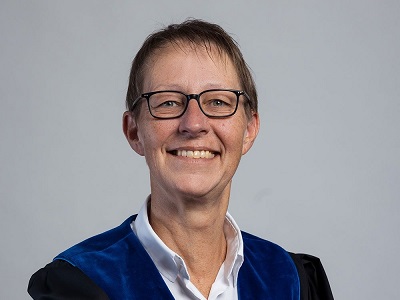
- Ulrike Voß
-

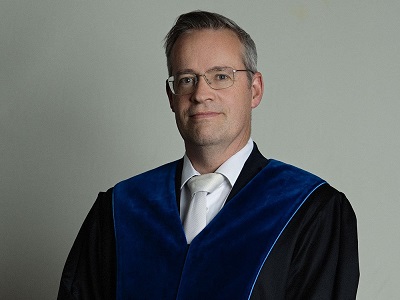
- Peter Tochtermann
-

- Richard Meade

Two weeks ago, the UPC Court of Appeal in Luxembourg heard the appeal against the Mannheim anti-suit injunction. Many stakeholders and observers have been waiting for the court’s judgment in the hope of gaining more clarity on the AILI issue. Some were also hoping for a de-escalation between the UPC and the UK High Court. However, in the opinion of observers, the Court of Appeal indicated at the hearing that the AILI was admissible.
A final clarification is now very unlikely. To do so, the judges would have to publish their judgment quickly before the parties withdraw their lawsuits.
However, parties in later disputes over streaming patents — such as Nokia against Warner Bros and Paramount — avoided measures that would have led to an AILI battle.
Focus on rate setting
The agreement makes InterDigital vs Amazon the third dispute in which the parties have disposed of all infringement claims and focused on a central rate-setting procedure.
In the dispute between Huawei and TP-Link over wifi patents, both the SEP holder and the implementer had committed to the RAND rate-setting procedure in the UK. The UK High Court subsequently granted an interim licence and Huawei withdrew its infringement claim in May. Judge Richard Meade will set the RAND rate in the main proceedings in February 2027.
In the dispute with Warner Bros and Paramount, Nokia also agreed to the rate-setting procedure initiated by the two streaming providers and withdrew its infringement claims. In May, UK High Court judge Richard Meade held a hearing for the interim payment amount. His judgment is expected at any time. The rate-setting main proceedings will take place in November.
Which arbitration venue?
In the dispute between Nokia and Acer, the UK Court of Appeal indirectly imposed arbitration on the parties, which raises the question of the appropriate forum.
The same question is now under discussion between InterDigital and Amazon. The UPC’s Patent Mediation and Arbitration Centre only officially launched at the beginning of June. SEP holders in particular have recently been strongly in favour of arbitration in FRAND disputes and had advocated the establishment of the PMAC. However, it is questionable whether InterDigital and Amazon will opt for the still inexperienced PMAC in view of the high economic significance of their licence dispute. The parties would have to spend significant time and effort familiarising themselves with the PMAC rules and procedures.
Alternatives include the WIPO Arbitration and Mediation Centre, the International Chamber of Commerce or the American Arbitration Association. National institutions could also be considered. As US companies, InterDigital and Amazon are likely to agree on an established forum.
Advisor line-up
Throughout the dispute, itigators from Bird & Bird and Arnold Ruess represented InterDigital together with patent attorneys from df-mp. Amazon relied on Hoyng ROKH Monegier and Hogan Lovells.
Find out more about the advisers here. Read a comprehensive overview of the dispute here.
Update 12. June 2026: After publication JUVE Patent received the following statement from an Amazon spokesperson: “InterDigital’s press release is inaccurate. While we are in negotiations regarding an arbitration process, no agreement has yet been signed. Amazon and InterDigital have not yet entered into a patent license agreement and our ongoing litigations with InterDigital have not yet resolved.”
