Merz and A&O gain sales ban for generic fampridine products in Germany
Generic drug manufacturers may no longer sell their fampridine products on the German market. At the request of patent holder Merz, Munich Regional Court has now issued several preliminary injunctions.
20 April 2026 by Konstanze Richter

Merz is fighting in Germany and at the UPC over its drug Fampyra, which aims to improve walking ability in multiple sclerosis patients. At the centre of the dispute are EP 2 377 536 and EP 1 732 548. Both cover methods of using sustained release aminopyridine compositions and relate to a dosing regimen for fampridine. While the patents have expired, the SPCs based on them are still valid.
After the German Federal Court of Justice recently upheld both patents, Merz applied for a preliminary injunction against nine generics manufacturers at Munich Regional Court (case IDs: 7 O 2713/26 to 7 O 2721/26). The subject matter in each case is the German supplementary protection certificate DE 12 2013 000 046.5 based on EP 536.
The court has now granted these against Betapharm, Aliud Pharma, Stada, Puren Pharma, Ratiopharm, Hexal, Microlabs and Heumann Pharma.
Some cases settled
Basic, Ascend, Zentiva and Neuraxpharm have provided voluntary cease-and-desist declarations.
Merz accuses the generics companies of infringing the German SPC based on EP 536, which remains valid until mid-July. Due to the PI, the Informationsstelle für Arzneispezifitäten (IFA) will no longer list the generic drugs as available in the Lauer Taxe. IFA is the joint clearing house for the pharmaceutical industry, wholesalers and pharmacists in Germany. The so-called Lauer Taxe, which provides pharmacies with information on the availability of approved medicines, derives from its database. Without a listing in the Lauer Taxe, medicines cannot be distributed in Germany.
In parallel PI proceedings against Viatris at the UPC’s Paris local division over the French SPC 13C0033 based on EP 536, the judges decided that Merz’s PI request came too late to justify an injunction. An appeal is pending, the oral hearing took place last week.
Merz banks on A&O
Merz relies on A&O Shearman in the proceedings at both the UPC and Munich Regional Court. Munich-based partner Stephan Neuhaus has extensive experience in pharmaceutical cases. He was lead counsel for Bayer in the dispute over its blockbuster Xarelto and for Mundipharma in the damages claim against Glenmark. In the current case for Merz, associate Teresa Limberg and patent attorney Caroline Bley assisted. Albrecht von Menges of Hamburg patent firm Uexküll & Stolberg advised on the technical part of the proceedings. He previously successfully defended Merz in the parallel nullity suit.
-
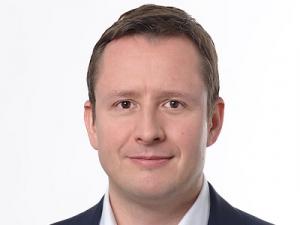
- Stephan Neuhaus
-
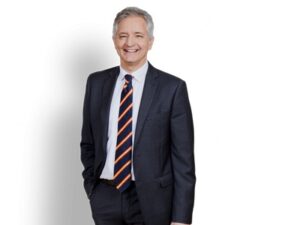
- Albrecht von Menges
They worked closely with the in-house team of Merz Therapeutics consisting of Head of Global IP Nikolai Graf v. Keyserlingk, Vice President and General Counsel Cornelia Keller, and Head of Legal Corporate Maike Bermüller.
In the UPC proceedings, French partners Laetitia Bénard and Charles Tuffreau are in the lead. Associates Elise Romelly, Morgan Torchy, and Manon Perret provide assistance. The team at the UPC also included Neuhaus and Limberg, as well as Dutch partner Fritz Gerritzen and associate Sara Swinkels.
Bonabry for four defendants
Bonabry represented four of the defendants. A team around counsel Sarah Salaschek acted for Betapharm, while Hamburg-based partner Daniel Hoppe represented Aliud Pharma and Stadapharm. Munich-based partner Carl-Alexander Dinges defended Puren Pharma. Patent attorneys from Hamm&Wittkopp provided advice on technical matters. Malte von Seebach was active for Betapharm, name partner Alexander Wittkopp and Thomas Kernebeck acted for Stadapharm and Aliud, while Nils Kahlcke advised in the case of Puren Pharma.
-
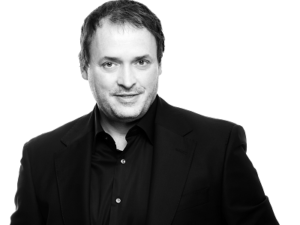
- Daniel Hoppe
-

- Sarah Salaschek
-
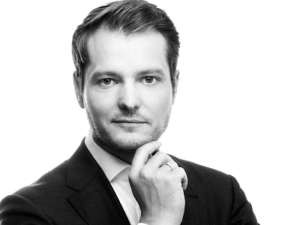
- Carl-Alexander Dinges
Ratiopharm and Basic banked on Bird & Bird, with a team around Düsseldorf partner Oliver Jüngst acting for the former and Munich-based partner Christopher Maierhöfer for the latter. Jüngst was assisted by counsel Lucas Brons and associate Natalie Ackermann-Blome. Partner Maierhöfer worked with counsel Roksana Hosseini.
Patent attorney Michael Best of Munich firm Kraus & Lederer advised on the technical matters in the case regarding Ratiopharm , while Executive Counsel, European IP and Regulatory Litigation at Teva Thomas Hendicott coordinated the proceedings.
-
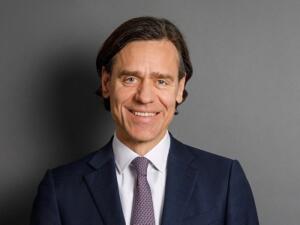
- Oliver Jüngst
-

- Christopher Maierhöfer
-
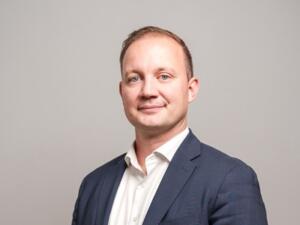
- Jan Phillip Rektorschek
Hexal instructed the Munich-based IP boutique Pentarc, with Jan Philip Rektorschek in the lead. He regularly works for the client. For example, he recently represented Hexal and Sandoz in the PI proceedings over Bayer’s Eylea.
Meanwhile, Thomas Janssen of Stuttgart-based full-service law firm BRP Renaud represented Micro Labs. No representative was present for Heumann Pharma.
