Hoffmann-La Roche lands PI against Menarini Diagnostics from UPC
Today, the local division Düsseldorf issued a preliminary injunction in proceedings between Hoffmann-La Roche and Menarini over CGM devices. Various providers of this lucrative technology are currently in dispute at the UPC.
5 December 2025 by Konstanze Richter

Glucose-monitoring devices represent a highly competitive market, as diabetes affects millions worldwide. Continuous glucose-monitoring systems (CGM) have become particularly popular, allowing users to monitor their blood-glucose levels continuously via mobile phone. Several companies are currently battling over this technology at the UPC.
F. Hoffmann-La Roche owns EP 1 962 668 B1, which protects a “sandwich sensor for the determination of an analyte concentration”. The patent owner accuses Berlin-Chemie and Menarini of infringing the patent with their products marketed under the brand name GlucoMen iCan. Roche applied for provisional measures at the UPC local division Düsseldorf.
The judges’ panel, consisting of presiding judge Ronny Thomas, judge rapporteur Jule Schumacher and legally qualified judge András Kupecz, granted Hoffmann-La Roche an injunction in the PI proceedings (case ID: ACT_34241/2025/UPC_CFI_712/2025).
-
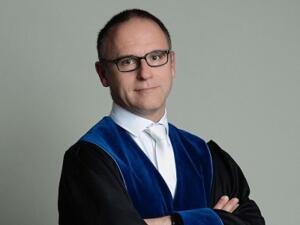
- Ronny Thomas
-
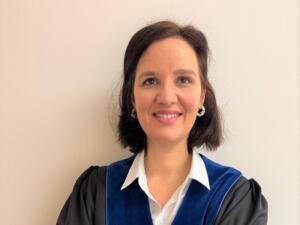
- Jule Schumacher
-
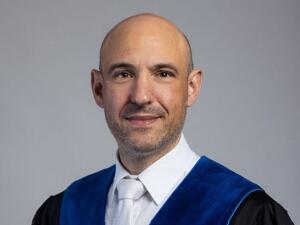
- András Kupecz
At the November hearing, discussion focused strongly on the sensor design, particularly the combination of the electrode system and contact layer. In its judgment, the court explained in detail the design of the sensors which Menarini is no longer permitted to manufacture, import or distribute in Germany, France, and Italy.
Additionally, the company must provisionally reimburse costs of €32,051.20. The UPC set the value in dispute at €1,000,000. According to JUVE Patent sources, Menarini will appeal the decision.
IP boutique vs international firm
Claimants F. Hoffmann-La Roche and Roche Diabetes Care relied on Düsseldorf-based IP boutique Kather Augenstein. Name partner Christof Augenstein was also active for Roche in a now-settled UPC dispute over insulin distribution technology against Tandem. Associates Katharina Brandt, Svenja Ullmann, and Sophie Prudent assisted in the current proceedings.
The Kather Augenstein team worked closely with patent attorneys Matthias Stößel and Eva Hennekemper from the Mannheim office of patent attorney firm Altmann Stößel Dick, who provided technical advice.
From Roche’s in-house team, Chief Patent Counsel Sabine Wildschuetz, Senior Patent Engineer Peter Kettenmann and Patent Counsel Elisabeth Kierig were also present at the hearing.
-

- Christof Augenstein
-

- Christopher Maierhöfer
An IP team from international law firm Bird & Bird led the case for defendants Menarini and Berlin-Chemie. The firm has strong relations with the Italian life sciences company and is representing it at the UPC against lawsuits from three different competitors. This includes the now-settled dispute with Insulet over insulin patch pumps and a lawsuit filed by Abbott at the local division The Hague.
Christopher Maierhöfer from Bird & Bird’s Munich office is leading the current case. He worked with an international mixed team including Milan partner Edoardo Barbera, who is leading the case against Abbott, as well as Munich partner and patent attorney Jan van Dieck.
German counsel Roksana Hosseini and Leonard Lotz, and associates Jonathan Hechler and Leonie Reichardt, assisted. Andrea Vantini and Pietro Dettori from the Milan office also provided support, as well as Munich-based patent attorney Simon Klesen, who joined the team in September from Vossius & Partner. (Co-author: Christina Schulze)