Halozyme takes the win over MSD’s cancer drug Keytruda in the Netherlands
The District Court The Hague has handed Halozyme a significant victory in its global dispute with MSD over the subcutaneous version of blockbuster cancer drug Keytruda. The court upheld Halozyme's European patent and issued a cross-border injunction covering eight countries, prohibiting MSD from marketing Keytruda.
9 October 2026 by Mathieu Klos

The Dutch court dismissed MSD’s revocation action against the Dutch part of EP 2 797 622 and granted Halozyme’s counterclaims for infringement in Belgium, Denmark, France, Ireland, Italy, the Netherlands, Sweden, and Switzerland (case ID: C/09/695432 / HA ZA 25-1075). The panel, consisting of judges Edger Brinkman, Jorrit Hoefnagel and Carolin Schüller, ruled that MSD’s Keytruda SC product falls within the scope of EP 622 and ordered the US pharmaceutical company to cease infringement within seven days of service of the judgment, subject to penalties of up to €50 million.
The patent, which expires in December 2032, protects modified PH20 polypeptides with increased stability in the presence of phenolic preservatives. Halozyme licenses the underlying Enhanze and MDASE technologies, which enable the subcutaneous administration of drugs that were previously only available via infusion. Keytruda, with the active ingredient pembrolizumab, generated sales of approximately €25.8 billion for MSD in 2024, making it one of the world’s best-selling medicines.
The dispute centres on Keytruda SC, which contains the enzyme berahyaluronidase alfa (ALT-B4), developed by Korean company Alteogen. MSD received central EU marketing authorisation for the subcutaneous formulation and had announced plans to launch the product in Europe in early 2026.
Infringement across eight countries
The Dutch court found that ALT-B4 meets all features of claim 1 of EP 622, including the requirement of increased stability in the presence of phenolic preservatives. The judges rejected MSD’s argument that the comparison of stability should be assessed within the final formulation, holding instead that the test must be conducted on the modified PH20 polypeptide as such. The court also noted that it was irrelevant whether Keytruda SC actually contained a phenolic preservative, since claim 1 constitutes a product claim with functional features.
On validity, the court dismissed MSD’s attacks based on lack of enablement, added matter, novelty and inventive step. The judges found that none of the cited prior art documents would have led the skilled person to the claimed modifications with a reasonable expectation of success.
Significantly, the court extended its jurisdiction to cover seven countries beyond the Netherlands. Applying the CJEU’s judgment in BSH vs Electrolux, the panel held that there was no reasonable and non-negligible chance that the patent would be revoked in the parallel nullity proceedings pending in Denmark, France, Sweden, and Switzerland. The court referred to its own validity findings, as well as the preliminary opinion of the German Federal Patent Court and the ruling of Munich Regional Court, both of which considered EP 622 valid.
Novel approach to cross-border enforcement
Rather than staying the proceedings pending the outcome of foreign nullity actions, the Dutch judges adopted a conditional approach, ruling that the cross-border injunction will lose its effect if the relevant national part of EP 622 is revoked by the competent national court. The court expressly departed from the Dutch Supreme Court’s approach in Roche vs Primus II, which it considered outdated following BSH vs Electrolux. The judges found this solution more practical and better suited to avoiding a multitude of stayed proceedings.
The court also granted a separate injunction prohibiting MSD from unlawfully facilitating infringement by its group companies through its central European marketing authorisation. The Dutch judges held that MSD, as holder of the marketing authorisation, acts contrary to societal due care if it knowingly facilitates or tolerates the marketing of Keytruda SC by its group companies in Belgium, Denmark, France, Ireland, and Italy.
The court further criticised MSD for breaching its duty of truthfulness under Article 21 of the Dutch Code of Civil Procedure. In its reply to the counterclaim filed in April 2026, MSD had described as “unfounded and incorrect” Halozyme’s allegation that the MSD group intended to launch Keytruda SC in European markets. However, less than a month later, MSD’s Swedish and Danish sister companies had listed Keytruda SC in the national pricing databases. The court decided not to attach further consequences to this breach, given that it had already awarded Halozyme the maximum proceeding costs for patent cases.
Global dispute continues
The Dutch ruling forms part of a wider European dispute over Keytruda SC. In late 2025, Munich Regional Court granted Halozyme a preliminary injunction prohibiting MSD from launching Keytruda SC in Germany. MSD appealed that decision. The German Federal Patent Court has issued a preliminary opinion indicating that EP 622 is likely valid. Nullity proceedings are also pending in France, the UK, Denmark, Sweden, and Switzerland.
In July 2026, a judge at the same Dutch court had dismissed an earlier preliminary injunction application by Halozyme, which sought to have Keytruda SC removed from the Danish and Swedish price lists. The judge held that MSD’s statement in its written pleadings did not constitute a binding undertaking.
Halozyme is also pursuing MSD in the US federal district court in New Jersey, alleging that Keytruda Qlex, as the product is marketed in the US, infringes 15 patents relating to Halozyme’s MDAS technology.
Brinkhof for Halozyme
A team from Brinkhof represented Halozyme in the Dutch proceedings, led by partner Mark van Gardingen. He worked with partner Rien Broekstra and associates Barbara Mooij, Charlotte Tiems, and Eveline Lots. Patent attorney Atze van Stralen supported the team on technical matters.
-

- Mark van Gardingen

-

- Rien Boekstra

-
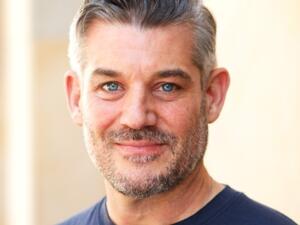
- Marcus Grosch
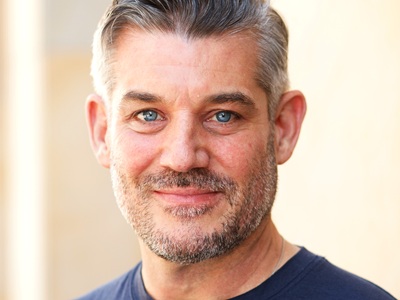
In Germany, the US and the UK, the biotech company relies on Quinn Emanuel Urquhart & Sullivan, with Marcus Grosch leading the German team, David Lancaster advising in the UK and David Nelson and Zach Summers handling the US cases. In the UK proceedings, a team from Osborne Clarke around Trevor Cross is also acting for Halozyme. In Italy Halozyme is relying on Trevisan & Cuonzo. Vittorio Cerulli Irelli and Donatella Capelli are in the lead.
Hogan Lovells for MSD
MSD instructed its long-standing patent counsel Hogan Lovells across all jurisdictions. Amsterdam-based partners Gertjan Kuipers and Dirk-Jan Ridderinkhof led the Dutch proceedings. Counsel Rik Zagers and associates Bram Jaarsma, and Anne Schreibers provided support.
-
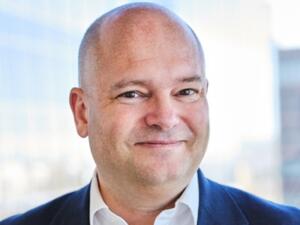
- Gertjan Kuipers
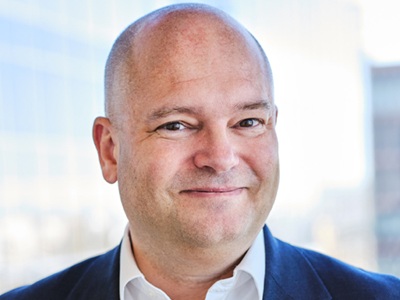
-

- Dirk-Jan Ridderinkhof

-

- Andreas von Falck

In parallel proceedings, Düsseldorf-based partners Miriam Gundt and Andreas von Falck lead the German case, working with patent attorney Felipe Zilly. French partner Stanislas Roux-Vaillard and associate Iris Accary act in the French proceedings.
Madrid partner Inmaculada Lorenzo leads the Spanish case, while Giovanni Ghirardi, partner in Milan heads the Italian team. In the UK, MSD as usual relies on a London-based team around Stephen Bennett, Helen Poulson, and Katie Barton. In the US, Jeff Kushan of Sidley Austin represents MSD.


