Federal Court of Justice hears FRAND appeal in VoiceAge vs HMD
Today, the German Federal Court of Justice scrutinises Munich Higher Regional Court's new FRAND approach. The highest court's decision in the VoiceAge vs HMD case will have far-reaching consequences for European FRAND law. Once again, the EU Commission has intervened in the proceedings. JUVE Patent reporter Mathieu Klos is at the hearing.
27 January 2026 by Mathieu Klos

After five years, FRAND is once again on the agenda in Karlsruhe. The city is home to the Federal Court of Justice, Germany’s highest civil court and final instance in patent proceedings. In 2020 and 2021, the court set out its interpretation of the CJEU’s European FRAND case law in Huawei vs ZTE with its two judgments Sisvel vs Haier I and II.
Today, the court will hear its next FRAND case in the appeal in VoiceAge vs HMD over EVS speech-coding patent EP 2 102 619 (case ID: KZR 10/25).
Previously, the Higher Regional Court Munich under presiding judge Lars Meinhardt found that HMD infringed VoiceAge’s EP 619 and is not a willing licensee (case ID: 6 U 3824/22 Kart).
Antitrust Senate takes over case
The Regional Court Munich had also found HMD to be an unwilling licensee and ordered HMD to cease and desist (case ID: 7 O 14091/19).
HMD not only appealed to the Higher Regional Court Munich but also to the Federal Court of Justice in 2025. Given the fundamental importance of the FRAND-related issues, the Higher Regional Court Munich granted HMD leave to appeal to the Federal Court of Justice, but only concerning FRAND.
The Antitrust Senate will therefore hear today’s case, headed by presiding judge Stefanie Roloff. It comprises judges from the court’s various senates. Like Roloff, Jan Tolkmitt, Ulrike Picker, Carmen Vogt-Beheim, Ulrike Holzinger and Mathias Kochendörfer come from the 13th Civil Senate, which is responsible for energy, public procurement and antitrust law, among other areas. Angelika Allgayer comes from the 1st Criminal Senate. Ulrike Pastohr is active on several other senates in addition to the Antitrust Senate.
The only designated patent judge on the panel is Hermann Deichfuß from the 10th Civil Senate, which is responsible for patent matters.
EU Commission intervenes
HMD’s lawyers will try to convince the judges today that their client is a willing licensee. This would mean that the injunction of the Higher Regional Court would have to be cancelled and the proceedings would likely be reopened.
To do so, HMD’s lawyers would also have to convince the judges that Munich Higher Regional Court’s FRAND case law does not correspond to the spirit of the so-called FRAND dance of Huawei vs ZTE.
Over the years, the dispute between VoiceAge and HMD has gained considerable significance for SEP and FRAND law in Germany. In April 2024, the EU Commission intervened in the first instance, submitting an amicus curiae brief. The Commission expressed dissatisfaction with the current jurisprudence of the Regional Court Munich.
According to previous case law, which focuses primarily on the conduct of potential licensees, a patent user is almost always considered unwilling, especially before the Munich Regional Court.
In November 2024, the 6th Civil Senate of Munich Higher Regional Court responded with a legal notice introducing a new approach regarding the willingness of licensees.
Stress test for Munich approach
Munich Higher Regional Court stated it would look more closely at the patent holder’s licence offer. But an implementer only meets the requirement for a “continuing willingness to take a licence” if they provide reasonable security, for example through a bank guarantee. In its judgment in February 2025, the 6th Civil Senate essentially confirmed this new FRAND doctrine.
However, in the opinion of many implementers, such as HMD, this no longer corresponds to the CJEU’s test because the Higher Regional Court prefers the final step of the FRAND dance. Additionally, a security deposit in the amount of the SEP holder’s offer constitutes a high hurdle for implementers.
The Federal Court judges will also examine whether the Munich approach aligns with their Sisvel vs Haier case law from 2020 and 2021. If yes, experts expect the court to provide further clarification.
Referral to CJEU possible
Experts also believe the Federal Court of Justice could refer the case to the CJEU. Some even hope for this outcome due to the need for greater clarification in multiple aspects of FRAND and SEP procedures.
According to JUVE Patent sources, the EU Commission has sent a second amicus curiae brief to the Federal Court of Justice. This is not publicly accessible, but is said to contain essentially the same arguments as the first brief.
The fact that the EU Commission has intervened in the proceedings for a second time could thus render a referral necessary.
However, whether the Federal Court judges will actually refer the case to the CJEU is doubtful. The highest German civil court only makes referrals to the CJEU in exceptional cases. All referrals in patent matters have recently come from either regional or higher regional courts.
The counsel
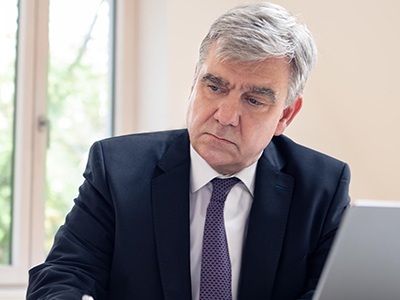
Both opponents have secured two of the most renowned specialist IP lawyers for the Federal Court of Justice case. Christian Rohnke represents VoiceAge. Rainer Hall from the Karlsruhe-based firm Hall & Quast represents HMD. The lawyers from the previous instances will accompany them.
Düsseldorf-based IP boutique Wildanger Kehrwald Graf v. Schwerin and Munich-based patent attorney firm Bosch Jehle have collaborated for many years on various campaigns for VoiceAge. A large team of Wildanger partners handle the infringement actions. Partner Peter-Michael Weisse and Jasper Meyer zu Riemsloh led the team.
-
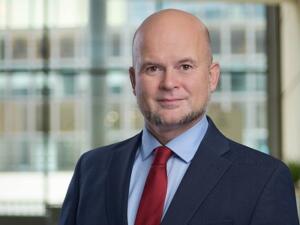
- Jasper Meyer zu Riemsloh
-

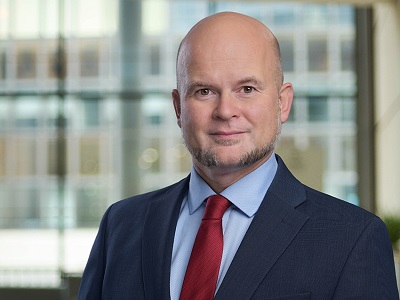
- Peter-Michael Weisse
-
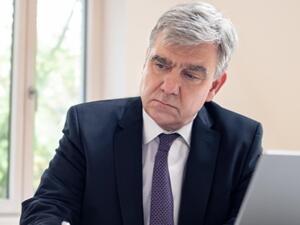
- Christian Rohnke
Bosch Jehle patent attorneys Thomas Hell and Rudolf Reichold worked on the nullity suits and technical aspects of the infringement actions. Like HMD’s patent attorneys, they will not play a role in today’s proceedings, as the Higher Regional Court did not allow an appeal on the revocation of the patent-in-suit.
Four firms for HMD
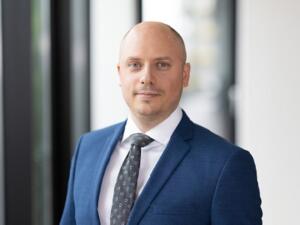
In the previous instances HMD relied on teams from Hoyng ROKH Monegier and Samson & Partner. The firms have an established working relationship. Düsseldorf-based litigator Lars Baum of Hoyng ROKH led the infringement proceedings. The team also included associates Franca Poll-Wolbeck and Joscha Torweihe.
Patent attorney Georg Jacoby of Samson & Partner led the nullity suit, with assistance from Thomas Behrens.
-
- Lars Baum
-

- Andreas von Falck
-
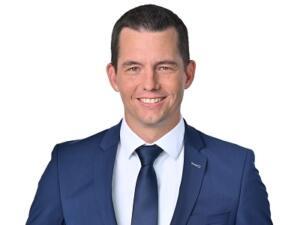
- Oliver Bäcker
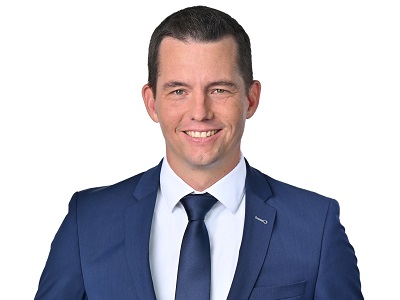
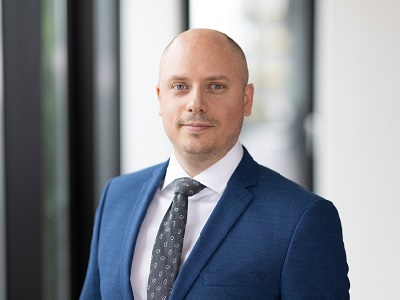
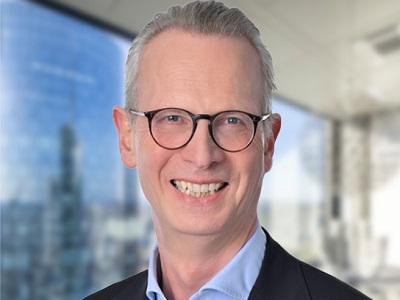
In the appeals case, HMD called in a second law firm. Andreas von Falck and newly appointed partner Oliver Bäcker from Hogan Lovells advised on the FRAND aspects of the proceedings.
In addition to EU Commission representatives, an antitrust team from Cleary Gottlieb Steen & Hamilton participated regarding the amicus curiae brief.
For more background about the case, see here.
