Biogen is entitled to damages in Tecfidera case rules Regional Court Hamburg
Biogen can claim damages from several generics companies for the commercialisation of their dimethyl fumarate generics before the end of Tecfidera's market exclusivity. This was the ruling from Hamburg Regional Court in proceedings against Viatris, Hexal, Neuraxpharm, and Zentiva.
27 April 2026 by Konstanze Richter

Biogen accuses the generic drug companies of violating market exclusivity for its multiple sclerosis drug Tecfidera by selling their dimethyl fumarate generics before the end of its market exclusivity in Germany — in the case of Viatris, as early as summer 2022. According to Biogen, the market exclusivity for its original product ran until 2 February 2024.
The generics companies argued that there was no marketing protection because Tecfidera is part of the same global marketing authorisation as Fumaderm, which dates back to 1994 and whose marketing protection therefore expired years ago. Biogen, however, argues that the marketing authorisation for Tecfidera is independent and was therefore valid from 3 February 2014.
According to the innovator pharma company, the premature marketing of Viatris’ generic drug, for example, resulted in damages of around €36.4 million due to lost sales and discount losses. Taken together, Biogen is claiming hundreds of millions of euros in damages from the four generic drug manufacturers. However, the court has not yet determined the specific amount, it has only addressed the fundamental question of whether Biogen is generally entitled to damages.
Legal uncertainty
The 27th Civil Chamber, presided over by judge Sebastian Weihrauch and including judges Valanto and Wimmer-Soest, ruled that Biogen is entitled to damages from all the defendants (case IDs: 327 O 12/24, 327 O 236/23 and 327 O 25/25).
According to the ruling regarding Viatris, the generics company had acted at least negligently. The company relied, among other things, on the legal uncertainty at the time due to ongoing ECJ proceedings on the same issue (Polpharma vs. EMA). In the judge’s view, the generics manufacturer had known that its entering the market took place in a legal grey area and a marketing authorisation did not protect it from liability.
The Regional Court Hamburg issued similar decisions against the other generic drug companies. All four defendants have meanwhile appealed the decision to the Higher Regional Court (case IDs: 3 U 29/26, 3 U 32/26, 3 U 33/26 and 3 U 35/26).
EPO ends patent dispute
Biogen had previously taken action against several generics manufacturers in various European countries. The patent infringement proceedings lasted years. The disputes concern the formulation patent EP 2 653 873, which protects a pharmaceutical composition comprising dimethyl fumarate or monomethyl fumarate, plus one or more pharmaceutically acceptable excipients. The formulation, administered in a 480mg daily dose, forms the basis of Tecfidera. Different assessments of the patent’s validity came into play.
In November last year, the Boards of Appeal at the European Patent Office revoked Biogen’s dosage patent EP 873 (case ID: T 1462/24). This decision resolved several PI and infringement proceedings across European countries, including Germany, France and the Netherlands.
In addition to the parallel patent disputes pending in several European countries, Biogen aimed to extend its market exclusivity but failed. In September, the European General Court ruled that it was several weeks too late to extend market exclusivity for Biogen’s MS drug Tecfidera by one year. The innovator company appealed the decision, which is now pending at the CJEU.
However, according to the Hamburg Regional Court, this judgment does not change the original ten-year protection.
In addition, Viatris’ predecessor, Mylan, had also brought proceedings before the European General Court challenging the revocation of a marketing authorisation that had already been granted for its dimethyl fumarate drug. In its February ruling, the General Court confirmed that the authorisation should not have been granted (case ID: T‑11811/23). An appeal against this decision is also pending before the CJEU.
Regulatory competence
In the proceedings, Biogen relied on the Bonn law firm Sträter Rechtsanwälte. The medical law boutique has a reputation for its regulatory expertise, particularly with regard to European law. Partners Markus Ambrosius and Dan Ivanescu were in the lead, assisted by associate Lukas Klement.
At the European Court of Justice, lawyers Carla Schoonderbeek and Bart Jong from Arnold & Porter represented intervenor Biogen Netherlands in the proceedings over the extention of market exclusivity. The firm also coordinates the various disputes for the client in Europe.
In the previous patent disputes, Biogen relied on the litigators of Rospatt and patent attorneys of df-mp in Germany, and on a team from Hoyng ROKH Monegier in France and the Netherlands. They worked closely with in-house litigation counsel Brian Larivee, while a team from Herbert Smith Freehills Kramer coordinated the pan-European litigation.
Overlap with patent teams
A Munich-based team from Taylor Wessing represented Viatris and Mylan at Hamburg Regional Court. Litigation partner Christoph de Coster acted in the damages case, life sciences expert Manja Epping advised on the regulatory aspects. She moved to Heuking last summer. In the previous patent proceedings, Jan Phillip Rektorschek and Julius Zacharias led the case for the generics manufacturer. They were part of the team that split off from Taylor Wessing in the autumn and founded the boutique Pentarc.
-
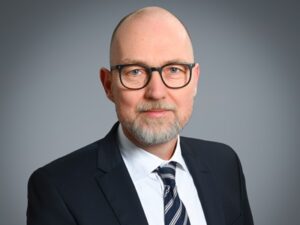
- Markus Ambrosius
-

- Christoph de Coster
-
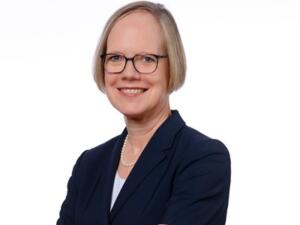
- Manja Epping
Viatris relied on its go-to advisors from the law firm Schertenleib in France. In the Dutch nullity suit, Viatris subsidiary Mylan relied on Jaap Bremer from Dutch national firm BarentsKrans.
In the previous case on the extension of market exclusivity at the EGC, Mylan Ireland relied on lawyers Kristof Roox, Thomas de Meese, Jules Stuyck, and Christopher Dumont of Brussels law firm Crowell.
-
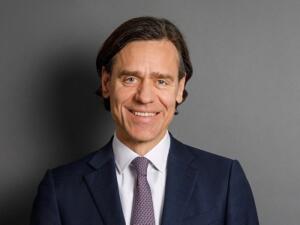
- Oliver Jüngst
-
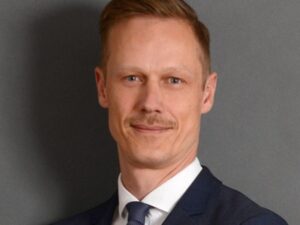
- Christian Lindenthal
Hexal, Neuraxpharm and Zentiva instructed Bird & Bird. Partners and patent litigators Oliver Jüngst and Moritz Schröder acted for Hexal while Christian Lindenthal and associate Annelie Säurig advised Neuraxpharm and Zentiva. Munich-based partner Lindenthal specialises in regulatory aspects of life sciences.
In the previous patent litigation, a team around Bird & Bird partner Annika Lückemann represented Ratiopharm.
