Abbott, Sinocare and Menarini meet for second time at Court of Appeal
Abbott's lawsuits against various competitors over glucose-monitoring devices have characterised the first two years of the UPC's existence. Today, the Court of Appeal will hear one of the few cases in which the market leader suffered a defeat, when a PI against Sinocare and Menarini was dismissed in the first instance. Things went better in a second lawsuit against the two competitors, with a judgment expected from the Court of Appeal in this case shortly.
26 March 2026 by Mathieu Klos

Abbott is regarded as the market leader for mobile phone-based glucose-monitoring systems. When the UPC first launched, the US company filed a lawsuit against Dexcom’s competing products. This was followed by further campaigns against smaller competitors such as SiBionics and Sinocare.
While Abbott’s dispute with Dexcom has long since been settled, the market leader recently followed up with a fourth campaign against Dutch company Mediq. The campaigns against Chinese competitors SiBionics and Sinocare are also continuing at the UPC.
Abbott and Sinocare as well as Sinocare’s European distribution partner Menarini are meeting today for the second time at the UPC Court of Appeal. The third panel under presiding judge Ulrike Voß, newly established at the beginning of the year, will hear Abbott’s appeal against a decision by the local division The Hague not to grant a PI against Sinocare and Menarini.
The same panel heard another appeal in the dispute back in February. Abbott aims to prevent the distribution of Sinocare’s GlucoMen iCan CGM system in Europe and filed two PI applications with the Dutch local division in June 2024. Abbott is also suing Italian company Menarini Diagnostics, which distributes Sinocare’s GlucoMen iCan systems in Europe through its medical devices division.
Split hearings
Abbott alleges the two companies infringe its EP 3 988 471 and EP 4 344 633 and seeks to halt sales in the UPC territory. In mid-October, the local division The Hague issued a PI against Sinocare and Menarini regarding EP 633. The PI was subject to a Court of Appeal hearing in February (case ID: UPC-COA-0000899/2025). Following the PI, Abbott filed an infringement action against Sinocare based on EP 633 in November 2024.
The Court of Appeal has not yet published a judgment in this appeal. However, this could happen at any time — theoretically even at the start of today’s hearing in the second appeal. This could turn the entire hearing on its head if the panel does not uphold the PI against Sinocare.
Abbott and its lawyers are hoping the Court of Appeal will also grant the second PI application (case ID: UPC-COA-0000901/2025). This is based on EP 471 and was rejected by the local division The Hague.
What is at stake today
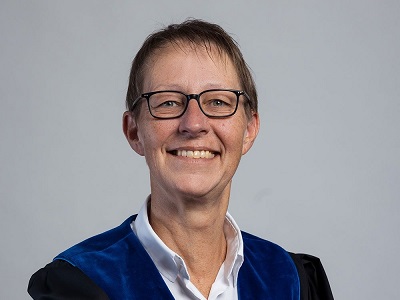
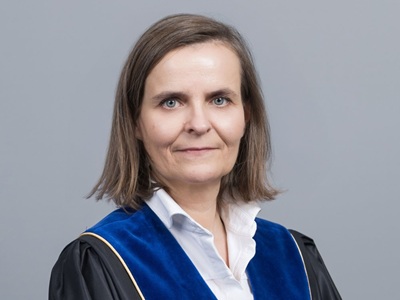
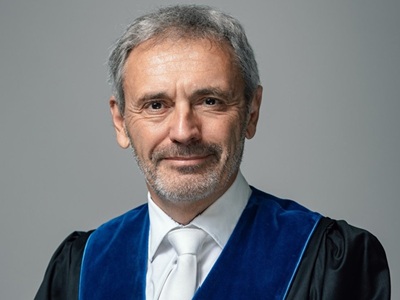
Today the panel comprises Ulrike Voss as well as legally qualified judges Bart van den Broek and Nathalie Sabotier. Gérard Myon and Dorothea Hofer are the technically qualified judges in the case.
-

- Ulrike Voß
-

- Bart van den Broek

-

- Nathalie Sabotier
In late October last year, the local division The Hague concluded that Sinocare’s GlucoMen iCan system does not infringe EP 471. The patent requires event data icons to display directly on the timeline graph. The court interpreted this to mean the icons must appear within the graph itself, not just anywhere on the screen. In Sinocare’s GlucoMen iCan system, however, the timeline graph and icons appear in separate areas of the screen. The judges therefore rejected Abbott’s PI request.
The court deemed it unnecessary to address validity arguments, as these would not affect the outcome. Even assuming the patent’s validity, the judges found it more likely than not that claims 1 and 14 are not infringed.
-

- Dorothea Hofer

-

- Gérard Myon
As lawyers from both sides reported to JUVE Patent, the Court of Appeal judges have not yet revealed what they will focus on in today’s hearing. The range of topics is therefore broad. Above all, Abbott will want to discuss why Sinocare’s products infringe EP 471.
Sinocare’s lawyers will probably focus on the lack of urgency of the PI application. They had filed a cross-appeal against the decision of the first instance. They will also argue why the patent is highly unlikely to survive a revocation attack. There is currently no such attack. The patent survived an EPO opposition from Dexcom in 2024 and was granted in a slightly amended form.
Central client for Taylor Wessing
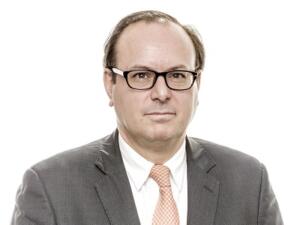
A joint team from Taylor Wessing and Paris firm August Debouzy have represented Abbott in the dispute over EP 471 since the beginning. Belgian partner Christian Dekoninck and Paris-based François Pochart take the lead.
Abbott is a key client for Taylor Wessing. The UK team led by Nigel Stoate is coordinating the European proceedings for the US medical technology company. Dutch partner Wim Maas leads the new cases against Mediq. This campaign includes two successful PI cases followed by two recently filed infringement claims with the local division The Hague.
-

- Christian Dekoninck

-
- François Pochart
-

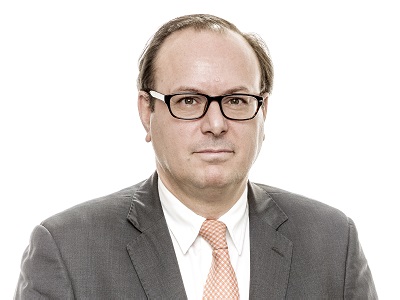
- Nigel Stoate

The relationship with Abbott also played a role in the decision of Taylor Wessing’s UK partners to leave Taylor Wessing’s Schweizer Verein association to join forces with Winston & Strawn. The US law firm’s patent team also has a very good relationship with Abbott.
The Belgian and Dutch practices followed the UK team and will operate as franchisees of the new transatlantic firm Winston Taylor. The teams around Dekoninck and Maas had already been working very closely with the UK patent team for some time on cases such as Abbott and Ericsson.
However, they will remain closely linked to Taylor Wessing’s continental European patent teams via a cooperation agreement.
On the defending side
Bird & Bird leads the case for defendants Sinocare and Menarini. A mixed team of French, Italian and Dutch lawyers defended Menarini and Sinocare at the local division The Hague. Paris-based partner Thierry Lautier and Dutch partner Tjibbe Douma lead the case over EP 471 while Milan partner Edoardo Barbera is responsible for the case concerning EP 633.
-

- Tjibbe Douma

-

- Thierry Lautier

-

- Edoardo Barbera

Bird & Bird also represented Dexcom in the battle against Abbott.
For more information on the cases and the teams of the law firm involved read our previous article.