Taylor Wessing’s patent practice faces troubled waters
Taylor Wessing UK plans to merge with US law firm Winston & Strawn next year. Both firms have strong IP practices, but questions remain over the future of Taylor Wessing's pan-European patent litigation team, which has made significant progress at the UPC.
22 December 2025 by Mathieu Klos

Taylor Wessing has always done IP a little differently to other international full-service firms like Hogan Lovells or Freshfields. While those firms have fully merged internationally, with patent partners working as one team, Taylor Wessing’s patent teams operated more independently. The individual country groups remain financially separate to this day.
For years, it seemed the European patent practice struggled to fully leverage its continental network, with partners not collaborating as closely across borders as they could have. This partly explains why Taylor Wessing, though highly ranked in individual countries by JUVE Patent, remained just behind the market leaders for many years.
UPC as a catalyst
That changed completely with the launch of the Unified Patent Court. The teams across Austria, Germany, Belgium, the Netherlands, and the UK collaborated on more UPC proceedings than nearly any other international practice. The firm reached the top tier in JUVE Patent’s first UPC ranking 2024.
Had it not been for the departure of a large team from the German practice this year, Taylor Wessing would likely still lead in 2025. Currently, it trails just behind the market leaders in the new UPC ranking. However, the pan-European team continues to handle major cases for Abbott, Ericsson and Pfizer.
The patent group now operates more cohesively in UPC cases than before the court launched. Abbott provides the most significant UPC work currently, with lawyers from Belgium, Germany, and the Netherlands handling suits against various competitors over glucose-monitoring technology. Though Taylor Wessing’s solicitors cannot represent clients at the UPC directly, they provide crucial support, especially in major cases like those for Abbott. Their strong client relationships remain vital for the European patent team.
The Belgian and Dutch teams particularly benefit from this. The German team has traditionally maintained its own robust client base. France represents a special case — partner Jules Fabre only joined from Pinsent Masons in May. His arrival filled an obvious gap in Taylor Wessing’s network.
Transatlantic merger
Further significant changes are now imminent. A week ago, Taylor Wessing UK announced its departure from the Schweizer Verein association that connects it with German, Austrian and other European sister firms. This split precedes the British firm’s planned merger with US giant Winston & Strawn. Last Tuesday, both firms announced they were joining forces to create a transatlantic law firm under the new brand Winston Taylor.
The partnerships must still approve the merger in January. The firms will unite in May 2026, at the end of Taylor Wessing’s financial year. The combined full-service firm will employ over 1,400 lawyers, establishing a large transatlantic practice with a primary footprint in the United States, United Kingdom, and Europe, as well as a presence in Latin America and the Middle East.
As part of the merger, Taylor Wessing’s Netherlands and Belgium offices will enter an agreement to operate under the new Winston Taylor brand. However, partners from these country groups will not join the Winston Taylor partnership, instead operating financially independently as franchisees of the transatlantic firm.
The other continental European offices will remain in the Schweizer Verein association. Patent litigation teams are primarily based in Vienna, Düsseldorf, Munich and Paris. Many German partners viewed a merger with a US law firm as unacceptable. The German, Dutch, and UK patent partners notably disagreed on this crucial strategic issue.
However, the practices in the Schweizer Verein intend to maintain close working relationships with Winston Taylor. A new cooperation agreement will serve as the foundation for this, aiming to facilitate coordination between various teams, including the pan-European patent practice.
According to The Lawyer magazine, the combined firms will consist of about 2,000 lawyers who will generate a revenue about $1,6 billion.
Strong IP impact
The merger brings together two formidable IP teams in Winston & Strawn and Taylor Wessing UK. A partner states, “IP is at the centre of this merger.” High-volume patent litigation is likely to play a significant role. Winston & Strawn has a reputation for being a top US firm for patent litigation. Experts even rate its patent practice slightly higher in quality than Taylor Wessing’s London team. The profitability of the US partners is also likely considerably higher.
Now, the European patent teams will exist in three strands: the UK team via the newly merged firm, the Belgian-Dutch team as franchisees, and the continental teams via the Schweizer Verein. The German, French, and Austrian patent teams will maintain links to Winston Taylor through a cooperation agreement. Compared to a globally integrated firm like Hogan Lovells, this represents a relatively loose association.
Alongside Hogan Lovells, whose European IP practice outperforms its US offering, Winston Taylor will possess one of the strongest IP offerings on both sides of the Atlantic.
Commitment to the new constellation
British partners express confidence in the future arrangement. Nigel Stoate, head of Taylor Wessing’s UK patent team, says: “This is such an exciting combination. We’re bringing together our tier 1 patent litigation practice in Europe with Winston & Strawn’s equally pre-eminent practice in the US. It’s never been done like this before. We are confident it will position us to handle transatlantic patent disputes at the highest level.”
-

- Nigel Stoate

-

- Gisbert Hohagen
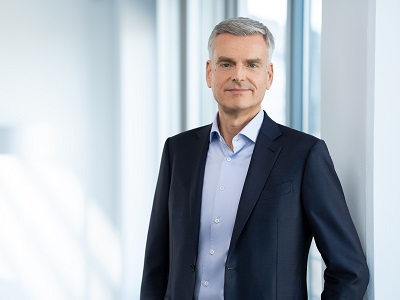
For the European patent partners, the changed legal framework is of secondary importance. “We have built a leading UPC practice. This project is about people who know each other and have worked together successfully on international cases for a long time,” says Stoate.
“We will continue to work together in the European patent group. The merger will not affect our work,” says Munich-based partner Gisbert Hohagen. “We have known each other for many years and work well together. The cooperation agreement now provides a new organisational framework for what has long been a reality in the patent group’s day-to-day work.”
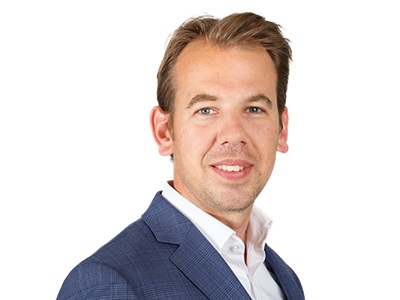
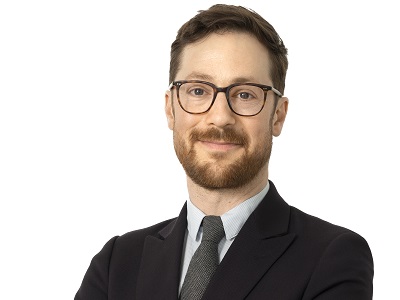
Jules Fabre, partner at Taylor Wessing’s Paris office, adds: “One partnership is not in the tradition of this firm, and we have a very long tradition of working together. This is not going to change.” Wim Maas, partner in the Netherlands office, emphasises, “We will continue to work as a united team. It’s business as usual.”
-

- Wim Maas
-

- Jules Fabre
Referral Work
Despite the strong relationships, the future of the European patent practice will depend how much the new merger partner focuses on Europe. Prospects appear positive, as Winston & Strawn — like many US firms — lacks direct access to the UPC.
This represents a crucial new factor in global patent litigation, attracting increasing attention from US technology companies. Key clients of both firms — Pfizer, Ericsson and Abbott — already use the UPC extensively. The merger thus strengthens connections with these important clients.
However, existing relationships with such high-profile clients may not suffice for a stronger push into Europe. Additional business must come from other clients. The critical factor will be whether Winston & Strawn’s strong ties with US Midwest tech firms generate enough repeat work for the European team. The latter will also need to deliver referrals to the US.
Through the merger, the UK practice has opted to focus on transatlantic business. The German practice, conversely, has traditionally maintained a strong Asian focus. Taylor Wessing partners do not see this as contradictory.
“We view the coverage of Asian business by the groups within the Schweizer Verein and transatlantic business by Winston Taylor as complementary rather than a major area of conflict,” says Gisbert Hohagen.
Challenges ahead
Despite its strong start at the UPC, Taylor Wessing’s pan-European patent litigation team faces a turbulent period, which will continue with the merger’s implementation. UK partners will need to manage the merger process and subsequent administrative tasks for some time.
The European team unanimously insist this will not pose a problem, that they are well-prepared and can handle it. The impact on the European patent practice, already more international than many other sectors in the firm, appears manageable.
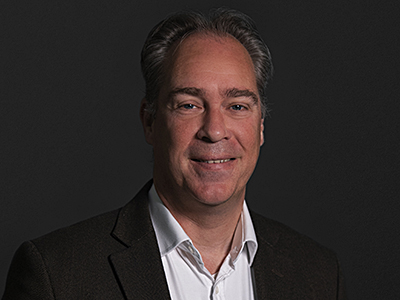
However, this is not the only challenge. The move by a larger Dutch team led by Bas Berghuis and Sebastien Versaevel from Simmons & Simmons has just been completed. In addition, twelve IP lawyers spun off from the Munich office as Pentarc in October.
-

- Bas Berghuis
-

- Sebastien Versaevel
The European team has undergone significant changes this past year. Despite years of smooth cooperation, the team must now redefine itself.
Ripe for the picking
With a US outfit behind the team, growth appears likely. “We will continue to grow the French and German patent teams,” says Jules Fabre. “The Paris patent team has already doubled in size since we joined Taylor Wessing only six months ago and we expect this trend to continue.”
But as is typical with such big mergers, competitors will likely attempt to capitalise on the situation, particularly with regard to luring away continental European partners. The European market has been volatile since the UPC launch, with many US and some UK law firms seeking to enter the UPC business. Discussions between headhunters and Taylor Wessing partners on the continent are probable in the coming weeks.
“The new set-up is not optimal. Taylor Wessing’s patent team has been under pressure this year. The merger will not change that anytime soon,” says one recruiter.
The collaboration of the European patent team via the cooperation agreement represents only the beginning of strategic considerations and a viable short-term solution, particularly to mitigate the significant profitability differences between continental, London, and US teams.
In the long term, the arrangement must prove robust enough for continental European partners to resist offers from competitors. Winston & Strawn partners might also develop a desire for stronger connections with a continental European team of partners.
