Local division Mannheim flirts with setting FRAND rate
German courts have always had a reputation for avoiding FRAND-rate determinations. Until now. Following Munich Regional Court, Mannheim local division is now also opening up to this. In yesterday's hearing in ZTE vs Samsung, presiding judge Peter Tochtermann presented the framework for a UPC FRAND-rate determination proceeding.
19 March 2026 by Mathieu Klos
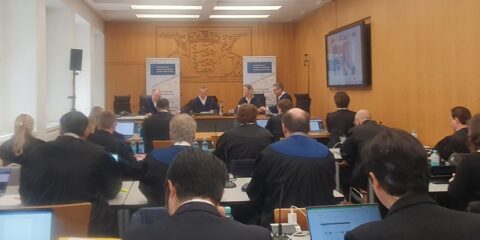
During yesterday’s hearing, the Mannheim local division under presiding judge Peter Tochtermann took the opportunity to provide an astonishing amount of basic information that did not necessarily relate to the case being heard that day. The local division heard the first of three infringement claims at the UPC between ZTE and Samsung.
The relatively small courtroom at Schubertstraße 11 in Mannheim was filled to capacity with lawyers, patent attorneys, in-house representatives and economic experts from ZTE and Samsung. Additional employees from both companies were also present from South Korea and China. Other observers watched from the overflow room. JUVE Patent was also present.
Tochtermann encouraged those present to file lawsuits at non-German UPC divisions, such as the Paris local division. Carine Gillet from Paris is the third judge on the panel in Mannheim alongside Tochtermann. Tochtermann also had some de-escalating words about the current tense relationship with the UK High Court. Above all, however, in the panel’s preliminary opinion he addressed the topic of FRAND-rate setting — considered to be the domain of the UK High Court.
-

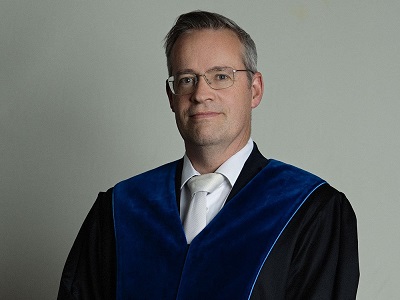
- Peter Tochtermann
-

- Carine Gillet

-

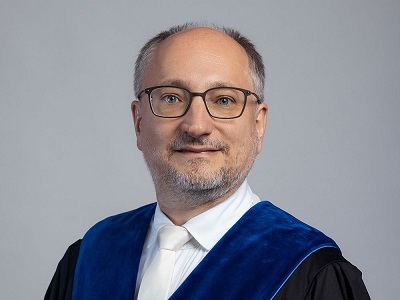
- Dirk Böttcher
-

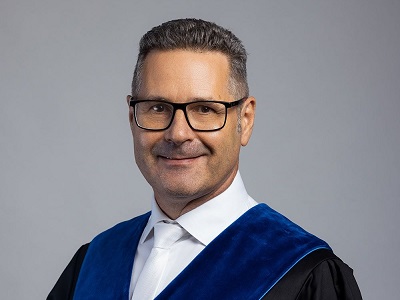
- Klaus Loibner
There is a specific reason for this. Samsung had filed a FRAND counterclaim in the proceedings at the end of 2025, which the local division must now decide on.
Tochtermann made it clear at the outset that the panel, which also included judge rapporteur Dirk Böttcher and technically qualified judge Klaus Loibner, was inclined to reject this application. Samsung had already filed a similar application with Frankfurt Regional Court in summer 2025. This would probably take precedence and, according to the Brussels Regulation, could not be filed with two different courts in the territory of the European Union.
No preliminary opinion on FRAND
Although the chances of Samsung’s FRAND counterclaim succeeding are slim, Tochtermann nevertheless played through the scenario in the event that such an application is admissible. The local division had already seen such an application to set a FRAND rate in Panasonic vs Oppo. According to Tochtermann, such a counterclaim for FRAND-rate determination by the implementer at the UPC is generally provided for. This is also evident from the new court fees.
The panel generally rules out an early case management conference — something requested by many parties. Tochtermann emphasised that this is not appropriate at such an early stage because the developments in global SEP dispute are highly dynamic. FRAND-rate determination claims are also pending between ZTE and Samsung in the US, China and the UK.
Therefore, under such circumstances, an early preliminary assessment of the FRAND-rate determination is not expedient. The specific data and figures would only crystallise in the course of the written proceedings. It also takes time to establish the necessary confidentiality regime.
An intensive working week
If a FRAND rate is then to be set by the UPC, the panel anticipates an intensive week of work. Tochtermann specifically mentioned a separate hearing of around three to four days. With regard to FRAND trials at the UK High Court, which often take over a week, Tochtermann referred to the UPC judges’ ability to conduct the proceedings more efficiently by asking the parties specific questions. This would enable shorter trials.
On the first day of the FRAND trial, the UPC judges would then address their questions and open points to the parties. It would then be up to the parties to make offers and calculations. This would require the parties to be represented not only by their lawyers, but also by economic experts and in-house representatives with decision-making powers. In the following two days, the parties would then have to play through specific scenarios and answer questions from the court in order to finally filter out a corridor for a FRAND rate. The judges could then set a rate within the corridor.
Overall, the procedure seems to be very similar to a mediation trial.
Speedbumps
Tochtermann also pointed out some problems. For example, the applications in the two FRAND counterclaims that had reached the local division so far had been very narrowly formulated. They requested the setting of a specific rate. However, this could lead to the claim being dismissed if the court considers a different rate to be more realistic. In order to avoid a quick dismissal of the claim, Tochtermann proposes motions with a broad-based staggered application.
There was also the question of how the court would deal with FRAND counterclaims from implementers if the court classifies them as unwilling to take a licence based on their previous behaviour. In this case, there is hardly any prospect of the court setting the rate.
On the other hand, the panel would proceed with the FRAND counterclaim even it would invalidate the related patent or find the implementer had not infringed. This is because these types of FRAND claim are normally filed with regard to global SEP portfolios.
The former is a realistic scenario in yesterday’s dispute between ZTE and Samsung because, judging by the course of events, the panel has considerable doubts as to whether ZTE’s EP 3 905 730 is valid. However, Tochtermann indicated yesterday that the panel would proceed with the FRAND-rate determination in such a scenario.
Dominant role of FRAND
The effects of the validity of EP 730 on setting a FRAND rate were more of a theoretical nature yesterday. This is because Samsung’s FRAND counterclaim will probably be rejected in principle due to the parallel antitrust case in Frankfurt.
Frankfurt Regional Court dismissed Samsung’s antitrust claim at the end of February. However, the hearing yesterday indicated that the South Korean company has announced an appeal but not yet formally filed it with the Higher Regional Court Frankfurt.
The dispute between ZTE and Samsung (more background here) is not exactly lacking in FRAND-rate setting proceedings. Samsung had filed corresponding lawsuits in the US, at the UK High Court, and Frankfurt Regional Court. The licence offers are also likely to be examined in the proceedings at Munich Regional Court. ZTE had also initiated a FRAND-rate determination in China.
FRAND issues took up a large part of yesterday’s hearing in Mannheim. In addition to the admissibility of Samsung’s FRAND counterclaim, the court discussed the willingness of the two companies to take licences. Among other things, the judges discussed whether Samsung’s application to ETSI to remove ZTE’s patents from the 4G and 5G standard indicated an unwillingness to licence. Samsung had to withdraw the application by order of Munich Regional Court.
The economic experts then came into play when the panel spent an hour and a half scrutinising the financial details of Samsung’s and ZTE’s FRAND offers. The public was excluded here.
Peace sign to London
Tochtermann quoted judgments from his peers in the UK with conspicuous frequency yesterday. The fact that parties such as Samsung and ZTE initiate several FRAND-rate setting proceedings in different countries does not bother the panel, he emphasised yesterday. This is the right of the parties. The UPC expressly respects these procedures. Tochtermann also briefly philosophised about whether FRAND rates from several courts do not also help the parties to reach an agreement at the negotiating table.
Furthermore, Tochtermann also took the opportunity to address the current tense situation between the UK High Court and the UPC in the parallel dispute between Amazon and InterDigital.
The problem for the UPC is not the rate-setting procedure, but rather if the court prescribes measures that affect the UPC’s jurisdiction. The disagreement between the UK High Court and Mannheim local division primarily revolves around the fact that an interim licence from the UK court is to be regarded as a contract, which the defendant — InterDigital in this case — must recognise. Otherwise, it would face considerable penalties.
April could be decisive
The dispute is now continuing apace. The Chinese court could hand down its judgment at any time. The UK High Court heard the main FRAND trial in early 2026. The London court could publish a judgment in just a few weeks.
In addition, Munich Regional Court plans to announce the judgment in the first trial on 15 April. On 29 April, Mannheim local division plans to deliver its judgment on the ZTE lawsuit heard yesterday (case ID: UPC_CFI_850/2024).
At the end of yesterday’s hearing, Tochtermann once again urged Samsung and ZTE to take the proceedings seriously and find a solution at the negotiating table.
