UPC revokes Chinese military medical research institute’s remdesivir patent
Gilead has successfully contested a patent that jeopardised its business with the COVID-19 drug Veklury based on remdesivir. The Milan central division revoked the patent belonging to the Chinese research institute AMMS in its entirety and rejected its applications for limitation and amendments to the patent. The EPO has not yet decided on a parallel opposition.
6 May 2026 by Christina Schulze

According to the judgment, the value of the patent dispute is €20 million. However, following the defeat, the Chinese Academy of Military Medical Sciences (AMMS) only has to pay €800,000, which it had previously agreed with Gilead.
This week, the central division Milan completely revoked one of AMMS’ patents and rejected amendments (case ID: UPC_CFI_552/2025). EP 3 854 403 protects the discovery that remdesivir can be used in treating a disease or an infection caused by SARS-CoV-2. The patent-in-suit was granted on 18 June 2025. On the same day, Gilead Sciences brought the present revocation action at the Milan central division.
Gilead is one of the major players in the development of innovative drugs and is based in the US. AMMS has been researching and developing drugs since the 1950s and was one of the first to discover that the antiviral drug remdesivir is effective against COVID.
Mutual cost decision
On 1 August 2025, the defendant lodged a defence to the statement for revocation and an application to amend the patent. In the rejoinder to the reply, the defendant proposed further changes to the patent amendments. These were dismissed by order of 16 March 2026. The panel set out these requests in the judgment.
During the oral hearing on 16 April 2026, the parties maintained that they had reached an agreement whereby the costs of these first-instance proceedings were mutually set at €800,000.
The panel consisted of Andrea Postiglione, Marije Knijff, and Xavier Dorland-Galliot and was significantly faster than the EPO in handing down the ruling. The EPO is currently running a deadline for comments on the appeal in the opposition.
-

- Andrea Postiglione
-
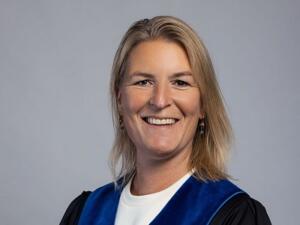
- Marije Knijff
-
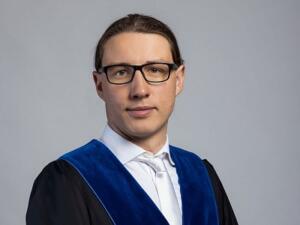
- Xavier Dorland-Gallio
With the UPC’s decision, Gilead has very quickly pre-empted a potential infringement dispute that could have jeopardised its drug under the brand name Veklury. The drug based on remdesivir is a broad-spectrum antiviral medication, including for Ebola virus disease and Marburg virus infections, but since the coronavirus pandemic it has been used primarily as a post-infection treatment for COVID-19.
French and multinational teams in Milan
Claimant Gilead Sciences is working with a German-French-Dutch team from Hoyng ROKH Monegier around the lead partners Christine Kanz, Amandine Métier, and Peter van Schijndel. The team also includes Akiva Friedman, Moritz Lohr, Théophile Rebuffel, Carolin Wollschlaeger, and Lisa-Marie Rauschendorfer.
Gilead had already filed an opposition against the patent at the EPO and is working with Chris Hoggett of Carpmaels & Ransford. The Carpmaels team includes partners Jennifer Antcliff and Paul Kaufman, as well as associates Joanna Rowley and Stephanie Willing.
-

- Christine Kanz

-

- Amandine Métier

-

- Peter van Schijndel

-

- Camille Pecnard

The Chinese Academy of Military Medical Sciences retained a French team from mixed law firm Lavoix from Paris with Camille Pecnard, Pierre-Emanuel Meynard, Charlotte Cuny, Béatrice Holz, Aude Veynante Gardey, and Michael Schlauch. Lavoix is already registered as representative of the research institute at the EPO.