UPC Court of Appeal strengthens central division in windscreen wiper dispute
Valeo may proceed with one of its claims against Bosch concerning windscreen wiper technology for cars at the Paris central division. The Court of Appeal clarified that the central division, rather than the local division in Düsseldorf, has jurisdiction over the claim because two Bosch companies are not based in UPC member states. The central division may now receive more cases.
3 July 2026 by Mathieu Klos

Valeo has achieved a partial victory in its wiper dispute with Bosch. The Court of Appeal referred one of the two infringement claims back to the central division (case IDs: UPC-CoA-4/2026 and UPC-CoA-13/2026).
Previously, the central division in Paris, under presiding judge and judge-rapporteur François Thomas, had declared that it lacked jurisdiction and referred the claim to the local division in Düsseldorf (case ID: UPC_CFI_809/2025). The Court of Appeal, presided over by judge Klaus Grabinski, has now overturned this decision. Judges Emmanuel Gougé and Ingeborg Simonsson also participated in the decision.
At the heart of this jurisdictional dispute are two of the six defendant Robert Bosch companies, which are not based within the UPC’s territory. Robert Bosch Do Beograd is based in Serbia and Bosch Automotive Products Co. in China.
Valeo had based the jurisdiction of the Paris central division on Article 33(1) of the UPC Agreement. This states that “actions against defendants having their residence, or principal place of business or, in the absence of residence or principal place of business, their place of business, outside the territory of the Contracting Member States shall be brought before the local or regional division in accordance with point (a) of the first subparagraph or before the CD”.
Valeo argued that the non-UPC defendants could serve as anchor defendants to justify the jurisdiction of the central division.
The central division has jurisdiction
Robert Bosch had taken a different view and applied for the case to be referred to a German local division. In that case, Valeo had argued in favour of Düsseldorf. That is indeed what happened. The central division declared itself not to have jurisdiction in two orders in December 2025 and January 2026. It also designated English as the language of the proceedings. The court took the view that Article 33(1) applies only if all defendants are domiciled outside the UPC territory.
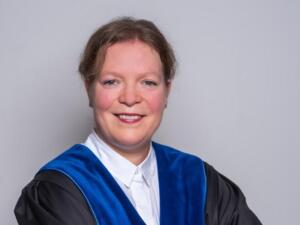
In the meantime, the second panel of the Düsseldorf local division, presided over by judge Bérénice Thom, took over the case. The proceedings are now being referred back and will continue in French, the language in which EP 2 671 766 was granted. However, the parties had agreed that the pleadings and decisions which have since been drafted in English will not be translated back into French.
-
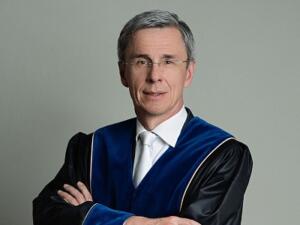
- Klaus Grabinski
-
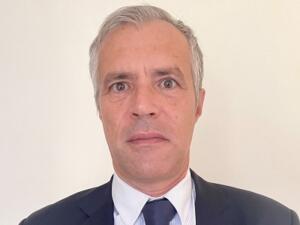
- François Thomas
-
- Bérénice Thom
The Court of Appeal judges consider the central division to have jurisdiction even where only one or some of the defendants are domiciled outside the UPC. They set out the grounds for their decision in four guiding principles and adopt a thoroughly pragmatic approach. They wish to avoid “parallel proceedings before different divisions and the risk of conflicting decisions”.
The claimants’ choice
For claimants, the decision now leads to more options for bringing claims. They can choose whether to bring claims, which may also be directed against companies in non-UPC countries, before the central division or a local division. Which section of the central division then takes on the case depends on the jurisdiction over the technical field of the patent.
Experts believe that the decision will lead to more proceedings before the central division. Paris and Milan could then benefit from this. Recently, there had been a strong concentration of UPC cases in the German UPC divisions, drawing criticism from France and the Netherlands in particular. According to sources, the UPC’s Administrative Committee is today discussing possible measures to ensure that the non-German divisions also receive more cases.
In the dispute between Valeo and Bosch, the central division has not yet set a date for the oral hearing. However, Valeo had also filed a second claim against Bosch, this time with the Paris local division (case ID: UPC-CFI-0001963/2025). Robert Bosch responded with counterclaims for revocation. JUVE Patent is not aware of any parallel national proceedings between the two parties.
The advisors
Valeo has been actively using the UPC since its inception. During the first two years of the UPC’s existence, the French automotive supplier was locked in a major dispute with its Austrian competitor Magna concerning gearbox motor generators. They settled the dispute in January 2025.
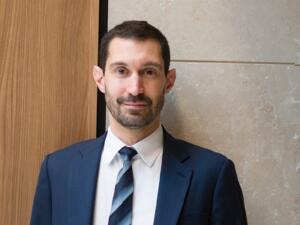
In its dispute with Robert Bosch, Valeo is relying on its regular Paris-based advisers at August Debouzy. Lionel Martin is leading the case for the firm. The patent team has been representing and advising Valeo for many years. Partners Grégoire Desrousseaux, Mehdi Mahammedi-Bouzina and Mayeul Ottaviani are also involved.
However, Valeo also works with Bird & Bird, for example in the disputes with Magna and with SEG Automotive in a further UPC claim.
-
- Lionel Martin
-

- Johannes Heselberger

In the UPC dispute, Robert Bosch engaged a team from Bardehle Pagenberg led by litigation partner Johannes Heselberger. The team also included lawyers Anna Giedke and Julien Freneaux, and patent attorneys Joachim Mader and Frederic Portal all from the Paris office.
Bardehle has long-standing ties with the German automotive supplier and electronics manufacturer. Heselberger had previously represented Robert Bosch in a UPC case against Grizzly Tools and Lidl concerning angle grinders. The firm also represents the client in numerous national proceedings and EPO opposition proceedings.