UPC Court of Appeal refers long-arm jurisdiction issue to the CJEU
The European Court of Justice will again deal with long-arm jurisdiction. In the appeal by Dyson and Dreame, the UPC Court of Appeal has just decided to refer certain questions on long-arm jurisdiction to the CJEU. This is the first ever referral from the UPC. The UPC judges also extended the first-instance injunction to cover Dreame's more recent haircare appliances.
6 March 2026 by Mathieu Klos

The UPC’s long-arm jurisdiction has become a key topic of discussion among patent experts since the Düsseldorf local division’s ruling in FujiFilm vs Kodak. In early 2025, the Düsseldorf local division initially indicated jurisdiction for only one country outside UPC territory: the UK. The Mannheim local division later issued an injunction against Kodak covering the UK in July.
In August 2025, the court extended its reach further beyond its 18 member states. The Hamburg local division prohibited Chinese manufacturer Dreame from distributing older hair styling devices in both UPC territory and Spain (case ID: UPC_CFI_387/2025).
Today, the Court of Appeal decided the appeal in the PI proceedings between Dyson and Dreame (case IDs: UPC_CoA_789/2025 and UPC_CoA_813/2025). Dyson was successful in its application to extend the PI to cover not only older haircare appliances such as a hot brush, but also newer products from Dreame. The company may no longer sell these in UPC territory.
Accordingly, the judges dismissed Dreame’s appeal and amended the first-instance PI. The judges of the Hamburg local division had only prohibited older versions, finding that Dreame’s main products Airstyle Pro and Pocket Neo do not infringe Dyson’s EP 3 119 235.
Referral to the CJEU
The judges of the first panel left open whether the PI also applies to Spain. The panel under presiding judge Klaus Grabinski stayed the appeal regarding the action against Dreame International to the extent that it relates to the territory of Spain, and the action against Eurep.
In the dispute, Dyson not only sued the Chinese parent company Dreame International, but also a Swedish subsidiary, a German sales partner and Eurep GmbH in Ingolstadt. Eurep, acting as an authorised representative for non-EU manufacturers and as Dreame’s EU representative, serves as an anchor defendant.
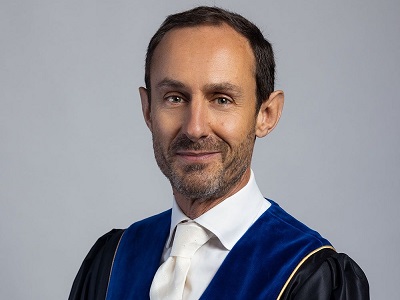
-

- Klaus Grabinski

-

- Peter Blok

-

- Emmanuel Gougé
At the centre of the case is the question of whether Eurep is sufficient as an anchor defendant to issue an injunction for products of a manufacturer based outside UPC territory, such as Dreame, for non-UPC countries such as Spain. Although Spain is a member of the European Patent Convention, it is not a party to the UPC.
The CJEU judges must now clarifiy whether these circumstances are sufficient for Eurep to be considered the anchor defendant for Dreame Hong Kong. In addition, the UPC judges referred three further questions to the CJEU (see below).
What suffices
These include the question of whether various identical websites through which Dreame Hong Kong distributes its products in Europe are sufficient to establish infringement in Spain as well. Furthermore, could extended jurisdiction for IP proceedings be invoked to establish jurisdiction for Spain? In addition, the CJEU must now clarify whether Eurep can be held liable for Dreame’s infringements at all.
The CJEU itself made the long-arm jurisdiction development possible with its judgment in BSH Hausgeräte vs Electrolux.
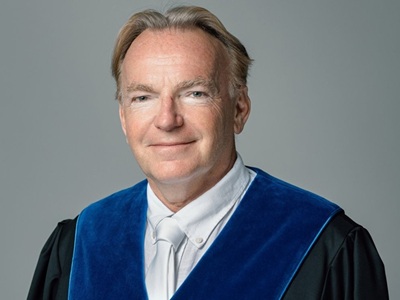
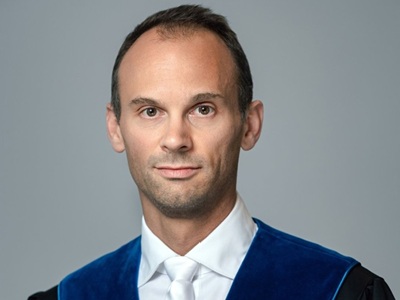
The UPC Court of Appeal heard the appeal in the Dyson case on 22 January. The panel comprises court president Klaus Grabinski, Peter Blok and Emmanuel Gougé, with Simon Michels and Lorenzo Parrini as technically qualified judges. Dutch judge Peter Blok acted as judge rapporteur.
-
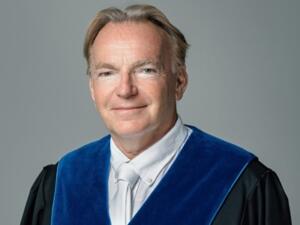
- Lorenzo Parrini
-

- Simon Michels
The submission to the CJEU is the first from the UPC. This also raises the question of how the Court of Appeal will deal with the long-arm issues in FujiFilm vs Kodak. The second panel under presiding judge Rian Kalden will hear the appeal in that case on 27 and 30 March.
DLA and Hogan Lovells again
Both Dyson and Dreame continue to rely on DLA Piper and Hogan Lovells teams respectively for the appeal and the new PI action in Hamburg.
DLA Piper partner Constanze Krenz leads for Dyson, as in earlier UPC cases against SharkNinja. The team includes senior associate David Kleß and associates Julia Pehe and Joschua Fiedler from DLA’s Munich office. Marcos Fraile from Spain is also involved.
-

- Constanze Krenz

-

- Christian Stoll

-

- Anna-Katharina Friese-Okoro

Hogan Lovells represents Dreame, with Anna-Katharina Friese-Okoro, and Christian Stoll from the Hamburg office leading the case.
Four questions for the CJEU
1. Must Article 8(1) in conjunction with Article 71b(2) of Regulation 1215/2012 be interpreted as meaning that a situation where, in proceedings before a common court within the meaning of Article 71a(2) of Regulation 1215/2012, a first company that is established in a third State is alleged to have committed an infringement of a national part of a European patent which is in force in an EU Member State that is not party to the instrument establishing the common court, and a second company that is established in an EU Member State that is party to the instrument establishing the common court is alleged to be an intermediary whose services are used by the first company to infringe in the EU Member State that is not party to the instrument establishing the common court, is capable of leading to “irreconcilable judgments” resulting from separate proceedings as referred to in Article 8(1) Regulation 1215/2012?
2. Must Article 71b(2), second sentence, of Regulation 1215/2012 be interpreted as meaning that a common court has jurisdiction in relation to an action for provisional measures against a company established in a third State that is alleged to have infringed a European patent in force in an EU Member State that is not party to the instrument establishing the common court, and in some or all EU Member States that are party to the instrument establishing the common court by offering the same products in all those EU Member States through websites that are identical apart from the language?
3. Is the fact that the company uses the services of a company that is established in an EU Member State that is party to the instrument establishing the common court in order to infringe a relevant circumstance in answering this second question?
4. Does Article 9(1)(a) of Directive 2004/48 or any other provision of Union law preclude case-law of a national or common court under which an interlocutory injunction aimed at preventing or prohibiting infringement of a patent by a third party by placing products on the market to which 10 Regulation 2023/988 and 2019/1020 apply may be granted against an authorised representative that performs the tasks laid down in these Regulations on behalf of the third party?


