UK judge Meade determines FRAND rate of $392m in Samsung vs ZTE
In an international dispute over a cross-licence for 4G and 5G patents, the UK High Court set a licence rate on 1 May. It is the first cross-licence ruling by the experienced judge Richard Meade in a FRAND case. The rate is far below what ZTE had demanded. However, the Munich Regional Court gave ZTE a sharp sword the day before when it granted an injunction against Samsung. Simultaneously, a Chinese court also ruled in favour of ZTE.
4 May 2026 by Christina Schulze

The UK High Court set a FRAND licence rate that lies between the demands of ZTE and Samsung (case ID: [2026] EWHC 999 (Pat), Case No: HP-2024-000044). At the same time, the Chongqing First Intermediate People’s Court found that ZTE’s pricing offer complies with FRAND principles. ZTE also achieved a victory in Germany, as the Munich Regional Court upheld ZTE’s claim (case ID: 7 O 64/25) and imposed an injunction against Samsung. Simultaneously, the 7th Civil Chamber rejected Samsung’s FRAND objection and claim (case ID: 7 O 2750/25).
The UK High Court under presiding judge Richard Meade granted a court-determined licence because plaintiff Samsung and defendant ZTE were unable to agree on a continuation for their respective global 4G and 5G portfolios after the expiry of their cross-licence agreement in 2021. According to the judgment, it is clear that Samsung is the net payer, as its smartphone sales are significantly higher than ZTE’s. Furthermore, Samsung prefers the London court, while ZTE considers the FRAND trial in the domestic court in the Intermediate People’s Court of Chongqing Municipality to be binding.
The next step in the UK will be a form of order hearing where both parties can ask for appeal permission if they wish. The case will also continue at the Chinese court, as the judgment at first instance is not enforceable.
Meanwhile, infringement cases are pending before the UPC, Frankfurt Regional Court, and in two chambers of Munich Regional Court, as well as nullity cases at the German Federal Patent Court. The parties are also fighting in Brazil.
Dysfunctional international system
However, at the heart of the dispute is the conflicting case law in the UK and China, which is hindering a quick resolution of the conflict. Meade criticises this in the ruling: “As Arnold L J has observed on a number of occasions, this profusion of litigation is a symptom of a dysfunctional system, whose critical problem is the lack of a dispute resolution mechanism within the ETSI rules. It is especially unfortunate that all this litigation has been seen by the parties as necessary when they have been in a previous consensual licence relationship, agree that there should be a renewal, and agree on almost everything but price.”
Meade states that Samsung considered a FRAND lump sum royalty of no more than $200m to be reasonable, while ZTE stated that $731m is definitely not above FRAND criteria. Samsung’s bid is based on the 2021 licence between Samsung and ZTE and the 2020 licence agreement between ZTE and Apple.
Top-down method unsuitable
Meade set the lump sum at $392m. This means Samsung has to pay almost twice as much to ZTE as they had hoped, but far less than ZTE had called for. Judge Meade explained that he did not see the top-down method as a suitable solution. Instead, he looked for a suitable basis as a reference licence and ultimately chose the licence agreement between ZTE and Apple from 2020. This agreement was ZTE’s first ever out-licensing of ZTE and came about because ZTE was under pressure in the US market due to sanctions by the USA. According to the ruling, these sanctions damaged ZTE’s thriving handset business and forced it to try to monetise its patent portfolio.
Whether this decision by the UK High Court will now lead to an end to the dispute is uncertain. What is clear, however, is that with this ruling the UK court has gone further than other courts in SEP cases. It obtained and analysed a great deal of information and issued a FRAND rate on this basis. Other courts, in particular the UPC and German national courts, have not yet carried out a comparably in-depth collection of information.
The day before the publication of the decisions from China and the UK, the parties also faced each other in Munich.
Munich court grants ZTE injunction
Meanwhile, on the final day of April, the 7th Civil Chamber ruled on ZTE’s EP 2 654 356 and Samsung’s EP 3 625 887. Immediately after the hearing, the 7th Civil Chamber rejected Samsung’s FRAND objection and claim (case ID: 7 O 2750/25), while upholding ZTE’s claim (case ID: 7 O 64/25). According to JUVE Patent research, this is the first time ZTE has received an injunction in this set of proceedings. This gives ZTE leverage, as the 4G patent is presumably used by all Samsung devices.
However, the judgment is not yet enforceable. It will only be enforceable when the written reasoning for the judgment becomes available.
This procedural restriction is a new development by the 7th Civil Chamber. Presiding judge Oliver Schön requests a declaration from the parties at the hearing that they will wait until the reasoning is available before he issues a judgment.
New approach in action
Last summer, Schön set out a new approach to FRAND proceedings in the proceedings over EP 356, dealing with the question of what constitutes willingness, the significance of security deposits from patent users, and the relevance of interim licences.
In the parallel national action over Samsung’s EP 827, the 21st Civil Chamber suspended the proceedings pending a ruling on validity (case ID: 21 O 366/25). Previously, in late March, the same chamber had dismissed the claim over Samsung’s EP 3 580 883 (case ID: 21 O 3733/25). In the meantime, the chamber under presiding judge Hubertus Schacht wanted to wait for the ruling on validity, which the Federal Patent Court will hear mid-2027.
Parallel nullity suits against Samsung’s EP 883 and EP 887 (case IDs: 6 Ni 38/25 and 5 Ni 25/25) as well as ZTE’s EP 356 and EP 827 (case IDs: 4 Ni 7/25 and 5 Ni 37/25) are pending at the German Federal Patent Court.
Samsung with Kirkland in UK
As JUVE Patent has already reported, each of the parties instructed two teams in Germany and one in the UK.
A Kirkland & Ellis team around Nicola Dagg and Steven Baldwin, Rory Clarke, Oscar Robinson and Peter Pereira acted for Samsung in the recent UK proceedings. Daniel Alexander, James Segan, and Kathryn Pickard appeared as King’s Counsel.
-

- Nicola Dagg
-

- Steven Baldwin
Samsung also retained two law firms at the UPC and Munich Regional Court. While regular counsel Rospatt handles active claims for the Korean client, A&O Shearman handles Samsung’s defence against ZTE’s infringement claims.
Munich-based A&O Shearman partners Jan Ebersohl and Denise Benz led the current case for the Korean client at the national court. Associates Timo Merle, Anna Nottingham, Anne-Sophie Moser, Nicolas Handrick, and Lukas Paysan assisted.
The team from Düsseldorf-based boutique Rospatt includes partners Hetti Hilge and Thomas Musmann, who are in the lead, plus partner André Sabellek and associates Jan-Kristianian Kritzler, Melanie Strobel, and Tabea Schäfer.
-

- Jan Ebersohl
-
- Denise Benz
-
- Hetti Hilge
-

- Thomas Musmann
Patent attorney Joel Nägerl of Zimmermann & Partner advises on the technical side of the cases. He also leads the nullity case at the German Federal Patent Court.
Powell Gilbert, Taliens and Vossius for ZTE
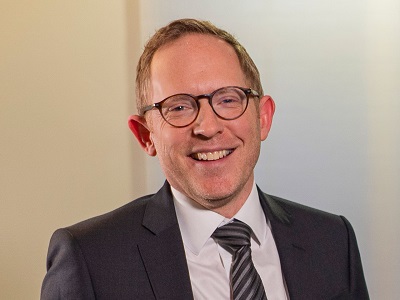
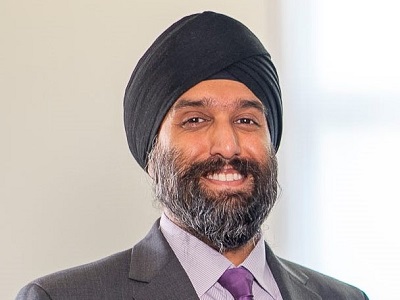
In London, ZTE retained IP boutique Powell Gilbert to defend against the UK lawsuit. Ari Laakkonen, Pete Damerell, and Raj Jagdev led the team. Sarah Abram, Ligia Osepciu and Edmund Eustace represented as King’s Counsel.
-

- Ari Laakkonen

-

- Peter Damerell
-

- Rajvinder Jagdev
Otherwise, ZTE relies on core advisors Taliens and Vossius & Partner. Each firm is handling active and passive cases at the UPC and Munich Regional Court, while cooperating on all the questions regarding FRAND. While Taliens leads the national cases at the 7th Civil Chamber, Vossius is in charge of the proceedings at the 21st Civil Chamber.
The Taliens team consists of lead partner Thomas Lynker as well as Christian Werner, Thomas Reithmann, and Evelyn Höfer. In the proceedings at Frankfurt Regional Court, Monika Stöhr assists Lynker.
-

- Thomas Lynker
-

- Georg Rauh
-
- Kai Rüting
The Vossius team consists of litigation partners Georg Rauh and Kai Rüting, as well as lawyers Zhuomin Wu and Roman Scheibe. Vossius patent attorneys Christian Sandweg, Thomas Schwarze, and Ingo Lummer are involved in all German and UPC cases, being in charge of the technical side of the proceedings. At the UPC, Jonathan Santman of Brinkhof is part of the team from alliance Vossius Brinkhof UPC Litigators.
Juliane Buchinski, who coordinates ZTE’s in-house litigation in Europe, is reportedly also involved.