Top 10 patent cases of the year 2025
In its third year of existence, the UPC has established itself as the go-to court for extensive patent battles. Even pharmaceutical manufacturers, who were initially cautious, are increasingly placing their trust in the pan-European court, which is also positioning itself in SEP proceedings – often in competition with the UK courts, which have dominated FRAND issues to date. This competition is intensified by a landmark ruling by the CJEU on the issue of long-arm jurisdiction. Meanwhile, national courts are emphasising with important rulings that they too are still a force to be reckoned with.
29 December 2025 by Mathieu Klos
JUVE Patent’s top 10 patent cases in Europe 2025:
- CJEU reopens European cross-border litigation in BSH vs Electrolux ruling
- Munich Higher Regional Court confirms new FRAND guidelines in VoiceAge vs HMD
- UK Court of Appeal orders Apple to pay Optis more money in FRAND dispute
- UPC decisions in FujiFilm vs Kodak now extend to the UK
- Bayer and Regeneron secure PI against Formycon concerning Eylea
- UPC and Munich court limit UK jurisdiction with first ever AILI orders
- Novo Nordisk and D Young defend crucial patent for tablet form of semaglutide
- Generics succeed against Sanofi over cancer drug cabazitaxel
- Boards of Appeal revoke Biogen’s dosage patent for Tecfidera
- Court of Appeal grants final victory to Boehringer in PI case against Zentiva
CJEU reopens European cross-border litigation in BSH vs Electrolux ruling
In its far-reaching judgment, the CJEU finds Swedish courts have jurisdiction to rule on infringement for the non-Swedish parts of European patents.

The ruling marked a departure from the CJEU’s precedent GAT vs LuK decision of 2006. ©EdNurg/ADOBE Stock
The landmark CJEU ruling in BSH Hausgeräte vs Electrolux held that Swedish courts have jurisdiction to decide on infringement of the non‑Swedish parts of a European patent, even where the defendant contests validity. Interpreting Article 24(4) Brussels Ibis, the CJEU clarified that courts in the EU member state where the defendant is domiciled may hear infringement actions relating to patent designations in other member states, while exclusive jurisdiction over patent validity remains with each national court. The decision does not extend Brussels Ibis to non‑EU courts but still allows EU courts to address infringement issues involving patents granted or validated in third countries.
Crucially, the CJEU held that EU courts may consider the validity of patents from third countries (e.g. the UK, Turkey, Switzerland) as a preliminary issue in infringement proceedings, without affecting the existence or content of those patents or their national registers. This follows the second opinion of Advocate General Nicholas Emiliou from September 2024 and is widely seen as reopening possibilities for European cross‑border litigation. It departs from the earlier GAT vs LuK precedent, which effectively blocked cross‑border injunctions once validity was challenged, and could enhance the role and reach of both the Unified Patent Court and national courts in cross‑border infringement disputes, while leaving central revocation of third‑country patent parts outside the UPC’s remit.
The case arises from long‑running litigation between BSH and Electrolux over European patent EP 1 434 512, covering vacuum cleaning technology, in Sweden and Germany since 2007. In Sweden, BSH sought damages for infringement of the Swedish, German, Austrian, Spanish, French, UK, Italian, Dutch, Greek and Turkish parts of the patent, invoking Article 4(1) Brussels Ibis, while Electrolux challenged jurisdiction and validity of the patent in multiple countries.
After a first‑instance Swedish court declined jurisdiction over non‑Swedish parts, the Court of Appeal referred the matter to the CJEU in 2022. Following the CJEU’s judgment, the Swedish Court of Appeal can now resume the jurisdictional proceedings, even though Stockholm’s Patent and Trademark Court separately found the Swedish part of EP 512 invalid and not infringed, a decision BSH has appealed.
Find out more about the case and its advisors here
Munich Higher Regional Court confirms new FRAND guidelines in VoiceAge vs HMD
The Higher Regional Court declares HMD an unwilling licensee and finds it has infringed a VoiceAge patent. The judges simultaneously confirm an injunction against Oppo.

Munich Higher Regional Court classed HMD as an unwilling licensee ©fizkes/ADOBE Stock
The Munich Higher Regional Court upheld a cease and desist ruling against HMD for infringing VoiceAge’s EVS speech‑coding patent EP 2 102 619 and confirmed that HMD is an unwilling licensee under FRAND principles. The court rejected HMD’s appeal against a 2022 Munich Regional Court decision, thus barring HMD from distributing EVS‑enabled devices in Germany. Given the case’s significance for SEP and FRAND law, the court granted leave to appeal to the German Federal Court of Justice, limited to the FRAND defence. The Federal Court of Justice will hear the case on 27 January 2026, marking a significant milestone in German SEP law. The hearing comes five years after the court’s last major FRAND rulings in the Sisvel v. Haier I and II proceedings.
The dispute stems from lawsuits filed by VoiceAge in 2019 over five EVS‑related patents, all of which were found infringed by courts in Mannheim and Munich. While HMD removed EVS functionality from German devices, the patent EP 619 was upheld in restricted form. After the EU Commission intervened in April 2024 with an amicus curiae brief criticising Munich Regional Court’s earlier FRAND approach, the Higher Regional Court announced new guidelines, shifting greater focus to the patent holder’s licence offer and requiring implementers to show “continuing willingness” by providing adequate security, such as a bank guarantee.
Applying these new FRAND guidelines, the court held that HMD failed to demonstrate sufficient willingness because it did not offer adequate security, making it unnecessary to assess whether VoiceAge’s licence offer was FRAND‑compliant. In a parallel decision, the court also confirmed an injunction against Oppo for infringing another VoiceAge EVS patent (EP 2 162 880), again allowing an appeal.
Find out more about the case and its advisors here
UK Court of Appeal orders Apple to pay Optis more money in FRAND dispute
In a victory for SEP holders, the UK Court of Appeal amends a previous ruling and orders Apple to pay more money to Optis for its global 4G portfolio.

Apple was disappointed with the amended ruling in Optis’ favour. ©Farknot Architect/ADOBE Stock
The UK Court of Appeal overturned a key part of an earlier High Court ruling and ordered Apple to pay Optis a substantially higher FRAND royalty for its global 4G standard‑essential patent portfolio. Apple was forced to pay a lump sum of $502 million, excluding interest, covering the period from 2013 to 2027. The decision marks a significant win for SEP holders and reinforces the UK’s role as a leading forum for global FRAND-rate determinations.
The appellate panel, led by Colin Birss alongside Richard Arnold and Guy Newey, unanimously rejected the High Court’s 2022 assessment, which had set royalties at just $56.43 million. Instead, the Court of Appeal fixed a FRAND rate of $0.15 per Apple device, relying primarily on comparable licence agreements involving Optis, Apple and other major SEP licensors such as Ericsson, Nokia, InterDigital and Sisvel. This confirmed that the use of comparables is now the preferred methodology for FRAND valuation in UK courts.
On non‑monetary licence terms, the court adopted a more hands‑off approach than at first instance, declining to impose conditions such as restrictions on foreign litigation. This is the third time the Court of Appeal has revised a High Court FRAND determination, following Unwired Planet vs Huawei and InterDigital vs Lenovo. For the latter case it also increased the rate in favour of the patent owner.
However, the final word has not yet been spoken in this dispute. Apple has lodged an appeal with the UK Supreme Court. Since the beginning of November, it is clear that the highest UK court has its next SEP case. This is because the Supreme Court allowed Apple’s appeal. A date for the hearing has not yet been set (case ID: UKSC/2025/0145).
Find out more about the case and its advisors here
UPC decisions in FujiFilm vs Kodak now extend to the UK
The UPC claims jurisdiction over the UK part of the patents, meaning two rulings issued in early April for the UPC territory now extend to the UK.

Kodak challenged the UPC’s jurisdiction to rule on UK patent parts. ©DmyTo/ADOBE Stock
The Unified Patent Court confirmed that its decisions in the FujiFilm vs Kodak dispute over printing plate technology extend to the UK parts of the relevant European patents. Relying on the CJEU’s ruling in BSH vs Electrolux, the Mannheim local division held that the UPC has jurisdiction to decide on infringement of the UK designation where the defendant is based in a UPC member state. This follows an earlier Düsseldorf ruling and means two UPC judgments from early April now also apply to the UK.
FujiFilm sued Kodak’s German subsidiaries over several patents covering manufacturing methods and chemical components for printing plates. In Mannheim, the court found EP 3 511 174 valid and infringed, ordering injunctions and damages in Germany and later confirming infringement in the UK as well. In contrast, EP 3 476 616 was revoked for lack of inventive step, meaning no UK injunction was necessary. The court clarified that while it can rule on UK infringement, it lacks jurisdiction to revoke the UK national part of a European patent with erga omnes effect.
The UPC also ruled that defendants may raise an invalidity defence concerning the UK part of a European bundle patent within UPC infringement proceedings, without starting separate revocation actions in the UK. Any validity assessment by the UPC applies only between the parties and does not bind UK authorities. The case underscored the growing practical reach of the UPC beyond EU member states.
Appeals against the decisions are pending. The oral hearing at the Court of Appeal in Luxemburg has been scheduled for the 27th March 2026, to be continued on the 30th March. Fujifilm has changed advisors for the appeal. While in the first instance Hoyng ROKH Monegier represented the Japanese company, Kather Augenstein took over for the appeal in Luxemburg.
Find out more about the case and its advisors here
Bayer and Regeneron secure PI against Formycon concerning Eylea
Munich Regional Court grants Regeneron and Bayer a preliminary injunction spanning 22 countries, thus preserving market exclusivity for their blockbuster drug.
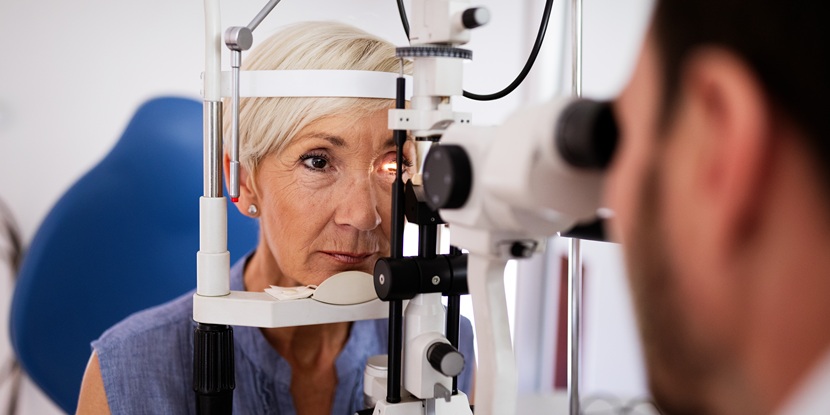
Bayer and Regeneron’s blockbuster Eylea is an ophthalmic drug, which treats age-related macular degeneration and diabetic macular oedema. ©NDABCREATIVITY/ADOBE Stock
Munich Regional Court granted Regeneron and Bayer a wide‑ranging preliminary injunction preventing Formycon from launching its aflibercept biosimilar of the blockbuster ophthalmic drug Eylea in 22 European countries. The injunction preserves market exclusivity for Eylea, which generated around $9 billion in global sales in 2023 and is a major revenue driver for Bayer. The ruling comes amid a global dispute over biosimilar entry, as key substance patent SPC protection is due to expire in November.
Although several companies, including Formycon and Samsung Bioepis, have obtained EMA approval for aflibercept biosimilars, Regeneron and Bayer argued that Eylea remains protected by formulation patent EP 2 364 691, potentially extending exclusivity until June 2027. After Samsung Bioepis unsuccessfully challenged this patent before the German Federal Patent Court, Bayer sought preliminary injunctions in Munich based on alleged equivalent infringement and relying on the CJEU’s BSH v sElectrolux ruling to justify cross‑border relief. Following a full‑day hearing, the court granted injunctions covering Germany and 21 additional countries.
The injunction follows Formycon’s earlier negative declaratory action seeking confirmation that its biosimilar does not infringe the patent in several jurisdictions. To this, Regeneron and Bayer responded with a counterclaim for infringement regarding Germany and 19 other European countries. They argue that Formycon infringes EP 691 by equivalence. In October, the Munich court dismissed the negative declaratory action and allowed for the counterclaim for infringement. Formycon appealed this decision.
Parallel proceedings are ongoing across Europe, the US and the UK, where a judgment on equivalence is still pending.
Find out more about the case and its advisors here
UPC and Munich court limit UK jurisdiction with first ever AILI orders
In their first ex parte anti-interim-licence injunction, the UPC local division Mannheim and Munich Regional Court put a stop to UK courts’ practice of granting interim licences. The UK courts responded. Since then, the courts have been prohibiting Amazon and InterDigital with increasingly drastic orders from taking action against each other in court.

InterDigital tries to force Amazon into its licensing programme for video streaming patents. ©alimyakubov/ADOBE Stock
At the end of September 2025, the UPC local division Mannheim and Munich Regional Court issued the first anti‑interim‑licence injunctions to block the UK courts’ growing practice of granting interim patent licences with cross‑border effect. The rulings opened a new chapter in telecommunications patent disputes. The dispute between the SEP holder and the internet giant, as well as the German and UK courts, reached a new peak around Christmas.
In late September, the rulings from Mannheim and Munich prevented Amazon from seeking an interim licence in the UK that would have extended to UPC and continental European jurisdictions. Both courts held that compulsory interim licences undermine the fundamental right of patent enforcement. They reasoned that once the UK High Court grants such a licence, patent owners are effectively barred from bringing infringement proceedings not only in the UK but also before national courts in Europe and the UPC. Both rulings became widely known under the abbreviation AILI.
Originally, both injunctions were granted ex parte to prevent pre‑emptive UK filings. Amazon and the UK High Court were quick to respond. Amazon requested that the UPC and the Regional Court of Munich review their AILI orders. Shortly before Christmas, the UPC local division in Mannheim, under presiding judge Peter Tochtermann, confirmed the AILI and imposed a penalty of up to €50 million if Amazon failed to comply (case ID: UPC_CFI_936/2025).
Back in October, UK High Court protected its jursidiction by issuing a temporary anti-anti-suit injunction against InterDigital (case ID: HP-2025-000043). With the ex parte AASI, the High Court aimed to prevent InterDigital from blocking the British proceedings with further legal action. Following this presiding judge Richard Meade accelerated the main proceeding regarding a RAND rate determination requested by Amazon. Shortly before Christmas he also dismissed InterDigital’s challenge that the UK High Court lacks jurisdiction to decide on a RAND rate for the SEP holder’s video streaming protfolio.
Find out more about the case and its advisors here and here.
Novo Nordisk and D Young defend crucial patent for tablet form of semaglutide
The European Patent Office upholds a Novo Nordisk’s patent related to the diabetes and weight-loss drug semaglutide. The Denmark based pharma company is locked in a multitude of EPO oppositions against numerous patents regarding its blockbuster drug.
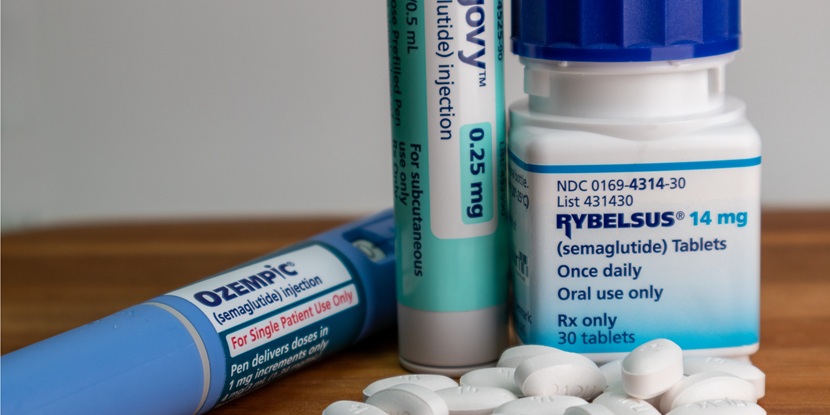
Novo Nordisk markets various versions of semaglutide, including Ozempic, Wegovy and Rybelsus ©K-KStock/ADOBE Stock
The European Patent Office upheld Novo Nordisk’s patent EP 3 746 111 B1, which protects a formulation improving the bioavailability of semaglutide in tablet form. The Opposition Division rejected challenges from several opponents alleging lack of inventive step, with the examining panel concluding that the invention was patentable. This decision is a significant success for Novo Nordisk, particularly after the Boards of Appeal revoked multiple semaglutide‑related patents.
Semaglutide is a cornerstone product for Novo Nordisk, marketed as Ozempic for diabetes, Wegovy for weight loss and Rybelsus as an oral diabetes treatment. While generics manufacturers are seeking to clear the way for competing products, recent EPO outcomes have been mixed. Patents covering tablet administration and long‑acting GLP‑1 peptides were revoked in 2024 and 2025, whereas a patent protecting an injectable semaglutide formulation was upheld in June and is now under appeal. The upheld EP 111 strengthens Novo Nordisk’s position in defending the tablet version of the drug.
The case highlights the intensity of generics’ challenges to Novo Nordisk’s semaglutide patent portfolio and the strategic importance of formulation patents in extending market exclusivity.
Find out more about the case and its advisors here
Generics succeed against Sanofi over cancer drug cabazitaxel
The UPC revokes Sanofi’s second medical use patent for cabazitaxel, which forms the basis of cancer drug Jevtana, thus clearing the way for generics. This is one of the first big pharma infringement cases at the UPC.

Sanofi’s drug Jevtana is used to treat prostate cancer and now face competition from generic versions. ©Chanakon/ADOBE Stock
The UPC local division Munich revoked Sanofi’s second medical use patent EP 2 493 466 for cabazitaxel, delivering a major victory for several generics manufacturers. The patent underpins Sanofi’s prostate cancer drug Jevtana. In its decision, the court dismissed Sanofi’s infringement claims and revoked the patent for multiple UPC countries, including Germany, France, Italy, and the Netherlands, with Sanofi retaining the right to appeal.
Although the European Patent Office had ultimately upheld EP 466 after opposition and appeal proceedings, generics had already achieved favourable outcomes in national courts. UK courts ruled against Sanofi as early as 2018, followed by German decisions in 2019, and the Paris Judicial Court revoked the patent in September 2024, citing obviousness. In the UPC proceedings launched by Sanofi in 2024 against Accord, Zentiva, Stada and Dr. Reddy, the Munich judges focused primarily on validity and indicated early on that revocation was likely, ultimately aligning their reasoning with the Paris decision rather than the EPO’s stance.
The ruling is one of the UPC’s first major originator‑generics decisions and highlights the vulnerability of second medical use patents, which are notoriously difficult to enforce in Europe. The outcome strengthens generics’ position across Europe and further opens the market to competition for cabazitaxel‑based cancer treatments.
Find out more about the case and its advisors here
Boards of Appeal revoke Biogen’s dosage patent for Tecfidera
The EPO Boards of Appeal refuse to grant Biogen’s dosage patent EP 873, which is central to its multiple sclerosis drug. The decision resolves several PI and infringement proceedings across European countries.

Biogen’s Tecfidera helps MS patients with mobility issues ©lordn/ADOBE Stock
The EPO Boards of Appeal revoked Biogen’s formulation patent EP 2 653 873, which underpins the multiple sclerosis drug Tecfidera. The Technical Board of Appeal overturned the Opposition Division’s earlier decision and found the patent invalid for added matter, rejecting Biogen’s attempt to refer the case to the Enlarged Board of Appeal. This ruling follows the European General Court’s finding that Biogen missed the deadline to extend market exclusivity and effectively dismantles the company’s strategy to keep generics off the market until 2028–2029.
EP 873 covered a specific 480 mg daily dosage formulation of dimethyl or monomethyl fumarate. Biogen pursued preliminary injunctions and infringement actions across Europe, including Germany, the Netherlands, and France, with mixed success: some German courts initially granted PIs after the Opposition Division upheld the patent, while higher courts expressed serious doubts about its validity. The Boards of Appeal decision now cuts off all pending infringement and PI proceedings based on EP 873.
As a result, European markets are effectively open to generic Tecfidera products, with the UK path now entirely clear. Biogen may face damages claims from generics for having enforced preliminary injunctions, even if it were later to succeed on procedural grounds before the Enlarged Board of Appeal. One potential remaining obstacle is Biogen’s divisional patent EP 4 137 819, still under examination, but for now the revocation marks a decisive setback to Biogen’s efforts to prolong exclusivity for Tecfidera in Europe.
Find out more about the case and its advisors here
Court of Appeal grants final victory to Boehringer in PI case against Zentiva
The Court of Appeal finds Zentiva is at risk of imminent infringement and grants patent owner Boehringer a PI for its respiratory drug Ofev. This decision marks one of the UPC’s first PI decisions in a pharma case.

Boehringer Ingelheim’s Ofev treats idiopathic pulmonary fibrosis and other lung diseases. ©Mikel/ADOBE Stock
In August, the UPC Court of Appeal overturned a first‑instance decision from the Lisbon local division and granted Boehringer Ingelheim a preliminary injunction against Zentiva over its respiratory drug Ofev. The dispute concerned EP 1 830 843, protecting the use of nintedanib or nintedanib esylate, which was valid until 21 December 2025 in 17 UPC states. The ruling blocked Zentiva from offering or marketing its generic products in those countries and ordered the company to pay Boehringer €199,000, with immediate effect.
At first instance, the Lisbon local division had rejected Boehringer’s PI request in May, finding no imminent risk of infringement despite evidence that Zentiva’s generic could become available in Portugal from December 2024. On appeal, however, the Court of Appeal concluded that Zentiva had “set the stage” for infringement by completing regulatory preparations early and lacking any binding national measures to prevent participation in hospital procurement processes. The judges held that infringement was therefore imminent, even though Zentiva had not yet entered the market.
The decision was a significant win for Boehringer and likely strengthens confidence among pharmaceutical originators in the UPC system.
Find out more about the case and its advisors here
(co-authors: Konstanze Richter, Christina Schultze and Laura King)
