Top 10 patent cases in France
French courts recorded a decline in the number of cases in 2024, and recent research suggests that the downward trend continued last year. Nevertheless, French courts handed down a number of decisions in high-profile cases, particularly concerning patents from the pharmaceutical sector. One ruling has an implication for the UPC.
6 March 2026 by Konstanze Richter

In France, large, often pan-European pharmaceutical proceedings continue to dominate national patent litigation. Last year, the French courts issued high-profile judgments on blockbusters such as Tecfidera, Xarelto and Alimta.
Companies are also responding well to the relatively new opportunities offered by the French Patent Office (INPI). Patent holders such as Janssen regularly challenge rejections of their SPC applications by the INPI. In addition, the Court of Appeal is starting to see the first appeals in INPI opposition proceedings.
Key settlements
In some recent hard-fought cases, the parties withdrew their actions after reaching a settlement. For example, the dispute between Illumina and MGI (case ID: 20/10930) and Signify against ALED (case IDs: 20/10415 and 22/13827) – both at the Judicial Court Paris – ended in early 2025 with the withdrawal of the lawsuits.
In July, Nestlé and K-Fee settled their long-running dispute over coffee capsules (case ID: 21/06887). Meanwhile, Sanofi also withdrew its appeal against Accord in the dispute over cabazitaxel after the Paris Judicial Court declared the 2024 patent invalid (case ID:(24/17193). The innovator was also in dispute with other generics manufacturers at the UPC.
In October, Bayer withdrew its appeal in the PI case against Zentiva in the dispute over Xarelto (case ID: 24/11926) after the Court of Appeal had declared the patent invalid in a parallel dispute against Sandoz in the summer.
JUVE Patent’s top 10 patent cases in France 2025:
- Paris court invalidates crucial claim of Bayer’s sorafenib patent
- Court of Appeal implements CJEU ruling in Janssen’s dispute with INPI
- Teva Santé and August Debouzy fend off Biogen’s PI request in Tecfidera case
- Success for Nintendo against Bigben over Wii
- Eli Lilly prevails in dispute over Alimta at Court of Appeal
- Lufthansa Technik vs Thales: Supreme Court dismisses appeal court’s assessment of inventive step
- Google and Apple score another win in appeal against inventor
- First French decision on disparagement issue relating to pending UPC cases
- No success for Bayer in dispute over rivaroxaban
- Paris Court excludes Canadian lawyers from confidentiality club
- BONUS CASE: Intellectual Ventures loses in dispute against SFR
Paris court invalidates crucial claim of Bayer’s sorafenib patent
For years, Bayer has fought a fierce pan-European battle over its cancer drug Nexavar. In summer last year, the pharma company suffered a blow in France after the Court of Appeal confirmed a first-instance decision declaring the patent-in-suit void.

Bayer’s drug Nexavar is used to treat different types of cancer, such as kidney, liver cell and thyroid cancer. ©Rido/ADOBE Stock
The dispute over Bayer’s cancer drug Nexavar took off in France in July 2021. After the expiration of a related SPC, Bayer first launched an interim action against Teva. The originator based its actions on claim 12 of its EP 2 305 255. However, the Judicial Court Paris dismissed the interim action, reasoning that claim 12 lacked inventive step. The Court of Appeal upheld this decision in May 2022.
Bayer then requested the French patent office INPI limit this claim and launched infringement proceedings against several generics manufacturers including Biogaran, Zentiva, Sandoz, and Viatris. In summer 2025, the Judicial Court Paris handed down judgments in the disputes against Biogaran, Viatris, and Zentiva.
The Paris court ruled that claim 12 was invalid due to added matter because it was not included in the application as filed. The judges stated that substantial amendments had been made to the patent description to allow the patent to be granted.
Proceedings between Bayer and Sandoz meanwhile ended throughout Europe.
Find out more about the case and its advisors here
Paris court renders first decision on SPC for combination drugs after CJEU ruling
The French Court of Appeal rules Janssen is entitled to an SPC from the INPI for an HIV treatment. This marks the first implemention the CJEU’s decision.
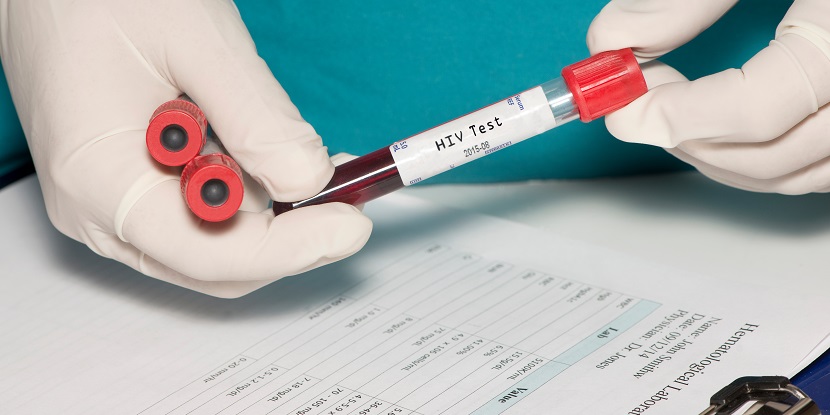
Janssen Pharmaceutica claims the effects of the combination HIV drug enables a reduced dosage and thus leads to fewer side effects. ©Sherry Young/ADOBE Stock
The INPI had previously rejected Janssen’s applications, citing Article 3(a) of the SPC regulation. Janssen sought SPCs to protect combinations of active ingredients used in its HIV treatment. In 2016, the Belgian innovator, a subsidiary of US life sciences company Johnson & Johnson, submitted applications to the INPI for SPCs covering two combination products based on EP 1 632 232.
The first SPC covered tenofovir alafenamide fumarate, emtricitabine, and rilpivirine hydrochloride. The second concerned tenofovir alafenamide fumarate and rilpivirine hydrochloride. Janssen Pharmaceutica claims the pharmaceutical compositions have improved therapeutic properties. According to the company, the combination produces a synergistic effect on HIV replication that exceeds the sum of each active ingredient’s individual effects. This allows for a reduced dosage of the anti-HIV drug and thus causes fewer side effects.
In 2022, the INPI refused to grant the SPCs, claiming the product in the application was not protected by the basic EP 232. Janssen appealed the decision and won in summer 2025. The Paris Court of Appeal ruling was the first in France to implement the CJEU decision regarding MSD’s drugs Janumet and Inegy.
Find out more about the case and its advisors here
Teva Santé and August Debouzy fend off Biogen’s PI request in Tecfidera case
In the fierce pan-European battle over Tecfidera, Biogen experienced a rollercoaster ride. While a German court prohibited various manufacturers from launching generic versions of the multiple sclerosis drug, the Paris Judicial Court rejected a PI against Teva Santé.

Biogen’s Tecfidera is used to treat MS, which can affect a person’s ability to walk. ©24K-Production/ADOBE Stock
In February, the Paris Judicial Court dismissed Biogen’s PI claim against Teva Santé over EP 2 653 873. The formulation patent protects a pharmaceutical composition comprising active ingredient dimethyl fumarate or monomethyl fumarate, plus one or more pharmaceutically acceptable excipients. Administered in a dose of 480mg per day, the formulation now forms the basis of Tecfidera. It is also the subject of litigation in Germany, the Netherlands and other countries.
In France, Biogen asked the Paris court to prevent Teva Santé from launching its own products on the market until February 2028, but the Paris judge had doubts as to whether the patent would survive a revocation action and did not grant the PI. Judge Benac declared that “there is no ground for preliminary injunction in view of the serious means alleging a lack of inventive step capable of challenging the apparent validity of the patent on which the claims are based”.
Find out more about the case and its advisors here
Success for Nintendo against Bigben over Wii
At the end of 2025 Nintendo achieved two successes in its battle against Bigben over a crucial patent protecting technology used in Wii consoles: one at the French Supreme Court and another in the German damages claim following the infringement suit.

Nintendo claimed joysticks sold by Bigben infringed technology used in the Wii console. ©shelbys/ADOBE Stock
At the heart of both disputes lies EP 1 854 518. The patent protects a game operating device that combines ergonomic aspects with sensor technology, including a camera and accelerometer. The Wii Remote, the main controller for Nintendo’s Wii console launched in 2006, features this technology.
Bigben Interactive, a French company that primarily distributes computer games and game console accessories through its subsidiary Nacon, marketed a controller compatible with the Wii console. Nintendo claimed this infringed its patent.
In a first-instance decision, dating back to 2015, the Judicial Court Paris declared one patent-in-suit partly invalid, but upheld two other patents, among them EP 518. However, the court held that Bigben had committed acts of unfair competition by importing and selling Wii-compatible controllers that were essentially close copies of Nintendo’s controllers. The judges prohibited further sales in France and awarded €500,000 in damages to Nintendo France.
Then, in April 2023, the Paris Court of Appeal declared the French part of EP 518 invalid. Simultaneously, the judges agreed with the first-instance court and found Bigben and Nacon guilty of unfair competition and misleading commercial practices. The court ordered Nacon to pay €1 million in damages to Nintendo France.
In the appeal, the Supreme Court overturned the previous ruling invalidating EP 518 and referred the case back to the Court of Appeal under a differently composed panel.
Find out more about the case and its advisors here
Eli Lilly prevails against Viatris in dispute over Alimta
For years, Eli Lilly has been defending its blockbuster drug Alimta in Europe. Since 2019 the battle has played out in France. After previous successes in actions against Fresenius Kabi and Zentiva, the innovator scored another win against Viatris.

Eli Lilly‘s chemotherapy drug Alimta is formulated as a so-called Swiss-type claim uses a combination of the disodium salt of pemetrexed in combination with vitamin B12. © romaset/ADOBE STOCK
The dispute concerns EP 1 313 508. Eli Lilly’s patent protects the use of the disodium salt of pemetrexed in combination with vitamin B12. The drug, formulated as a so-called Swiss-type claim, forms the basis of Alimta, used in chemotherapy.
The patent expired in mid-2021. In 2019, Eli Lilly launched an infringement suit against several generic drug companies in France, including Viatris’s predecessor Mylan. Lilly France also accused the defendant of committing an act of unfair competition with this infringement and demanded provisional damages of € 2.5 million and the reimbursement of costs. The Judicial Court Paris found the patent valid and infringed in 2023. However, it rejected Lilly France’s claims for damages.
The generic drug company appealed and in December 2025, the Court of Appeal upheld the first-instance ruling (case ID: 24/02201). The judges also found the patent valid and infringed but dismissed the claim for damages.
In a parallel case on the merits against Fresenius Kabi, the Paris Judicial Court ruled in September 2020 that the defendant infringed Lilly’s EP 508. The court ordered Fresenius Kabi to pay Eli Lilly damages in the amount of € 28 million, the highest provisional damages award ordered in a life sciences patent dispute in France.
In another parallel action against Zentiva, the Paris Judicial Court issued a PI prohibiting the generics company from selling their chemotherapy drug pemetrexed in France. In addition, the court ordered the provisional sum of €4 million. The Court of Appeal upheld the PI. However, Zentiva did not have to pay the provisional damages, since the judges pointed out that potential damages should be dealt with in the proceedings on the merits. The oral hearing on the merits took place in January 2026 and included a damages discussion.
Find out more about the case and its advisors here
Supreme Court rejects appeal court’s assessment of Lufthansa patent’s inventive step
For years Lufthansa has defended a crucial patent for an electrical power supply device in France. After defeats in the first and second instance, the French Supreme Court has rescinded the previous judgment and referred the case back to the Court of Appeal.
Lufthansa has lost a patent dispute in France at the second instance, after Thales and Astronics succeeded in invalidating a patent. ©andrey gonchar/ADOBE STOCK
Lufthansa’s EP 08 81 145 covers an invention that aims to provide safety to passengers plugging in their device by detecting if a person has inserted a plug or foreign object. In aeroplanes, safety precautions are necessary due to the high voltage permitted by the plug sockets. The patent expired in May 2018 and the main issue in both France and the UK centred on costs and damages.
In France, Lufthansa directed its infringement lawsuit against Thales, with Astronics and Panasonic as co-defendants. The defendants requested that the proceedings not disclose some documents so as to protect business secrets. The Judicial Court Paris initially shelved this question and focused exclusively on the patent’s validity.
While German and UK courts decided in favour of Lufthansa, the Judicial Court Paris in 2020 and then the Court of Appeal in 2023 declared the patent invalid due to lack of inventive step. Lufthansa then took the case to the Supreme Court. In early 2025, the highest French court repealed the previous judgments and referred the case back to the Court of Appeal to be heard by a different panel of judges (case ID: 23-13.576).
The Supreme Court found the appeal court’s assessment of inventive step and definition of the person skilled in the art to be flawed. The Court of Appeal had defined this skilled person as an electrical engineer, while the specific technological field was aviation technology rather than general electronic plug and socket outlets. According to the Cour de Cassation, the special requirements of the aeroplane environment should have played a role in the definition of the skilled person. Furthermore, the Court of Appeal did not give a sufficient reason why several technical points in the patent claim, such as time measurement and comparison, would have been obvious to a skilled person.
Now a different panel at the Paris Court of Appeal will review the case on the merits.
Find out more about the case and its advisors here
Google and Apple score another win in appeal against inventor
Apple and Google achieved another win in an action brought by inventor Ferid Allani, who claims the two companies infringed his patent through their iOS and Android operating systems. The Court of Appeal upheld the first-instance decision, now the case is pending at the Supreme Court.

Apple and Google have defended an accusation of infringement via their operating systems. ©DenPhoto/ADOBE STOCK
The dispute began in France in December 2019, when individual inventor Ferid Allani launched an infringement action at the Judicial Court Paris. He claimed that Apple’s iOS system and Google’s Android system infringe claims one to eight of his patent, which covers a “method and device for accessing information sources and services on the web”. The two systems are present in millions of products, including Apple’s iPhones and iWatches and Google’s mobile phones.
In 2023, the Judicial Court Paris declared the patent-in-suit invalid for lack of novelty. As such, the judges concluded that Apple and co-defendant Google did not infringe FR 2 803 929. Ferid Allani appealed the decision.
After a hearing in June 2025, the Paris Court of Appeal upheld the first-instance decision last October (case ID: 23/01389). The inventor then appealed to the Supreme Court (Cour de Cassation) where the case is now pending.
Find out more about the case and its advisors here
First French decision on disparagement issue relating to pending UPC cases
In April, a French court extended the concept of disparagement to an ongoing UPC case for the first time. The ruling affects Dutch company Qiagen, which had published a press release on its French-language website regarding a UPC case. This is an issue that many companies outside France are likely to be unfamiliar with.

The French court Tribunal des activités économiques de Lyon, situated in Lyon, has raised the issue of disparagement concerning pending UPC cases for the first time. ©nomadkate/ADOBE Stock
On 3 March 2025, Qiagen published a press release announcing it had filed an infringement action against France-based company bioMérieux at the UPC’s Düsseldorf local division (case ID: ACT_9962/2025).
In response, bioMérieux filed interim proceedings for disparagement before the Tribunal des activités économiques de Lyon. The court ruled in favour of the plaintiff, finding that the communication was disparaging and constituted “manifestly unlawful disturbance” to bioMérieux.
The French rules on disparagement fall under competition law and aim to protect companies from statements by competitors that could cast them in a negative light. Among other restrictions, it is prohibited to discuss pending or unfiled patent infringement lawsuits outside one’s own company.
A company may only communicate a patent infringement lawsuit externally after the publication of a first judgment, for example in a press release or in an email to a customer.
As a result, the court ordered Qiagen to refrain from further comment on the ongoing UPC case. Furthermore, it ordered the company to publish the decision of the Tribunal des activités économiques de Lyon on its French-language website Qiagen.com for three months. BioMérieux also had to publish this decision on its website for the same period.
Find out more about the case and its advisors here
Court of Appeal finds Bayer’s rivaroxaban patent invalid
In a dispute spanning multiple jurisdictions, the German pharma company is fighting tooth and nail for its blockbuster drug Xarelto. In France, the second-instance court declared a crucial patent as invalid. This could clear the way for generic rivaroxaban products.
Pharmaceutical company Bayer is headquartered in Leverkusen and is defending its blockbuster drug, Xarelto. ©Tobias Arhelger/ADOBE STOCK
In April 2024 the SPC for basic patent EP 1 261 606 protecting active ingredient rivaroxaban expired in Europe. But the company continued to protect its EP 1 845 961, which was valid until January 2026. Rivaroxaban is used as an anticoagulant for the prevention and treatment of thromboembolic disorders.
In France, Bayer fought against several generic drug companies, among them Sandoz and Zentiva. Sandoz obtained marketing authorisations in 2018 for generic rivaroxaban products. In April 2024, these products were granted pricing and reimbursement approval in France. In June 2022, Sandoz brought proceedings before the Paris Judicial Court seeking annulment of the French part of EP 961 (claims 1 and 2), arguing lack of validity.
In March 2024, the Paris Judicial Court annulled the French part of EP 961. Bayer appealed this decision. In summer of last year, the Court of Appeal upheld the first-instance judgment and declared the patent invalid due to lack of inventive step.
In parallel French interim proceedings against Zentiva, the Judicial Court rejected Bayer’s request for provisional measures in March 2024, as it did not consider the infringement to be sufficiently plausible (case ID 24/51632). Last October Bayer withdrew its appeal against Zentiva in the PI proceedings (case ID: 24/11926).
A&O Shearman acted for Bayer with renowned pharma expert Laetitia Bénard leading the case in France. The firm also handled the proceedings for the pharma company in Germany and UK.
Denis Schertenleib represented Sandoz. The name partner of Paris-based litigation firm Schertenleib Avocats is highly experienced in pharma cases, regularly acting for a number of generics companies.
In the parallel PI proceedings, Zentiva instructed a team around Jules Fabre, previously a partner at the French office of Pinsent Masons before moving with a team to Taylor Wessing last year to set up a French patent litigation practice.
Find out more about the case and its advisors here
Paris Court excludes Canadian lawyers from confidentiality club
In a dispute over an antenna pointing system, used in secure satellite communications for the Spanish government, the French court has limited access to documents to the claimant’s French lawyers. This shows how national security impacts patent litigation.

Due to the sensitive nature of the Spanish government programme, the court has excluded MDA’s Canadian lawyers from the confidentiality circle. ©Andrii Yalanskyi/ADOBE Stock
MacDonald, Dettwiler and Associates Corporation (MDA), a Canadian company specialising in space operations and satellite systems, owns EP 2 608 313. The patent relates to an antenna pointing system.
Spanish aerospace company Sener Aeroespacial supplied an antenna pointing system to Airbus Defence and Space, a French company within the Airbus group. MDA alleges that this system infringes its European patent.
In January 2025, MDA obtained a court order authorising a seizure (saisie-contrefaçon) at Airbus’ premises in France to collect evidence of the alleged infringement. The seizure took place on 28 January 2025.
Airbus and Sener subsequently initiated summary proceedings seeking retraction or adjustment of the order, primarily concerning how the seized documents — some allegedly protected by trade secrets — should be handled. While the parties reached agreement on most procedural aspects (including document review and confidentiality measures), they disagreed on the composition of the confidentiality circle, particularly whether MDA’s Canadian lawyers should have access to the confidential documents.
Airbus and Sener argued that the patent-in-suit is part of SpainSat NG, a secure communication system used by the Spanish government and the military, thus containing sensitive information. Parts of the program are classified due to interests of state and defence.
In an order issued in July, the Paris Judicial Court lifted the provisional sequestration. The documents seized in January were released from provisional court custody, but only within a defined confidentiality circle. The court ruled that access to the confidential documents is limited to the French lawyers of each party and the French patent attorneys, as well as three designated employees per company, all subject to confidentiality undertakings.
Importantly, the court excluded MDA’s Canadian lawyers from the confidentiality circle. It justified this restriction in light of the sensitive context of the SpainSat NG programme, which partly involves classified information, and the need to maintain a restricted and balanced confidentiality circle.
For any future proceedings on the merits the court ordered that submissions be filed in two versions, one complete version accessible only to the court and the lawyers and one redacted version, which may be shared with the parties. Hearings referring to confidential documents will be held in closed session (in camera). Furthermore, the court decisions must be drafted and published in a way that protects confidential business information (case IDs: 25/02403 and 25/02404).
Hoyng ROKH Monégier represented the Canadian claimant with Sabine Agé leading the case. While lawyers from the Canadian law firm Own Innovation work on the case with the French team, they are now excluded from receiving certain information. Meanwhile, the confidentiality club includes MDA’s general counsel, chief technology officer, chief satellite systems architect and senior satellite systems engineer.
Airbus Defence and Space instructed Allen & Overy. Paris-based partner Charles Tuffreau represents the defendant at court.
Sener banked on Hogan Lovells with Stanislas Roux-Vaillard of the Paris office at the helm.
Court of Appeal confirms revocation of Intellectual Venture’s patent in fight against SFR
While the comprehensive mobile communications proceedings between Intellectual Ventures and various defendants are now pending at the Supreme Court, the NPE suffered a further defeat in a parallel dispute against SFR in spring 2025.

In a dispute over several patents, the Judicial Court of Paris found that SFR did not infringe an Intellectual Ventures patent ©astrosystem/ADOBE STOCK
Intellectual Ventures and SFR have been locked in a battle over the French part of EP 1 304 002 since 2016. The patent protects a technology for arranging data ciphering in a wireless telecommunication system. In November 2019, the patent holder filed a request for limitation of the French part of EP 002 with the INPI. The French Patent Office granted this in January 2020, with the patent then expiring at the end of June 2021.
The Société Française du Radiotéléphone (SFR) has provided its “Auto Connect WiFi” service since 2012, which gives customers access to the internet via hotspots. Intellectual Ventures accuses the French telecommunications provider of infringing claims one, eleven and 14 of the French part of EP 002.
In November 2022, the Judicial Court Paris dismissed an infringement suit against SFR. The patent holder appealed the decision. In March 2025, the Court of Appeal in Paris upheld the first-instance decision due to inadmissible extension (case ID: 23/02588). The judges declared claims one, eleven and 14 of EP 002 invalid, thus dismissing the infringement action.
Find out more about the case and its advisors here


