SEP holders force UPC into FRAND dance with UK courts
Sun Patent Trust has asked the UPC's Paris local division to set a FRAND rate in its dispute with Vivo. Ericsson has also filed a similar FRAND claim in its battle with Transsion. A FRAND-rate determination by the UPC could intensify competition with the UK High Court and Munich Regional Court.
2 December 2025 by Mathieu Klos

Rumours have circulated among experts for some time. Since last Friday, it has become clear that the Unified Patent Court has received a complaint from an SEP holder regarding FRAND-rate determination.
At the end of November, the Court of Appeal rejected an application by implementer Vivo to halt the main proceedings in its dispute with Sun Patent Trust until the Court of Appeal decides whether the UPC has jurisdiction to make FRAND-rate determinations.
Sun Patent first applied to the UPC for a FRAND-rate determination in April. This forms part of two infringement actions brought by the Panasonic-affiliated licensing company against two SEPs at the Paris local division (case IDs: UPC_CFI_361/2025 and UPC_CFI_362/2025). Sun Patent aims to stop the sale of various 4G+ compatible Vivo devices.
Battle over jurisdiction
The FRAND applications embedded in the SEP holder’s lawsuits only came to light through recent UPC procedural orders addressing the court’s jurisdiction over such applications. The court also had to determine whether to stay the main proceedings pending a decision on its fundamental jurisdiction.
Vivo now has clarity: the main proceedings will continue as normal. The first panel of the UPC Court of Appeal under presiding judge Klaus Grabinski made this decision (case ID: UPC_CFI_361/2025). Consequently, Vivo had to submit its defence statement by Friday.
-

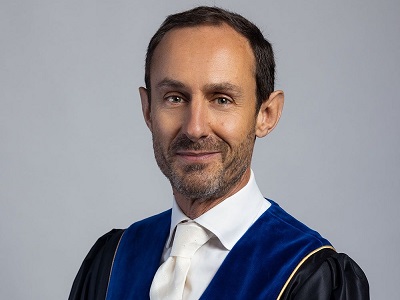
- Klaus Grabinski

-

- Emmanuel Gougé
-

- Peter Blok

However, Grabinski, Peter Blok and Emmanuel Gougé will determine the UPC’s competence to set FRAND rates in a separate appeals proceeding.
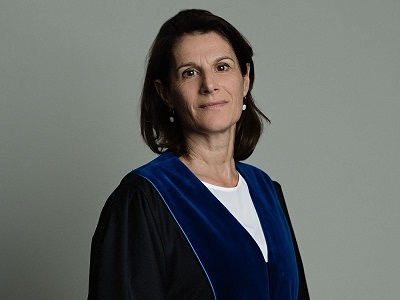
The Paris local division under presiding judge and judge-rapporteur Camille Lignières has not yet made a final decision at first instance. The court opted to examine the jurisdiction question in detail during the main proceedings before making its final determination.
-

- Camille Lignières
-

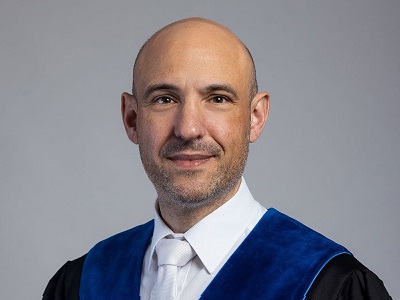
- András Kupecz
-

- Carine Gillet

Several experts interpret the 30 October order as indicating that Lignières, Carine Gillet and András Kupecz view FRAND-rate determination favourably. However, Vivo wants the Court of Appeal to rule on the UPC’s jurisdiction before any first-instance FRAND-rate decision.
The SEP holder’s turn
FRAND-rate determination applications at the UPC are not unprecedented. Oppo filed such an application last year in its dispute with Panasonic. However, the court never ruled on Oppo’s requested FRAND rate. The Mannheim judges deemed Oppo’s FRAND counterclaim admissible but unfounded, though the companies had already reached a settlement.
What is novel is SEP holders applying to the UPC for FRAND-rate determinations. Besides Sun Patent Trust, Ericsson has also taken this step. The company initiated a global series of lawsuits in mid-November targeting Transsion’s global handset business over its 4G and 5G portfolio.
According to Ericsson, the company attempted negotiations and FRAND licence offers for years before filing. Ericsson then brought infringement cases to the UPC local divisions in Mannheim and Paris. Ericsson is also seeking FRAND-rate determination at The Hague local division (case ID: UPC-CFI-0001568/2025).
Unlike the Sun Patent vs Vivo dispute, no interim judgments yet reveal Ericsson’s justification for FRAND-rate determination at the UPC. Experts suggest that, as an SEP holder, the Swedish mobile phone company will likely base its case on Article 32.1(a) of the UPC Agreement, similar to Sun Patent.
Ericsson’s Chief Patent Enforcement Officer IPR & Licensing, Robert Earle, confirmed to JUVE Patent: “Ericsson has filed cases before the UPC in which we ask the court to confirm that our cross licence offer is FRAND-compliant. If the court finds our cross licence offer is not FRAND-compliant, then to determine how the terms of our cross licence offer should be adjusted to be FRAND-compliant. Once the court determines that a FRAND-compliant cross licence offer has been made to and rejected by Transsion, granting of the requested injunctions is appropriate for the infringement of valid standard essential patents.”
Article 32 as legal basis
This approach mirrors Sun Patent’s strategy with law firms Hoyng ROKH Monegier and Bristows at the UPC, albeit in The Hague rather than Paris.
Article 32.1(a) appears to be the entry point for SEP holders’ FRAND-rate determination claims. This article governs court competencies, including “actions for actual or threatened infringements of patents and supplementary protection certificates and related defences, including counterclaims concerning licences”.
The UPC founders did not explicitly provide for SEP holder claims for FRAND-rate determination. Sun Patent therefore embeds the FRAND-rate determination within an infringement claim. As a conditional claim, the NPE first asks UPC judges to verify whether its offer to Vivo is FRAND. If Vivo rejects this offer, the court should issue an injunction. However, if the court finds Sun Patent’s offer does not meet FRAND conditions, it should then determine what is FRAND. If Vivo rejects this rate as well, the court should issue an injunction.
An order dated 30 October 2025 from the Paris UPC judges led by Camille Lignières states: “The court considers that it follows from reading the contested operative part of the SoC, that Sun Patent’s main claim consists primarily of an infringement action. Since this involves infringement of an essential patent, its request for an injunction and other corrective measures is conditional on the assumption that it has already made a FRAND offer to the defendant. Only in the event that a FRAND offer is not accepted, an injunction and corrective measures are requested.”
Conditional or not conditional
The order continues: “The claimant has merely anticipated the so-called ‘FRAND defence’ that the defendant is raising against this type of infringement action. This FRAND defence falls within the jurisdiction of the UPC, according to a consistent UPC CFI caselaw which indicates that the FRAND issue can be dealt with incidentally by the UPC, in view of several decisions issued by UPC local divisions, notably in Panasonic/Oppo cases.”
Vivo, represented by Vossius & Brinkhof UPC Litigators, views the applications as independent rather than “conditional” claims and questions the UPC’s jurisdiction to rule on them.
Sun Patent and Ericsson have their reasons for filing FRAND claims with different divisions. ETSI-related issues and French law likely influence Sun Patent’s claim. The French judges at the Paris local division are well-positioned to interpret ETSI IPR Policy. Vivo’s high sales in France also play a role, according to reports.
The place to claim FRAND
Ericsson has not commented on its reasons for filing in The Hague, but it is likely not coincidental. At recent conferences Dutch judges such as Rian Kalden or Edger Brinkman have expressed their willingness to decide on FRAND rates.
Ericsson consistently retains Taylor Wessing and Kather Augenstein for its European lawsuits. Dutch Taylor Wessing partner Wim Maas is probably the main representative in the FRAND-rate determination case.
-
- Edger Brinkman
-

- Peter Tochtermann
-

- Richard Meade
Sources suggest KPN previously attempted to enforce a FRAND-rate determination in The Hague against Oppo, but without success. Public information on this is unavailable.
The Mannheim local division also demonstrated openness to FRAND aspects with its judgment in Panasonic vs Oppo. The FRAND section of the Mannheim judgment spans 26 pages, offering a detailed view on how the court addresses issues such as interpreting the CJEU’s Huawei vs ZTE ruling and FRAND-rate setting. The judges evidently felt compelled to comment extensively on FRAND.
Next steps
Time is now pressing in the Sun Patent vs Vivo dispute. Substantial work lies ahead for Vivo representative Vossius & Brinkhof UPC Litigators team led by Munich-based partner Georg Rauh.
For Sun Patent, Sabine Agé and Caroline Levesque lead the Hoyng ROKH Monegier team as main representatives, with a Bristows team led by Richard Pickney also involved.
-

- Sabine Agé

-

- Richard Pickney

-

- Georg Rauh

The crucial question is how the Court of Appeal will address the UPC’s jurisdiction for FRAND-rate determination. The court has not yet set a date for an oral hearing.
Competition with UK Courts
Industry experts suggest Sun Patent and Ericsson may be attempting to pre-empt a FRAND-rate determination by the UK High Court through their UPC actions.
However, neither Vivo nor Transsion have filed claims in London thus far.
In the Ericsson vs Transsion dispute, it remains uncertain whether the Chinese company will pursue this option or turn to a Chinese court.
The Court of Appeal judges’ latest decision has removed one obstacle to a swift FRAND decision by the UPC. The court could reach a decision on FRAND-rate determination next year, though whether the judges will follow Sun Patent and Ericsson’s requests remains unclear.
A question of timing and competence
Should the UPC set a FRAND rate, Europe would have two courts capable of such determinations. This would intensify the existing competition between the UK High Court and the UPC, currently evident in the AILI and AASI orders of both courts in InterDigital vs Amazon.
“Then we would have two courts setting rates,” one lawyer notes. “The situation would become a little more complicated, but in the end that does not change the fact that companies have to decide how to behave economically in such a situation.”
Another expert suggests the UPC must first demonstrate its expertise in deciding such economically complex issues. “There is also the question of whether the tight deadlines are suitable for carrying out a complex FRAND-rate determination.”
London currently holds the advantage. High Court judges possess substantial experience in setting FRAND rates, which is presently a key attraction of the City as a patent litigation venue. A UPC FRAND-rate determination capability would present significant competition, experts believe.
Competition for German injunction
This would also create competition for Munich Regional Court, which currently attracts numerous lawsuits with SEP-owner-friendly injunctions.
SEP holders considering FRAND-rate determination might in future opt for the UPC, where they can also expect an injunction or licence agreement.
Munich Regional Court would likely then appeal primarily to actions seeking fast, cost-effective injunctions in the German market.