Samsung and Pentarc triumph as UPC revokes Maxell content-casting patent
In the dispute between Maxell and Samsung over content-casting technology, the patent owner has now suffered a defeat at the UPC. The Hague local division revoked Maxell's patent and dismissed the infringement action against several Samsung entities. This is the second judgement in a series of actions before the UPC to be handed down in favour of the Korean company.
10 August 2026 by Konstanze Richter

Japanese consumer electronics company Maxell had sued four Samsung entities before the UPC’s local division The Hague, alleging that various Galaxy smartphones and tablets infringed device claims of EP 2 061 230. The patent, granted in 2011 and validated in France, Germany, and the Netherlands, covers a portable terminal, information processing apparatus and content display system. It relates to so-called cast technology, allowing content viewed on a mobile phone to be handed over to a second device such as a TV set, with the option of handing it back later.
Samsung countered with a revocation action, arguing the patent lacked novelty and inventive step and contained added matter. The panel of the local division The Hague, chaired by presiding judge Edger Brinkman and comprising Stefan Johansson, Dennis Kretschmann and judge-rapporteur Margot Kokke, sided with the defendants.
-
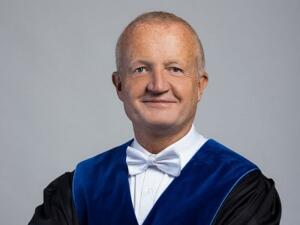
- Edger Brinkman
-

- Stefan Johansson
-
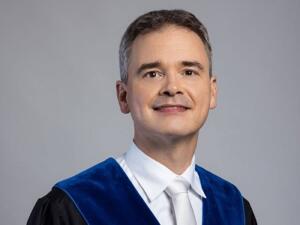
- Dennis Kretschmann
-

- Margot Kokke
The judges concluded that claim 1 as granted was fully anticipated by US prior art document US 2006/0263048 (Sato), which discloses a comparable throw-and-catch functionality between an operation control apparatus and a display-playback apparatus (case IDs: UPC_CFI_251/2025 and UPC_CFI_769/2025).
Auxiliary requests fail
Maxell had originally submitted 44 auxiliary requests, later reduced to ten in response to Samsung’s focused invalidity attacks. The panel opted to examine the most limited requests, AR7a and AR8a, first. It reasoned that if these were found obvious, the broader auxiliary requests could not save the patent either.
In its headnotes, the court laid down two principles of general relevance. First, in the absence of functional interdependencies producing a synergistic effect, a plurality of routine modifications that a skilled person would take as a next step or as a matter of routine amounts to a mere aggregation of features that is obvious. Second, where auxiliary requests progressively narrow the scope of protection and the narrowest is found obvious, the broader preceding requests must also be regarded as obvious.
Applying these principles, the panel held that AR7a and AR8a lacked inventive step and thus revoked EP 230 in its entirety for all UPCA contracting member states, in which the patent has effect. At the same time the court dismissed Maxell’s parallel infringement action.
The EP 230 had previously been the subject of proceedings in German national courts, which were settled before a decision was handed down. No opposition had been filed against the grant at the European Patent Office. Maxell may lodge an appeal with the UPC Court of Appeal within two months.
Second setback
The ruling from The Hague is the second UPC setback for Maxell in its dispute with Samsung within a few months. In May, the Munich local division had already revoked another Maxell patent, EP 2 579 587, in its entirety and dismissed a parallel infringement action targeting a broad range of Galaxy smartphones and tablets, including the Galaxy S25, S24, Z, A, XCover series as well as several Galaxy Tab models.
The Munich panel, chaired by presiding judge Tobias Pichlmaier and comprising Ina Schnurr, Stefan Johansson and technically qualified judge Andrea Scilletta, found claim 1 of EP 587 to lack novelty. The judges also rejected both auxiliary requests, finding that they contained added matter extending beyond the content of the application as filed. The Munich case was also filed by Maxell, following the patent’s transfer from Hitachi Maxell in 2017 and subsequent corporate restructuring within the Maxell group (case IDs: UPC_CFI_82/2025 and UPC_CFI_634/2025).
Another case over EP 2 403 266 is also pending at the local division in Munich. A decision is expected for the second half of September (case IDs: UPC_CFI_196/2025 and UPC_CFI_665/2025).
Mayer Brown vs Pentarc
Maxell was represented by Mayer Brown. The team led by partner Christoph Crützen and including counsel Benjamin Beck as well as associates Alexander Balan and Svenja Schenk. The team has acted in UPC proceedings before, such as for ARM against Network System Technologies. The lawyers worked with patent attorney Thomas Hell of Bosch Jehle.
-

- Christoph Crützen
-

- Thomas Hell
-

- Christian Lederer
-

- Jan Phillip Rektorschek
Samsung retained Munich based patent boutique Pentarc. The Korean company is a long-standing client of founding partner Christian Lederer, who took the lead. The team included founding partner Jan Phillip Rektorschek as well as lawyers Tobias Baus, Julia Fischer and Verena Brusius. The firm is experienced in disputes over streaming technology. For example, the team also acts for Disney in the dispute with InterDigital. Patent attorney Christoph Hewel and Martin Kuschel of Paustian & Partner advised the technical side of the case.