Qualcomm and Bardehle win semiconductor dispute with NST
Qualcomm may continue to sell its Snapdragon chips in UPC territory. The Munich local division has rejected the lawsuits filed by Network System Technologies for the infringement of three patents. However, it is considered certain that the US company will appeal.
11 March 2026 by Mathieu Klos

The judgments relate to three patents. In March 2024, US company Network System Technologies, which focuses on licensing, sued Qualcomm for infringement of EP 1 552 669 as well as EP 1 875 683 and EP 1 552 399.
All patents relate to chip technology and cover methods for the transmission of signals in semiconductors. This system-on-chip and network-on-chip technology, known as SoC and NoC, is used in electronic devices and cars. Philips originally developed the technology in Europe and later sold it to NST.
NST demanded that Qualcomm stop the sale of Snapdragon 8 processors and related processors. This would have particularly impacted sales in France and Germany. However, the Munich local division has now rejected this (case IDs: UPC_CFI_64/2024, UPC_CFI_63/2024 and UPC_CFI_65/2024).
In any case, EP 669 and EP 399 had already expired at the end of 2024. Accordingly, NST is only seeking damages. But in the action relating to EP 683, it is seeking an injunction and damages.
Qualcomm had not only responded with counterclaims for revocation at the UPC but is also seeking revocation of the German parts of all three patents at the German Federal Patent Court.
A question of source code
The second panel of the Munich local division decided that NST has not provided sufficient evidence for the infringement of its patents. NST had requested the submission of Qualcomm’s source code during the course of the proceedings. However, the company refused and the court rejected NST’s request. In NST’s opinion, the source code is crucial to prove the infringement.
A parallel lawsuit is running at the Western District Court of Texas. Here, the corresponding US patents of NST are in dispute. Apparently Qualcomm had submitted the source code there but this is subject to confidentiality obligations. This means that the source code is not automatically available in the UPC proceedings.
Small consolation for NST
One small consolation remains for the plaintiff. The second panel rejected Qualcomm’s counterclaims against EP 683 and EP 339, but declared EP 669 invalid. The patent was last validated in Germany and France.
A good two years have passed since NST filed the suits. The second panel only heard the lawsuits in December, after which the judgment was reached quickly. During this time, however, the court underwent staff changes.
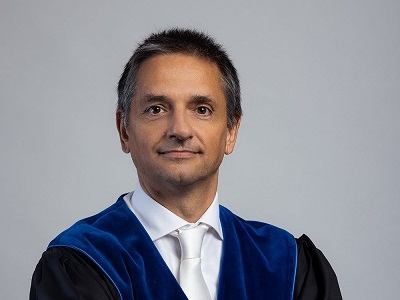
Officially the panel of the local division now comprises presiding judge Daniel Voss, Munich judge Georg Werner and the presiding judge of the Milan local division Pierluigi Perrotti. Andrea Scilletta joined as technically qualified judge.
-

- Daniel Voß

-

- Ulrike Voß

But the oral hearing in December was still conducted by the then-presiding judge Ulrike Voß. Daniel Voß acted as judge rapporteur. It was not until January that he took over the panel from Ulrike Voß, who has been appointed to the Court of Appeal. However, the judgments show Ulrike Voß still acted as presiding judge with Daniel Voß signing the judgments in her absence. Newly appointed judge Werner was not involved.
-

- Pierluigi Perrotti
-

- Andrea Scilletta

-

- Georg Werner

The dispute with Qualcomm is unlikely to end any time soon. It is expected that NST will appeal. Qualcomm could also appeal against the revocation judgments.
This could theoretically lead to the curious situation of the appeal ending up before the third panel of the Court of Appeal under the newly appointed presiding judge Ulrike Voß.
Early settlements
The dispute with Qualcomm is part of a large-scale campaign by Network System Technologies. The US NPE sued not only Qualcomm but also Samsung in parallel. Unlike Qualcomm, however, the Korean industry giant settled.
In January 2024, Network System Technologies also initiated infringement actions over the same three patents against Texas Instruments, Audi and Volkswagen. The parties have since settled all three disputes.
A chequered legal history
Even though Thomas Gniadek filed the lawsuits as a Simmons & Simmons partner at the time, and is still involved as lead counsel, the dispute has seen a number of changes in advisors. Last autumn, Gniadek himself decided to leave his law firm and make a fresh start at Hoffmann Eitle. He brought the NST disputes with him; they likely constitute Gniadek’s largest litigation campaign of the past two years.
At his new firm his newly organised team consists of patent attorneys Dominik Scheible, Giovanni Corneo, Danche Spirkoska, and Stephanie Rupp, as well as lawyer Jonas Smeets, who also joined Hoffmann Eitle.
-

- Thomas Gniadek

-

- Jonas Smeets

-

- Johannes Heselberger

Singled out in the JUVE Patent Ones to Watch Germany 2025, litigator Smeets was counsel at Bird & Bird in Düsseldorf for many years before deciding to join the mixed IP firm. There he rose to associate partner
Good relations with Qualcomm
In the disputes with NST, Bardehle Pagenberg plays the dominant role on the side of the implementers. The law firm not only represented Qualcomm in the proceedings decided today, but has also previously advised several German car manufacturers in parallel disputes.
Partner and lawyer Johannes Heselberger leads the team for Qualcomm, which also includes lawyers Stefan Lieck and Michael Kobler as well as patent attorneys Martin Hohgard and Patrick Daum.
The firm is also representing Qualcomm in five active lawsuits against Transsion and Tecno Mobile at the Munich local division. Previously Bardehle Pagenberg also took over the representation of Audi and Volkswagen against NST. The firm also advised Bentley, another Volkswagen brand. Bentley had filed revocation actions against all three patents which it later withdrew.