New patent owner Silimed lands PI against Polytech at Munich court
Polytech may no longer sell certain breast implants in Germany. The Munich Regional Court granted an application filed by Brazilian patent holder Silimed against its German competitor and former patent owner Polytech.
9 April 2026 by Konstanze Richter
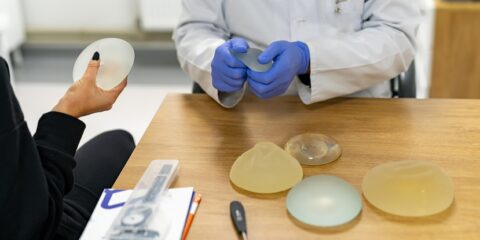
Silimed has achieved its first success in the infringement dispute over breast implant technology. After the Brazilian manufacturer secured the rights to a patent for the manufacture of breast implants in a complex entitlement action, Silimed is now taking measures against its German competitor and the former owner of the patent, Polytech.
At the centre of the dispute is EP 2 581 193, which protects a process for manufacturing implants. Since 2017 the Brazilian manufacturer had fought with competitor Polytech over the ownership of the technology. In late 2024, the Frankfurt Higher Regional Court granted Silimed the rights to the patent.
In a parallel entitlement action, Munich Regional Court also ruled early last year that all rights concerning EP 3 002 101 belong to Silimed. An appeal filed by Polytech is still pending (case ID: 6 U 1126/25).
Poised for the fight
Following the official transfer of the rights for EP 193, Silimed launched an infringement action on the merits against Polytech and several of its European distributors at the UPC local division Hamburg (case ID: UPC-CFI-0000481/2026). Whilst the former patent holder Polytech had initially submitted an opt-out declaration for the UPC, Silimed subsequently withdrew this opt-out.
Simultaneously, the new patent holder filed a PI at Munich Regional Court to prevent Polytech from continuing to distribute certain breast implants. In Silimed’s view, the court’s jurisdiction derives from the transitional provision under Article 83 of the UPCA that applies as a result. This provision establishes parallel jurisdiction for the UPC and the national courts during the transition period.
The court’s 7th Civil Chamber assumed jurisdiction based on the transitional provision and has now issued a PI prohibiting Polytech from distributing the products of its SublimeLine range, which includes the Même, Replicon and Opticon models as well as the Optimam and Diagon/Gel models (case ID: 7 O 290/26). The product information for these breast implants is currently not available on the Polytech website.
The panel chaired by presiding judge Katalin Tözsér deemed the action urgent. Although Polytech argued that it had modified the manufacturing process for its products in such a way that it no longer infringed the patent, the 7th Civil Chamber granted Silimed’s application for a preliminary injunction and prohibited Polytech from producing, importing and distributing the aforementioned products.
A parallel nullity suit at the German Federal Patent Court against the German part of EP 193 is pending (case ID: 6 Ni 6/26).
Germany-Brazil axis
Mike Gruber and Niels Hölder of Carpmaels & Ransford represent Silimed in the proceedings at Munich Regional Court as well as before the UPC. They have represented the Brazilian client from the beginning of the dispute. London-based partner John Brunner and Natasha Christian provided advice as patent attorneys and associate Melanie Schain assisted in legal matters. Patent attorney Anne Schön of Hoffmann Eitle, who already worked on the case when Gruber and Hölder were still at the firm, took the lead in the technical side of the proceedings.
The team works closely with Karlo Tinoco from São Paulo firm RNA Law to manage the cross-border litigation. Furthermore, a team from Taylor Wessing was involved, namely patent litigator Gisbert Hohagen and Irina Rebin. The latter is a specialist in regulatory law in the field of life sciences.
-

- Mike Gruber
-

- Niels Hölder
-

- Jörg Wahl
For the PI proceedings in Munich as well as in the UPC case, Polytech relies on a team around Jörg Wahl of Viering Jentschura & Partner.
