Munich Regional Court further clarifies FRAND rules in Wilus vs Asus judgment
A partial payment obligation, comparative agreements for FRAND licences and FRAND calculation. A recent judgment by Munich Regional Court's 7th Civil Chamber is peppered with guiding principles for the chamber's FRAND jurisprudence. The judges ordered Asus to cease and desist due to the infringement of a Wilus wifi patent. In future, the chamber will not only look at the implementer's willingness to take a licence but also at the FRAND conformity of the SEP holder's offer.
30 January 2026 by Mathieu Klos
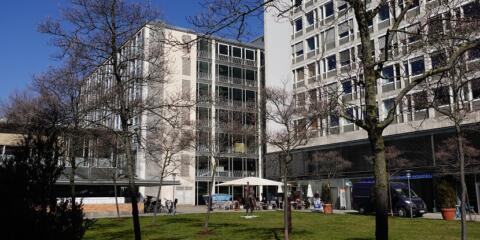
Implementer Asus, SEP holder Wilus and their lawyers received a judgment yesterday that packs a punch. Munich Regional Court ordered Asus to cease and desist from infringing the Wifi 6 patent EP 3 512 289. This much had been known since mid-January. Ever since, Asus has not been allowed to sell certain Wifi-6-compatible devices in Germany (case ID: Ref. 7 O 5007/25).
These include the Zenfone 11 Ultra smartphone, the ASUS Zenbook S 13, the ASUS Chromebox 4 mini PC and the ASUS AiO E3 (E3402) all-in-one PC. However, the plaintiff, the South Korean Wilus Institute of Standards and Technology, has not yet enforced the judgment. Asus can also appeal, which is considered certain.
The background to the lawsuit is the conclusion of a licence agreement for Sisvel’s Wifi 6 portfolio or bilaterally with the owner of the patent Wilus and SK Telecom. Last year, the South Korean R&D lab also launched a separate action against Asus at the Mannheim UPC local division alleging infringement of a second Wifi 6 patent.
New FRAND rules
Yesterday, the opposing parties and their lawyers received the written judgment with many fundamental comments, some of which went beyond the case. The 7th Civil Chamber has not had the opportunity to solidify its FRAND guideline for some time as many recent SEP cases have settled early. What the judges have now written into the Wilus vs Asus judgment is groundbreaking for future SEP proceedings at Munich Regional Court.

Oliver Schön
Presiding judge Oliver Schön and his fellow judges Katalin Tözsér and Florian Schweyer wrote thirteen guidelines on FRAND. These deal with the topics of a partial payment obligation, comparative licence agreements, compensation for the past and control calculation based on a top-down analysis.
JUVE Patent has seen the judgment and has included a translation of the guiding principles at the bottom of this article.
FRAND under scrutinity
What is new above all is that in future the 7th Civil Chamber will take a closer look at the FRAND offer and examine whether it is FRAND-compliant. Until now, German patent courts have primarily examined whether the parties to an SEP dispute are complying with the steps specified by the CJEU in the FRAND dance following the Huawei vs ZTE decision.
To examine FRAND compliance, the Munich judges rely on the top-down analysis and calculate a licence rate. For this purpose, the judges consult the licence rates published on the Sisvel website. It is disputed whether these were also presented in the proceedings. As a result, the judges come to the conclusion that both the pool offer and Wilus’ individual offer are FRAND.
Partial payment and a little more
The chamber’s guiding principles on the implementer’s obligation to make partial payments are also likely to cause discussion. As already indicated in the reference decision of the same chamber in Samsung vs ZTE and an oral hearing between Nokia and Asus last week, the chamber assumes that the implementer will in future have to pay the undisputed amount of a FRAND licence, i.e. its own licence offer, to the SEP holder. This will have to be paid directly in cash. A bank guarantee as provided by Asus is not sufficient.
In addition, there is a supplementary obligation to pay a security deposit to the court. This depends on the particular case and the difference between the two offers, either in absolute figures or as a percentage.
In future, however, the chamber will also include information from a UK FRAND-rate setting procedure, such as the one Asus initiated in its dispute with Nokia. If the UK court then sets an interim licence fee, the implementer will have to deposit the difference between that and the partial payment as security.
Munich battle
Even combining the partial payment and additional security, the Regional Court would still be significantly below the amount that the Higher Regional Court in Munich sets as security. The latter assumes that the SEP holder’s final offer is decisive. The dispute between the two instances on this point was the subject of the hearing at the Federal Court of Justice on Tuesday. However, the Federal Court judges did not make any specific statements during the hearing. Their written judgment could provide clearer indications. It is not known when this will be published.
It is currently unclear whether the guiding principles also apply to Munich Regional Court as a whole. So far, the 7th Civil Chamber only speaks for itself. The parallel patent chamber is currently undergoing staff changes. Hubertus Schacht, who has worked with Schön for many years, will take over the 21st Civil Chamber on 1 February.
Ampersand for Sisvel for first time
Hosea Haag, founding partner of Ampersand, filed the lawsuits against Asus at Munich Regional Court. This is the first time that the law firm has represented the patent pool in proceedings. The law firm is strongly active on the side of NPEs and SEP owners and recently strengthened its team considerably with partners from Klaka who are experienced in SEP proceedings.
This is also the first time Ampersand has acted for Sisvel pool member Wilus. To date, the pool and its members have mainly retained Arnold Ruess, Bardehle Pagenberg, Bird & Bird or Eisenführ Speiser.
-

- Hosea Haag
-

- Jochen Ehlers

-

- Desiree Heintz
-

- Holger Stratmann

The latter firm probably has the longest relationship with the patent pool. Eisenführ patent attorney Jochen Ehlers has represented Sisvel for many years.
The patent attorneys Desiree Heintz and Karin Rosahl are also involved in the dispute with Asus. Ampersand attorneys Jonathan Konietz and Carolin Becker are also active in the proceedings.
A Bird & Bird team is representing Wilus in the UPC action at the local division Mannheim.
Hoffmann Eitle for Asus
Like Sisvel, Asus relies on various law firms for patent cases in Germany. These include Wildanger Kehrwald Graf v. Schwerin & Partner, EIP Europe and Arnold Ruess.
But it is Hoffmann Eitle partners Holger Stratmann and Axel Esser who are representing Asus in the dispute with Wilus. The law firm is also active for Asus in proceedings against Philips and most recently represented the core client in the dispute with Atlas Global over Wifi 6.
The key points of the judgment
Partial payment obligation:
- When assessing willingness, it is considered particularly significant whether the licence applicant makes a partial payment. This partial payment obligation applies in a situation where it is undisputed between the parties that the licence applicant must make a payment and only the amount is in dispute. Then the amount undisputed between the parties must be paid to the patent holder in such a way that it remains permanently with the patent holder. This is a down payment on the subsequent licence fee. The amount is based on the offer made by the patent applicant and is therefore not limited to the territory of the Federal Republic of Germany if the parties are negotiating a worldwide licence.
- In addition to the obligation to make an undisputed partial payment, there may be an obligation to provide additional security. In such instances, this is determined on a case-by-case basis and depends on the difference between the two offers in a) absolute figures and b) percent.
- A party that has applied for a rate to be set must provide the amount set by the court in addition to the partial payment as security, regardless of whether the defendant in the other jurisdiction has agreed to the proposal of the court there or not.
Comparative licence agreements:
- Agreements concluded recently with other licensees of approximately the same size and with a comparable product portfolio are a very strong indication that the rate specified therein is within the FRAND corridor.
- The fact that infringement proceedings took place prior to the conclusion of the agreement should not be overestimated. It should be noted that a significant proportion of market participants are not prepared to conclude licence agreements without the corresponding pressure from infringement proceedings. In this respect, initiating infringement proceedings is a normal and acceptable part of the negotiations to find a licence rate that is suitable for both sides.
- It is up to the plaintiff to decide whether and, if so, which comparative licence agreements it wishes to submit in order to substantiate the asserted claim. When submitting agreements for a lump sum payment, the amount, the term and the number of units on which the calculation is based should generally be stated. If this is the first agreement between the parties, information should also be provided on how the past has been compensated.
- There is no obligation to submit all agreements concluded by the plaintiff regarding the subject matter of the licence.
Compensation for the past:
- It can be assumed that market participants are aware that they must obtain licences. Therefore, it can generally be required that provisions be made when use without a licence begins. Other circumstances may apply if certain technologies are not licensed for a long period of time or if licences are not consistently enforced in the market. In this respect, it is always necessary to provide specific information on how a patent holder has behaved in the past.
- It can therefore be assumed that, as a rule, licence payments cannot be claimed in full for the period prior to a qualified request for payment and a reasonable period of time required to adjust sales prices. However, depending on the duration of the retroactive effect, reasonable partial amounts may be claimed. The amount and the period of time are a matter for individual cases.
- It is a permissible business decision on the part of any patent holder to decide whether to assert claims for the past. This decision must be accepted as long as there are no exceptional indications of abuse. There is no presumption that a waiver of claims for past use serves solely to set an excessive future rate in order to create comparative licence agreements with high licence fees.
Control calculation based on a top-down analysis:
- First, it must be determined what amount is appropriate for the use of a particular standard. Based on this determination, the share of a specific patent holder in the standard must then be determined.
- A control calculation using a top-down analysis is always possible if the patent holder has a significant share in the standard. For the highly extensive mobile communications standard, a share of one per cent is sufficient to convince the Chamber. For smaller standards, a higher share may be necessary.
- The unit price used as a basis must be based on an average value for certain product categories. This means that for certain categories, a product of average type and quality must be used as a basis. This is because there are considerable price differences between end products, which are not due to improved standard functionality, but to a particularly attractive brand, a particularly high-quality camera or particularly functional software. It would not be compatible with the idea of a fair balance of interests if the manufacturer of high-quality branded products had to pay a higher price for the same functionality than the manufacturer of cheaper or cheapest products.
