Halozyme and Quinn Emanuel secure PI against MSD over Keytruda SC
Merck Sharp & Dohme cannot launch Keytruda SC in Germany following a preliminary injunction issued by Munich Regional Court. Halozyme has thus prevailed for the time being against the new administration form of the successful cancer drug. MSD is expected to appeal.
8 December 2025 by Mathieu Klos

According to industry analyses, Keytruda, containing the active ingredient pembrolizumab, was the world’s best-selling drug last year. It generated sales of around €25.8 billion for MSD in 2024.
Currently, doctors administer the cancer drug by infusion. However, the new variant Keytruda SC is injected subcutaneously under the skin, which would ease administration particularly for older and less mobile patients. MSD had only recently received authorisation for subcutaneous administration in Germany. Now, however, MSD cannot sell Keytruda SC in Germany.
Civil Chamber 7, under presiding judge Oliver Schön and judges Florian Schweyer and Katalin Tözsér, prohibited the US pharmaceutical giant from launching its product in an urgent decision on Friday (case ID: 7 O 12286/25).
US biotechnology company Halozyme Therapeutics filed the lawsuit. The San Diego-based firm develops oncological therapies targeting the tumour’s microenvironment. It alleged infringement of its MDAS patent EP 2 797 622 by Keytruda SC. However, the Munich ruling does not prohibit the current administration of Keytruda by infusion.
Subcutaneous administration
Halozyme announced in a press release that the German proceedings are part of its global enforcement of MDAS patents against alleged infringement by Merck’s Keytruda SC. The press release states, “Halozyme has also sued Merck for patent infringement in U.S. federal district court in New Jersey. In that case, Halozyme alleges the subcutaneous formulation of Keytruda, which is being marketed in the U.S. as QLEX, infringes 15 patents that Halozyme filed beginning in 2011 to protect its MDAS technology”.

Oliver Schön
The patents stem from Halozyme’s research into various modifications to human hyaluronidases. Among their uses, these hyaluronidases provide a mechanism for the rapid subcutaneous administration of therapeutic drugs. EP 622 protects the stabilisation of hyaluronidase by a phenolic preservative.
Differing opinions
While Halozyme claims that Keytruda SC uses the excipient in connection with the preservative, MSD argues that the effect of hyaluronidases for subcutaneous applications has long been known and was therefore not patentable. Furthermore, MSD contends that Keytruda SC does not use a phenolic preservative.
MSD therefore also filed a nullity suit with the German Federal Patent Court. However, the court has not yet ruled and has not yet published a preliminary opinion on the validity of EP 622.
This means that the PI from Munich is now in force for the time being. MSD can appeal, which observers consider very likely.
MSD has also filed nullity actions against EP 622 in the Netherlands, France, and the UK. In the UK, Halozyme responded with an infringement counterclaim (case ID: HP-2025-000041).
PIs from Munich
The PI against MSD is now the second urgent decision from Munich Regional Court issued in quick succession. For a long time, the court was primarily known for lawsuits concerning SEPs. Pharmaceutical cases were the domain of Düsseldorf Regional Court. By issuing PIs in pharmaceutical cases, the Munich court is now also likely to play a more prominent role in this segment.
In September 2025, the same panel at Munich Regional Court under presiding judge Schön decided that generic company Formycon cannot launch its biosimilar of the macular degeneration treatment Eylea in various European markets. The widely noted decision granted Regeneron and Bayer a preliminary injunction spanning 22 countries, thus preserving market exclusivity for their blockbuster drug.
In the Formycon decision, the Munich judges saw a risk of first infringement and granted the PI far beyond the borders of Germany. The judges did not have to go that far in the dispute over Keytruda SC, but nevertheless issued the PI due to a risk of imminent occurence (“Erstbegehungsgefahr”), even though MSD’s new product is not yet on the German market.
Quinn Emanuel wins for Halozyme
Quinn Emanuel is not frequently active in pharmaceutical litigation, but recently the US law firm’s German team represented Samsung Bioepis against Regeneron and Bayer over Eylea. Now, it has also successfully represented Halozyme.
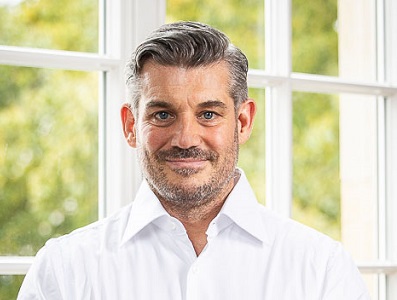
The German team includes lead partner Marcus Grosch, counsel Andreas Hahne and associates Katharina Peters, Sebastian Scholz, and Mariamo Ilay. The law firm also represents the US biotech company in the US and UK.
-

- Marcus Grosch
-
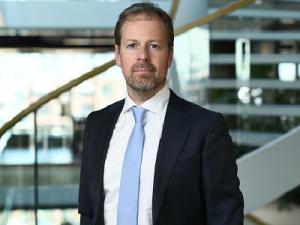
- Mark van Gardingen

In London Halozyme relies on David Lancaster from Quinn Emanuel, whereas in the Netherlands, where the US law firm has no office, Brinkhof partner Mark van Gardingen leads the Dutch porceedings. It is not yet known who will be Halozyme’s French advisors.
In the US the Biotech company also relies on Quinn Emanuell. David Nelson und Zach Summers are in the lead. In-house on the Halozyme side are Chief Legal Officer Mark Snyder, Executive Director and Patent Litigation Counsel Josh Mack as well as Executive Director Intellectual Property Aubrey Haddach.
-

- Miriam Gundt

-

- Andreas von Falck
Hogan Lovells for MSD
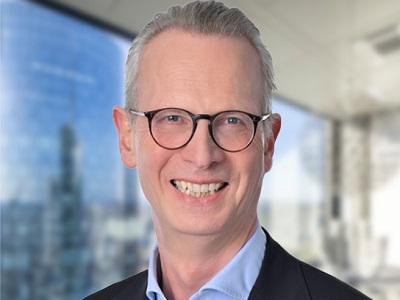
That MSD had an international team from Hogan Lovells at its side is no surprise. The US company and the firm’s patent team have worked together for a long time. The two Düsseldorf partners Miriam Gundt and Andreas von Falck are leading the German proceedings. Kerstin Jonen, Lea Gröblinghoff, Lars-Fabian Blume, Lukas Sievers, Tobias Timmerscheid. Newly appointed partner and patent attorney Felipe Zilly leads the technical parts as well as the validity attack against EP 622. Patent attorney Jonas Rose is also involved.
MSD also once again instructed Hogan Lovells in the parallel proceedings in the UK, the Netherlands, and France. Stanislas Roux-Vaillard and Iris Accary are leading the French proceedings, Gertjan Kuipers, Dirk-Jan Ridderinkhof and Bram Jaarsma the Dutch proceedings and Stephen Bennett, Helen Poulson and Katie Barton the UK proceedings.
Jeff Kushan from Sidley Astin is leading the US cases for MSD. Mark Stewart and James Horgan coordinate the battle with Halozyme in-house at MSD.
