Generics succeed against Sanofi over cancer drug cabazitaxel
Several generic drug companies scored a win at the UPC against Sanofi's second medical use patent for cabazitaxel. In a decision issued today, the local division Munich revoked the patent, which forms the basis of cancer drug Jevtana.
12 December 2025 by Konstanze Richter

For years, Sanofi has been defending its EP 2 493 466 in various proceedings before national courts as well as the EPO and recently also the UPC. EP 466 is a second medical use patent and protects a novel anti-tumour use of cabazitaxel. In combination with prednisone or prednisolone, the drug forms the basis of chemotherapy drug Jevtana. Healthcare professionals use it to treat hormone-refractory metastatic prostate cancer, which they previously treated with docetaxel-based chemotherapy.
Originators in Europe seldom submit second medical use patents due to difficulties in the practical enforcement of these patents. When the EPO granted the use patent in February 2021, twelve opponents immediately challenged the decision. These included Glenmark, Teva, Accord Healthcare and Ever Pharma. After the Opposition Division rejected the opposition in early 2024, an appeal was lodged, which the Boards of Appeal dismissed in September this year.
Prior decisions favour generics
However, multiple generics companies are already active in various European countries with their own generic versions after having received favourable decisions from the UK courts in 2018 and from German courts in 2019. In September 2024, the Judicial Court Paris revoked the patent on the grounds of inter alia obviousness in a dispute against Accord (case ID: 21/06416).
In one of the first major originator-generics disputes at the UPC, Sanofi filed an infringement claim against Accord, Zentiva, Stada and Dr. Reddy at the local division Munich in May 2024, which the generics companies answered with counterclaims for revocation.
The Munich local division heard the case in mid-October this year. The judges discussed the question of validity at great length and indicated that they would most likely revoke EP 466 (case IDs: UPC_CFI_148/2024/UPC_CFI_503/2024, UPC_CFI_146/2024/UPC_CFI_496/2024 and UPC_CFI_147/2024/UPC_CFI_374/2024). For this reason, they did not discuss patent infringement in detail.
In a decision handed down today, the court under presiding judge Matthias Zigann revoked the patent for the UPC countries Austria, Belgium, Germany, Denmark, France, Italy, Purtugal, Sweden, and the Netherlands. As Zigann emphasised in the oral announcement, which JUVE Patent attended, it followed the decision of the Paris court and not that of the EPO.
The panel dismissed Sanofi’s infringement claims. The panel also consisted of Alima Zana and Tobias Pichlmaier as well as technically qualified judge Carola Wagner. Sanofi now can appeal the ruling.
-
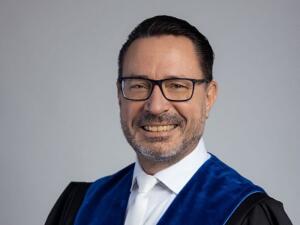
- Matthias Zigann
-
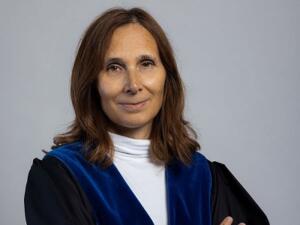
- Alima Zana
-
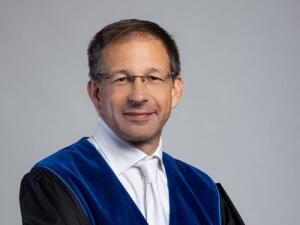
- Tobias Pichlmaier
-
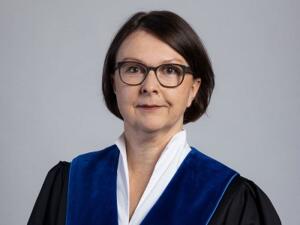
- Carola Wagner
Shortly before the hearing, Sanofi and Accord entered into a confidential settlement agreement. Both withdrew their respective claims (case IDs: UPC_CFI_145/2024/UPC_CFI_463/2024)
McDermott for Sanofi
A team from McDermott Will & Emery represented Sanofi in all proceedings. Partner Frédéric Chevallier took the client with him when he joined McDermott’s IP team in Paris this summer. He moved from Herbert Smith Freehills, where he already represented the pharma client in the French proceedings. The team also included McDermott associate Emie Paganon.
-

- Frédéric Chevallier
-
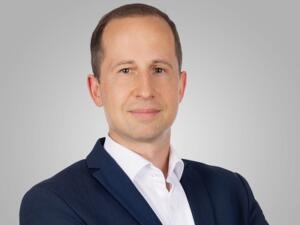
- Christian Meyer
-
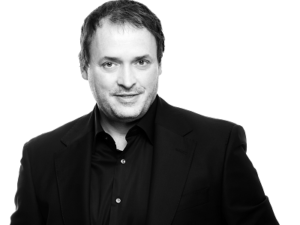
- Daniel Hoppe
Stada relied on the lawyers of Bonabry and patent attorneys of Hamm & Wittkopp. The litigator and partners Daniel Hoppe and Konstantin Schallmoser split off from Preu Bohlig with other lawyers at the beginning of the year. Later, Yasmine Azzaoui from the Schertenleib boutique joined the team in France. Patent attorney and name partner of his firm, Alexander Wittkopp, assisted with technical matters.
A mixed team from Maiwald assisted the generics manufacturers Reddy Pharma and betapharm in the proceedings. Partner and litigator Christian Meyer took the lead with counsel Tobias Matschke and patent attorneys Andreas Ledl and Sandra Unterseer.
-
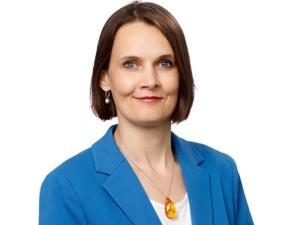
- Anja Lunze
-

- Elisabeth Greiner
-
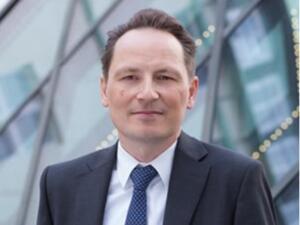
- Alexander Wittkopp
Zentiva relied on a team led by Anja Lunze from Pentarc, which split off from Taylor Wessing’s Munich office in October and set up its own boutique. Lunze took the client with her to Pentarc. Aurel-Damian Roscher provided support. The lawyers worked closely with df-mp patent attorneys Elisabeth Greiner and Simon Geiger, who gave the technical arguments.
In the French proceedings as well as at the UPC, a team from Taylor Wessing around Jules Fabre, who joined the firm from Pinsent Masons in the summer, represented Accord. Marina Jonon, Louise Millot, and Clémence de Marassé Enouf assisted.