De Koffiejongens averts PI filed by Ox Barrier in the Netherlands
De Koffiejongens may continue to sell their coffee capsules in the Netherlands. The District Court The Hague rejected a preliminary injunction application from Ox Barrier.
2 April 2026 by Konstanze Richter
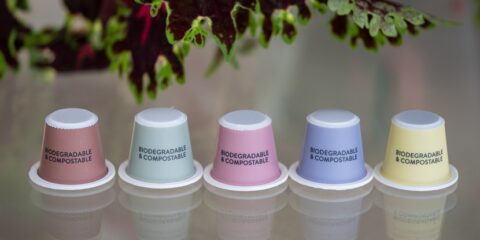
The case is reminiscent of the patent dispute over coffee capsules between manufacturers Nespresso, Krups, De’Longhi and Ethical Coffee Company (ECC), which broke out between 2016 and 2018 in Germany and Switzerland, as well as the more recent dispute between Koninklijke Douwe Egberts and Belmoca.
Ox Barrier owns EP 3 145 838, which covers compostable coffee capsules. The patent holder accuses competitor De Koffiejongens of infringing EP 838 with its capsules. Ox Barrier applied for a preliminary injunction at the District Court The Hague, requesting recall, disclosure of sales and other damages-related information.
De Koffiejongens, along with co-defendants Euro-Caps and Capsul’in, denied infringement and argued the patent might be invalid. Luxembourg-based Capsul’in delivers the disputed capsules to Euro-Caps, which then fills the capsules and delivers them to De Koffiejongens.
Despite accepting the argument of urgency due to expanded sales via Albert Heijn supermarkets, the District Court The Hague rejected the application for a preliminary injunction. In preliminary relief proceedings, judge Hugo van Heemstra, with assistance from J.M.N. van Limpt-Schrover, found there was likely no infringement. Furthermore, given the severe consequences for the defendant, the threshold for a preliminary injunction was high. The court did not assess the validity of the patent.
Different layers
Ox Barrier had argued that the defendant’s compostable capsules fall within the scope of EP 838, which includes a multilayer compostable film, an oxygen barrier layer, a carrier layer connected to that barrier and a weakened area enabling controlled tearing.
De Koffiejongens argued that its capsules do not contain a carrier layer in the sense required by the patent. According to the defendants, the middle layer in their product is made of relatively thick paper which, like aluminium, is rigid enough to open independently on the pyramid plate of a coffee machine. The oxygen barrier layer of De Koffiejongens’ coffee capsule therefore does not require a carrier layer to tear properly, as is the case with the thinner, stretchable oxygen barrier layer of the patent. The other layers — such as a PLA inner layer and cellulose outer layer — serve different functions such as sealing and filtering, rather than supporting the barrier layer.
Furthermore, De Koffiejongens claimed there was a strong likelihood that a court would find EP 838 invalid in proceedings on the merits. And since capsules represent the majority of De Koffiejongens’ revenue, an injunction would be disproportionate.
Three defendants
Ox Barrier retained a team from Brinkhof. Amsterdam-based partner Daan de Lange led the proceedings with assistance from Isabelle Kleinveld and Djamo van Luttervelt.
-

- Daan de Lange
-

- Ricardo Dijkstra
-

- Paul Reeskamp
Defendant De Koffiejongens relied on Tjerk Sigterman. Previously a litigator at Vondst, Sigterman left the firm in 2024 to set up his own law firm, Christoffel Advocatuur. In the current case he cooperated with former colleague and Vondst partner Ricardo Dijkstra, who acted for Capsul’in. While Dijkstra pleaded the material defences of non-infringement and invalidity, Sigterman handled the lack of urgency defence.
The other co-defendant Euro-Caps instructed a team from DLA Piper, led by Paul Reeskamp, of counsel at the Amsterdam office. Patent attorney Martijn Vermeulen of EP&C advised the defendants on the technical questions. He specialises in mechanics, process and mechanical engineering.
