Court of Appeal upholds PI against Sinocare and Menarini
Sinocare and its distribution partner Menarini may no longer sell the GlucoMen iCan CGM system in UPC territory. The UPC Court of Appeal decided this yesterday, upholding a preliminary injunction from the local division The Hague. Further proceedings in the dispute will therefore likely focus primarily on the companies' challenges to the validity of Abbott's patent.
31 March 2026 by Mathieu Klos

The local division The Hague has become attractive for PI applications — especially in the medical devices sector. In Abbott’s dispute with Chinese competitor Sinocare and the latter’s distribution partner Menarini, the court thus appears to have delivered what companies and their lawyers expect.
Yesterday, the UPC Court of Appeal upheld a PI from the Dutch local division in its entirety. The third panel under presiding judge Ulrike Voss dismissed the appeal by Sinocare and Menarini outright (case ID: UPC-COA-0000899/2025). Italian company Menarini Diagnostics distributes Sinocare’s GlucoMen iCan systems in Europe through its medical devices division.
In mid-October, the local division The Hague issued a PI against Sinocare and Menarini regarding EP 633. The market leader later enforced the judgment, which also covers the Sinocare iCan i3 version. This has been on the market in Europe since October 2023. At present, the corresponding products are not available in UPC territory.
Broadly worded injunction
The Court of Appeal heard the PI case in February. In the appeal, Sinocare and Menarini argued that the local division The Hague was wrong to issue a broadly worded injunction that also covered the Sinocare iCan i3.
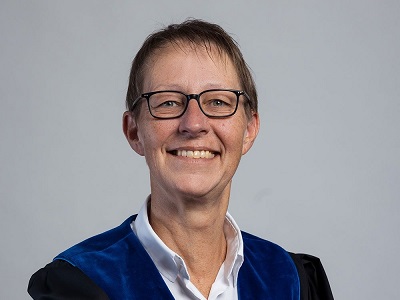
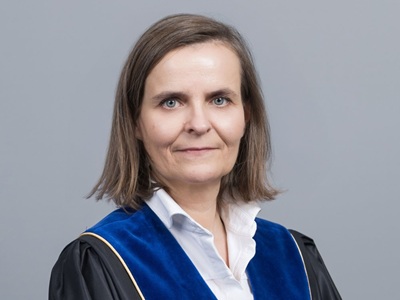
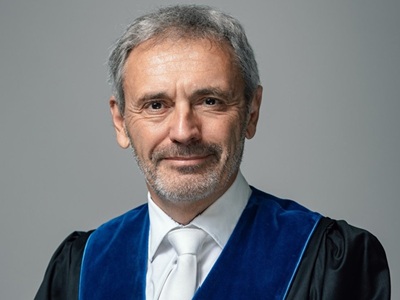
The Court of Appeal panel also included legally qualified judges Bart van den Broek and Nathalie Sabotier. Gérard Myon and Dorothea Hofer were the technically qualified judges in the case.
-

- Ulrike Voß
-

- Bart van den Broek

-

- Nathalie Sabotier
At the oral hearing, Abbott clarified that, “Despite the general wording of the requested and issued preliminary injunction, the Sinocare iCan i3 is not meant to be covered by the injunction.” Nevertheless, the judges did not restrict the judgment of the local division on this point.
This could lead to a situation in which Sinocare and Menarini may not sell the i3 product, but do not risk a penalty if they nevertheless place it on the market due to Abbott’s declaration. Whether a second PI application also covers the i3 product is subject to parallel proceedings.
Split hearings
Abbott filed two PI applications with the Dutch local division in June 2024. Abbott alleges the two companies infringe its EP 4 344 633 and EP 3 988 471 and seeks to halt sales of Sinocare’s GlucoMen iCan CGM system in UPC territory.
-

- Dorothea Hofer

-

- Gérard Myon
Last week, the same panel heard Abbott’s appeal regarding EP 471. Abbott and its lawyers are hoping the Court of Appeal will also grant the second PI application (case ID: UPC-COA-0000901/2025). The local division The Hague rejected this. At the end of the appeals hearing the judges did not announce a specific date for the judgment.
All appeal claims rejected
In the appeal regarding EP 633, Sinocare and Menarini argued that the UPC has no jurisdiction against the Chinese parent company Sinocare Inc. Both defendants were of the opinion that EP 633 is likely invalid and not infringed. They also argued a lack of urgency and alleged legal errors in the PI judgment at first instance. However, the appeals judges completely rejected these claims.
The judges preceded their decision with three headnotes:
- By not contesting the jurisdiction and competence of the UPC at first instance, Sinocare and Menarini waived the right to use this alleged lack of jurisdiction as a reason for an appeal.
- By manufacturing and selling allegedly infringing products intended for UPC states, there is a likelihood of damage occurring in UPC territory arising from the possibility of third parties obtaining these products in the UPC states. This is regardless of whether the actual manufacturing or selling took place outside those states.
- To overturn a decision, the appellant must prove that any alleged procedural or substantive errors made by the lower court actually led to an incorrect ruling. Without this proof, the original order will stand.
Focus on invalidity
Following the PI, Abbott filed an infringement action against Sinocare based on EP 633 in November 2024. Sinocare and Menarini will likely challenge the validity of the patent in their defence.
In addition, Sinocare has also challenged the granting of the patent at the EPO. The EPO has already accelerated the opposition proceedings in view of the UPC infringement case. The EPO will likely hear the opposition this summer. The UPC has not yet announced a date for the oral hearing in the main proceedings.
The inventive step of EP 633 is likely to be intensively discussed in both proceedings.
Taylor Wessing again successful for Abbott
A joint team from Taylor Wessing and Paris firm August Debouzy represented Abbott in the dispute over EP 633 and EP 471 from the beginning. Belgian partner Christian Dekoninck and Paris-based François Pochart take the lead.
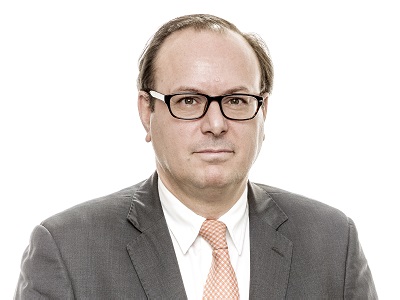
Abbott is a key client for Taylor Wessing. The UK team led by Nigel Stoate is coordinating the European proceedings for the US medical technology company.
-

- Christian Dekoninck

-

- François Pochart
-

- Nigel Stoate

The Taylor Wessing team also comprises UK partners Matt Royle and Amanda Ebbutt, as well as Irish partner Eoin Martyn, UK counsel Julie Chiu, and Dutch counsel Geert Theuws.
On the defending side
Bird & Bird leads the case for defendants Sinocare and Menarini. A mixed team of French, Italian and Dutch lawyers defended both companies at the local division The Hague. Milan partner Edoardo Barbera is responsible for the case concerning EP 633 while Paris-based partner Thierry Lautier and Dutch partner Tjibbe Douma lead the case over EP 471.
-

- Edoardo Barbera

-

- Tjibbe Douma
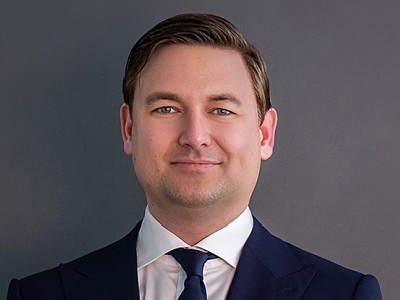
-

- Thierry Lautier

Pietro Dettori and Andrea Vantini from Bird & Bird’s Milan office provide support alongside Jonathan Hechler from the Munich office. The French team consists of Laurent Labatte, Marylis Clerc, Rémy Cassin, and Eva Kessi. From the Dutch offices, patent attorney Frodo Ferro as well as Marijn van der Wal, Nathalie Steurrijs, Pippa van Hengel, and Anna Koster are involved.
