Court of Appeal redefines the scope when preserving evidence in hygiene paper dispute
In the dispute between Tempo tissue paper manufacturer Essity and its competitor WEPA, the UPC Court of Appeal has narrowed the powers of bailiffs and technical experts when executing measures for the preservation of evidence. The judges under UPC President Klaus Grabinski ruled that questioning defendant personnel on technical details of products or production processes falls outside the scope of Art. 60 UPCA.
7 September 2026 by Mathieu Klos

The manufacturer of Tempo tissue paper, Essity Hygiene and Health, wanted to know if and how its Dutch competitor WEPA is infringing its patent. Essity therefore applied to the UPC for measures to preserve evidence and inspect the premises at WEPA Nederland’s tissue paper production facility in Swalmen, and the court granted the application.
But last week, the UPC Court of Appeal has narrowed the powers of bailiffs and technical experts when executing measures for the preservation of evidence. The judges under UPC President Klaus Grabinski ruled that questioning defendant personnel on technical details of products or production processes falls outside the scope of Art. 60 UPC Agreement (case ID: UPC-CoA-113-2026). In doing so, the judges partially overturned an ex parte order issued by The Hague local division in April 2026, which had granted Essity measures for the preservation of evidence and inspection.
At the centre of the dispute is Essity’s EP 3 289 139, which protects tissue paper containing pulp fibres originating from Miscanthus giganteus and a method for manufacturing it. The patent is in force in eight UPCA contracting states, including Germany, France, Italy, and the Netherlands, as well as in Spain, Switzerland, the UK, and Turkey.
Essity is part of the Essity Group and owns brands such as Tempo and Zewa. WEPA, part of a family-owned group operating fifteen paper production facilities across six European countries, is another major player in the European private-label hygiene paper market.
Limits of Art. 60 UPCA
The Court of Appeal, chaired by Grabinski with judge-rapporteur Peter Blok, clarified two aspects of the scope of Art. 60 UPCA. On the one hand, the court confirmed that measures for the preservation of evidence are not limited to technical documentation and may also cover promotional and commercial materials. According to the judges, this follows from the wording of Art. 60(1), which refers to “any relevant evidence in respect of the alleged infringement”.
-

- Klaus Grabinski

-

- Peter Blok

-

- Paolo Catallozzi
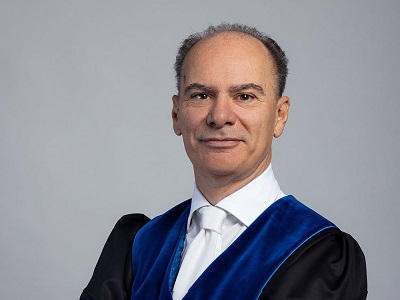
The third legal judge was Paolo Catallozzi. Marc van der Burg and Max Tilmann were technically qualified judges.
On the other hand, the Court of Appeal drew a clear line regarding the questioning of the defendant’s personnel. The Hague local division had allowed Essity to ask WEPA employees direct questions as to whether the teachings of the patent were implemented in WEPA’s products and processes, while noting that under Dutch law they were not obliged to answer on pain of penalty.
The Court of Appeal held that Art. 60 does not confer on the court the power to allow a bailiff or expert to question the defendant’s personnel on technical details relating to products or production processes. Where obtaining statements from personnel is necessary, this must take place under the court’s control and not through a bailiff or expert as part of a description or inspection. In contrast, the court may order the defendant’s personnel to provide practical information necessary for the execution of the measures, such as passwords to access digital data.
Consequences for the expert report
The Court of Appeal ordered the technical expert to redraft the report and submit a new version within two weeks. Any parts recording answers by WEPA personnel to substantive questions, or containing findings that rely exclusively on such answers, must be excluded. The judges further ordered Essity to instruct the expert, the bailiff, and its representatives to destroy all copies of the original report. If the original had already been disclosed to Essity, the company is prohibited from using it and must destroy all copies.
The Court of Appeal also rejected WEPA’s argument concerning the validity of the patent. The EPO Opposition Division had maintained EP 139 as granted in November 2025. WEPA later appealed this decision; the Boards of Appeal scheduled an oral hearing for 20 November 2026. The parties expect a preliminary opinion in September. In parallel, WEPA filed a standalone revocation action before the Paris central division in December 2025 (case ID: UPC_CFI_1898/2025). Essity responded with a statement of defence including 13 auxiliary requests. The central division has scheduled the oral hearing for 6 October 2026.
According to JUVE Patent research, Essity has so far neither filed an infringement suit with the UPC nor applied for a preliminary injunction. Nor is the editorial team aware of any other claims before national courts.
WEPA relies on two firms
WEPA relied on a team from Meissner Bolte led by litigator and partner Andreas Kabisch, together with Moritz-Melchior Bloser, as well as patent attorney and partner Tilman Pfrang. According to JUVE Patent research, this is the first time WEPA retained a Meissner Bolte team.
WEPA attacked EP 139 at the EPO with the support of UK firm Withers & Rogers patent attorneys Ernst-Ulrich Wittmann and Simon Bradbury. Wittmann also leads the parallel revocation proceedings at the Paris central division. Here Meissner Bolte is also involved.
-

- Andreas Kabisch

-

- Ernst-Ulrich Wittmann

-

- Frank Eijsvogels

Hoyng ROKH Monegier represented Essity, with attorney-at-law Frank Eijsvogels in the lead, working alongside Hoffmann Eitle. Hoyng ROKH lawyers Amandine Métier and Pien Haase are also on the team. The firm’s French and German offices have represented Essity in the past.
In the Paris revocation proceedings, Hoffmann Eitle partner Clemens Tobias Steins has the lead for Essity. The firm also filed EP 139 on behalf of the company. Multiple partners of the firm played a role in the opposition proceedings.